


20 likes1 comment


“Creepy carrots! Creepy carrots! Creepy carrots!”

 Creepy Carrots!: with audio recording |


“Creepy carrots! Creepy carrots! Creepy carrots!”
Creepy Carrots! tells the story of Jasper Rabbit, who loves carrots until he becomes convinced they are following him. This book is useful in the classroom for teaching mood, tone, and how illustrations can shape the reader‘s feelings. It also works well for lessons on prediction, cause and effect, and even creative writing, students can imagine their own “creepy” objects.
 pick
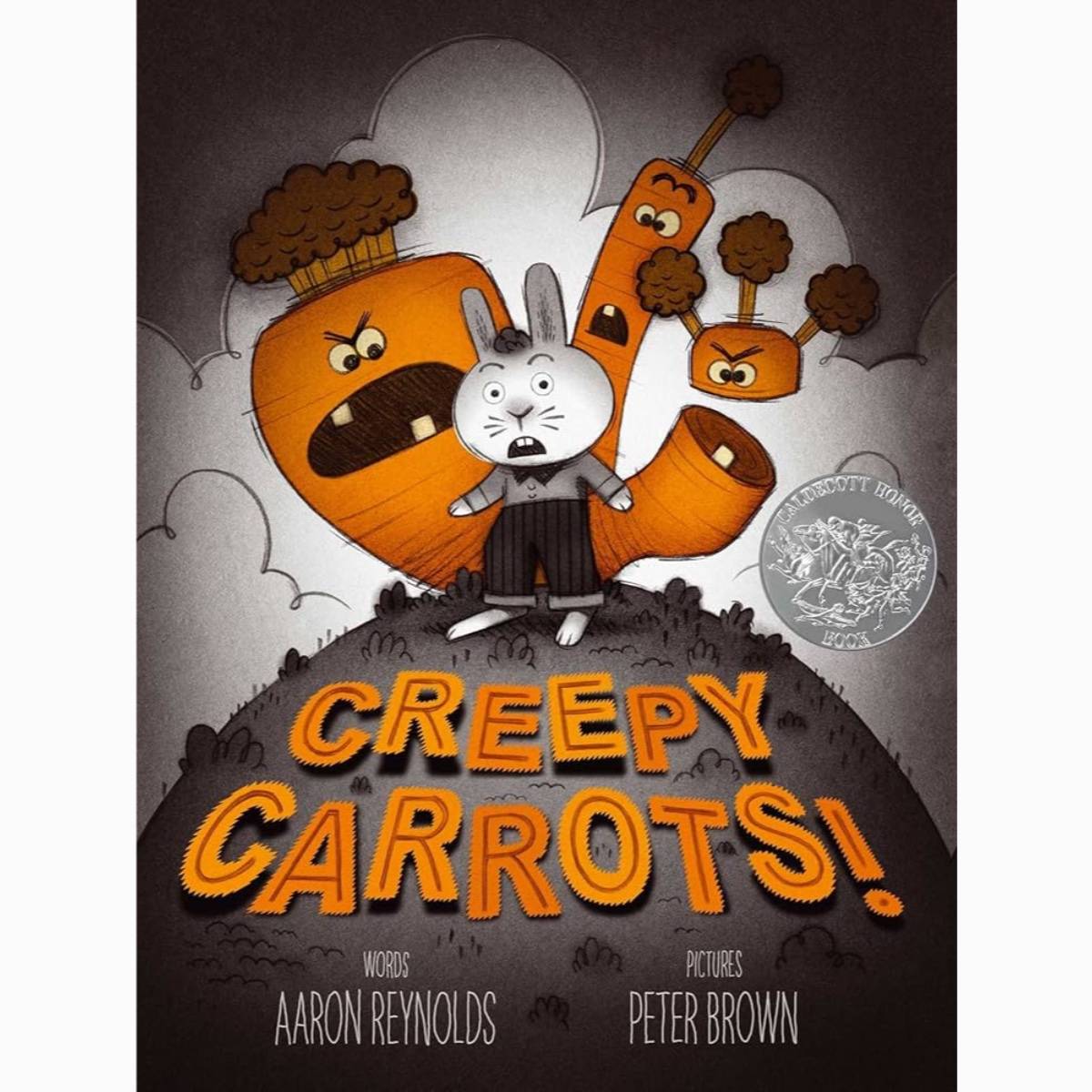
pickIn Creepy Carrots!, the illustrations are organized with strong contrasts of black, gray, and orange, creating a dramatic, almost film-noir atmosphere. The sharp lines, shadowy textures, and careful use of space build suspense and humor. The art makes the story come alive by balancing spookiness with silliness.
“Something in the corner of his eye made him jump.“
This book received a Caldecott honor for the illustrations in the book. I would use this book around Halloween time, for a fun story time. I would use this book to inspire kids to write their own “creepy“ book as a post reading activity.
pickThe illustrations in this book allow for an eerie feeling, yet the organization of the illustrations creates a humorous element to the book. A lot of the illustrations are black and white, so it allows the orange carrots to pop out of the pages.
“Mom! Mom!“ Jasper screamed. “Creepy Carrots! In the shed!“
This book would be used in my classroom during the fall time ot engage students in the season and feelings around fall and festivities. I think that students would engage in this story with excitement and be interested ot hearing more when reading.
pickThis picture book shows excellent illustrations to demonstrate the captivating words of a story follwing a carrot who has a creepy feeling about carrots. The images are mostly black and white, which adds to the “creepy“ effect. The illustrator also adds to this by showing different angles of depth and shapes of images. The illustrations tell the story without having to read the words.
“Sometimes when Jasper ate a carrot, he would hear a little ‘munch munch‘… and sometimes the carrot seemed to be looking back at him!“
This story could help promote discussions about perspective. After finishing the story, the class could discuss the differences between how the rabbit was feeling compared to how the carrots were feeling. This could lead to bigger discussions on students' personal perspectives.
pickCreepy Carrots by Aaron Reynolds is a picture book published in 2012. The illustrator decided to use the colors black, white, and orange to create suspense and contrast in the story. The illustrations help convey feelings of suspense, fear, and humor. The book is illustrated to emphasize shadows, the orange of carrots, and emotions of the characters. The overall composition mimics The Twilight Zone which adds to the creepy feel.
“By the end of the week, Jasper was seeing creepy carrots creeping EVERYWHERE.”
“Jasper rabbit would never get into that carrot patch every again“
You could use this book in a classroom to practice making predictions because there is a lot of hinting and anticipation methods used in this book. It is also a great book for they fall/Halloween time.
I would use this story to have students practice writing and understanding text. I would have students create their own “Creepy_____“ stories. This requires students to focus on text elements like plot, climax, rising action, falling action, and dialogue.
pickPicture Book, published in 2012
This book uses dark and light illustrations to create a “creepy” feeling for readers. The illustrator also uses shapes to display the main characters mind.
“Jasper Rabbit would never get into the carrot patch ever again!“
pickThis picture book utilizes black and white and color to provide emphasis on different story elements. There are dark, black and white pages that give the story its erie creepy feel. The illustrator utilizes orange to show the carrots and different objects that the boy believes to be said creepy carrots. I think this playful effect makes it very interesting and satisfying to look at.
I would use “Creepy Carrots!“ illustrated by Peter Brown to teach the use of color and have my students write a short story. I would have them pick one color to use for illustrations, as well as, using black and white. This would teach them the use of color and how a certain color can make the audience feel. They don't have to use creepy, they can create a whole new story with a new mood. This would teach students writing and the use of art.
I love how fun this book is. I believe that this book will keep students engaged and we could have fun discussions regarding the different elements presented in the book.
I would use this in my classroom as an oppurtunity to do some “what would happen next“ style writing as the book left off on a good spot for interpretation.
 pan
panPicture book (2012)- The pictures in this book help create suspense and humor, creating a visually engaging experience that helps Aaron Reynolds narrate the story. The contrast emphasizes the carrots, but also adds a fun touch to make it engaging for students.
He begins to think the carrots are following him — hearing creepy “tunk, tunk, tunk” noises or seeing them in shadows.
I can see myself using this book in the fall around harvest time and have the students infer and draw conclusions around the imagery
pick“Creepy Carrots!“ written by Aaron Reynolds and illustrated by Peter Brown, is a picture book that was on honored as a Caldecott book and was published in 2012. This children's picture book uses the images with pops of one color (orange) to convey the emotions and mood of creepiness to come out of the page. This book is seen to be black and white, but the orange from the carrots gives it a timeless look and helps tell the story Peter Brown wanted.
pickAaron Reynolds‘ Creepy Carrots! (published in 2012) is a clever, funny tale about Jasper Rabbit, who learns a spooky lesson in moderation. The story blends humor with just the right amount of suspense, keeping young readers hooked. Peter Brown‘s noir-style illustrations in black, white, and orange heighten the eerie mood and make the “creepy” carrots feel truly alive.
pickPicture book published in 2012
The illusrations in this book really added to the story being told. One of the biggest things that stuck out was how everything was black and white besides the orange items in the images. It really added to the “creepy“ illusion that the story was conveying.
“No creepy carrots would get out of that patch again“
pickThis book was a super cute story about a bunny named peter that was being haunted by some creepy carrots. The pictures were taken after the movie styles in old fashioned filmed. it really took them to life.
“By the end of the week, Jasper was seeing creepy carrots creeping EVERYWHERE.“
I would use this book with elementary students (grades pre-k to 6). I would use this book to help introduce predicting/ inferencing. It is also a fun book to read in the fall around Halloween time.
Creepy Carrots is great for the classroom because it helps kids explore imagination, suspense, and problem-solving. The illustrations and text work together to show mood and humor, and the story can spark discussions and creative activities.
“Everywhere Jasper Rabbit hopped, he could feel those carrots creeping, peeking, and plotting in the shadows.”
“The carrots were everywhere—in the shadows, in the bushes, and even in Jasper‘s dreams.”
This would be a good book to use in a elementary classroom. You can use this book in the fall giving students a fun interactive read-aloud that keeps students engaged with its mix of humor and suspense.
“He chuckled to himself, thinking how silly he had been to be scared of carrots“.
The book Creepy Carrot helps students create their own imagination, and it helps kids put ideas from a story into content.
“He chuckled to himself, thinking how silly he had been to be scared of carrots.“


