Trauma wounds and stains in different ways.
Like grief, it doesn‘t always make sense how, where, and when it hits home.
7 likes


Trauma wounds and stains in different ways.
Like grief, it doesn‘t always make sense how, where, and when it hits home.
Iron rusts. Gold melts. Diamonds chip and fracture. Strength and beauty are constantly tested in this life.
For love, even true love, every day is a crucible.
Everyone has something interesting to share if you give them a chance to speak.

 pick
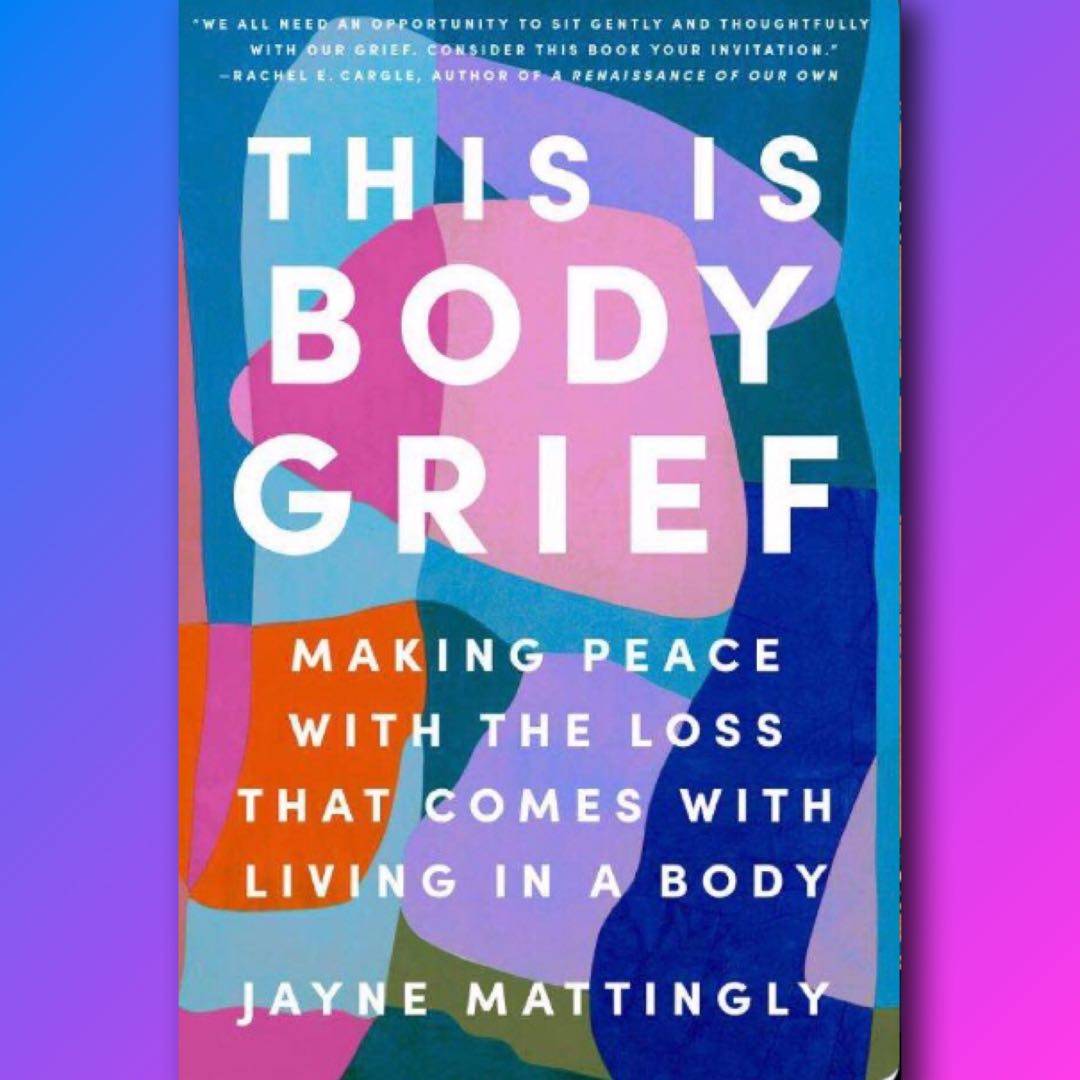
pick⭐️⭐️⭐️⭐️⭐️
Wowzers yowzers, y‘all.
Every bit of anxious and excited anticipation while waiting for this book to become available at my library was totally warranted.
I had a feeling it would be a game changer and I was right.
The truths within it are revolutionary, I can see it easily becoming a banned or challenged book quickly because of the truth found within these pages.
10/10 highly recommend.
I want to buy it for everyone I know!

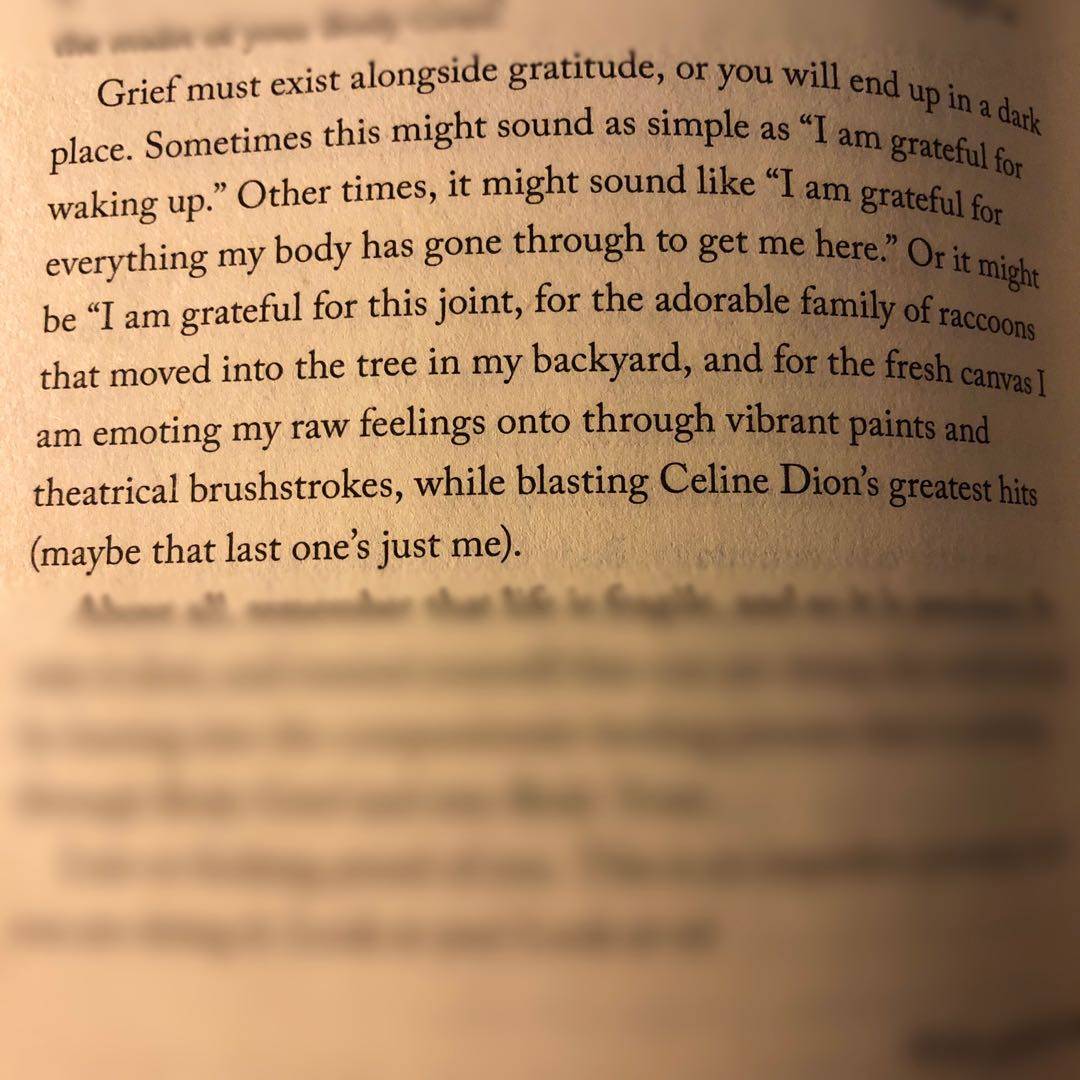
This paragraph made me LOL because this book covers the heavy topic of grief, but now as it comes to a close, I know that if I ever get the privilege & honor of meeting Jayne one day, I‘d immediately tell her I am on #TeamCeline too, all hail #QueenCeline and that Jayne‘s love of her is not “just her”.
I was a diehard Celine fan from like age 8 when Titanic hit the big screens to about 16-17 years old. She was literally all I listened to.
😂🥰

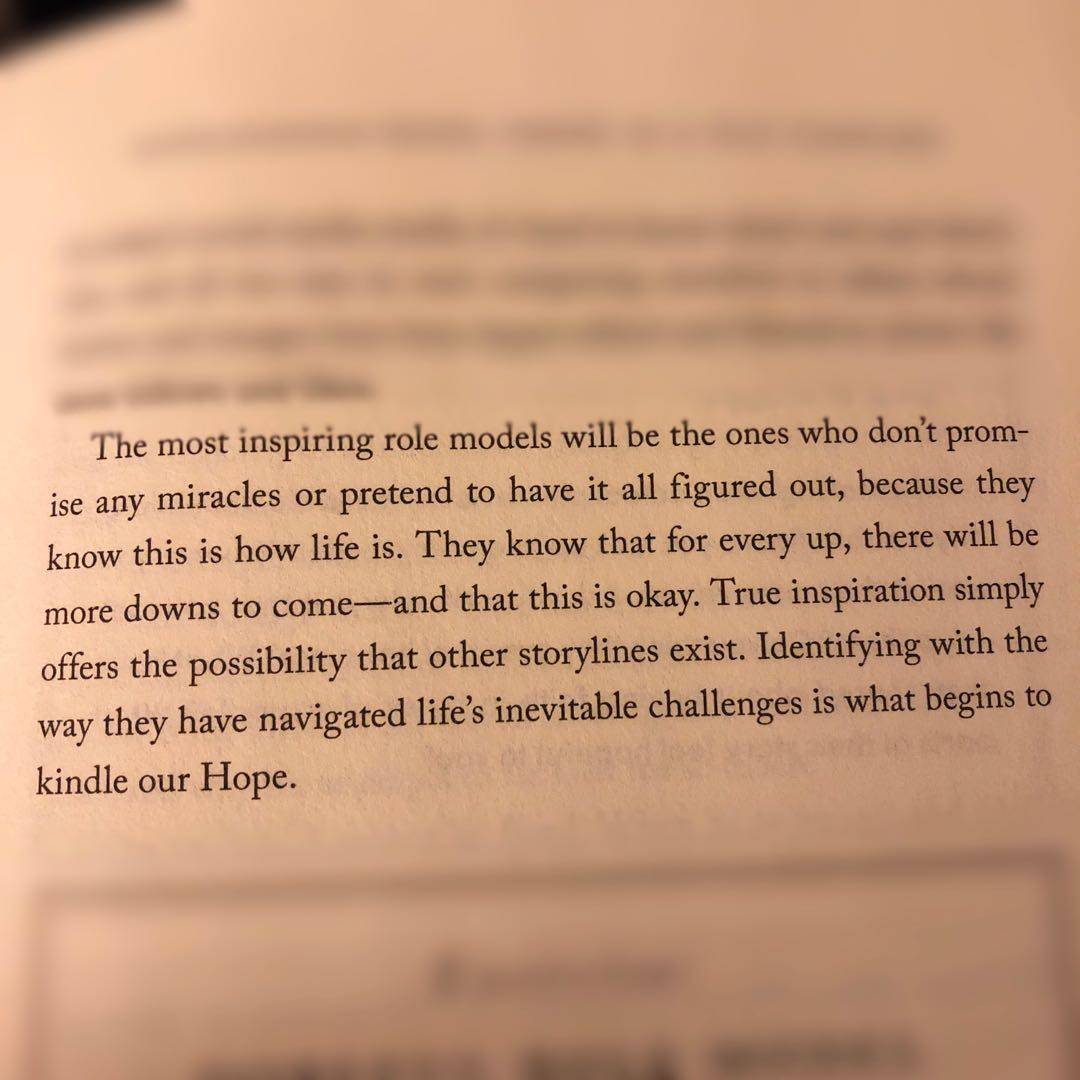
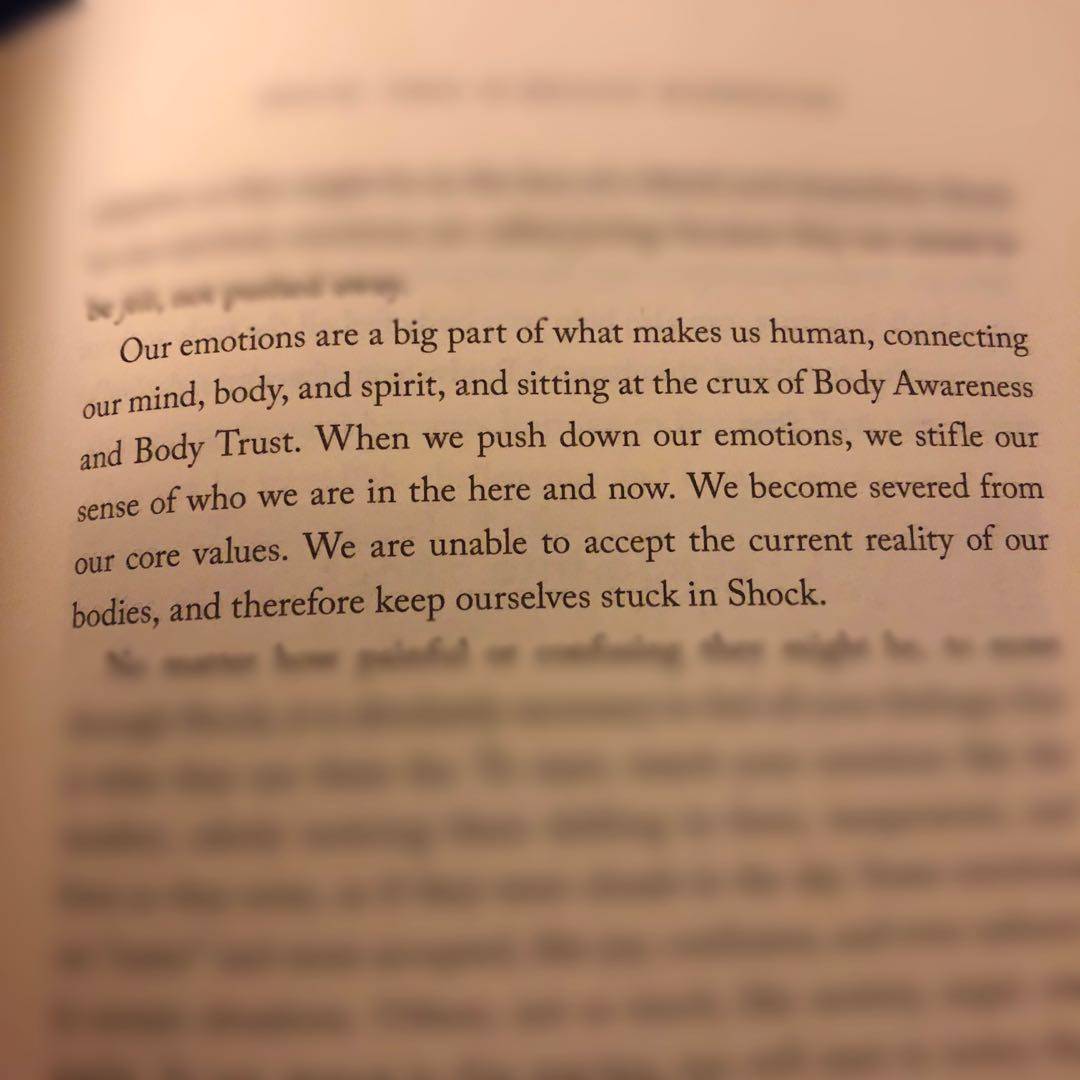
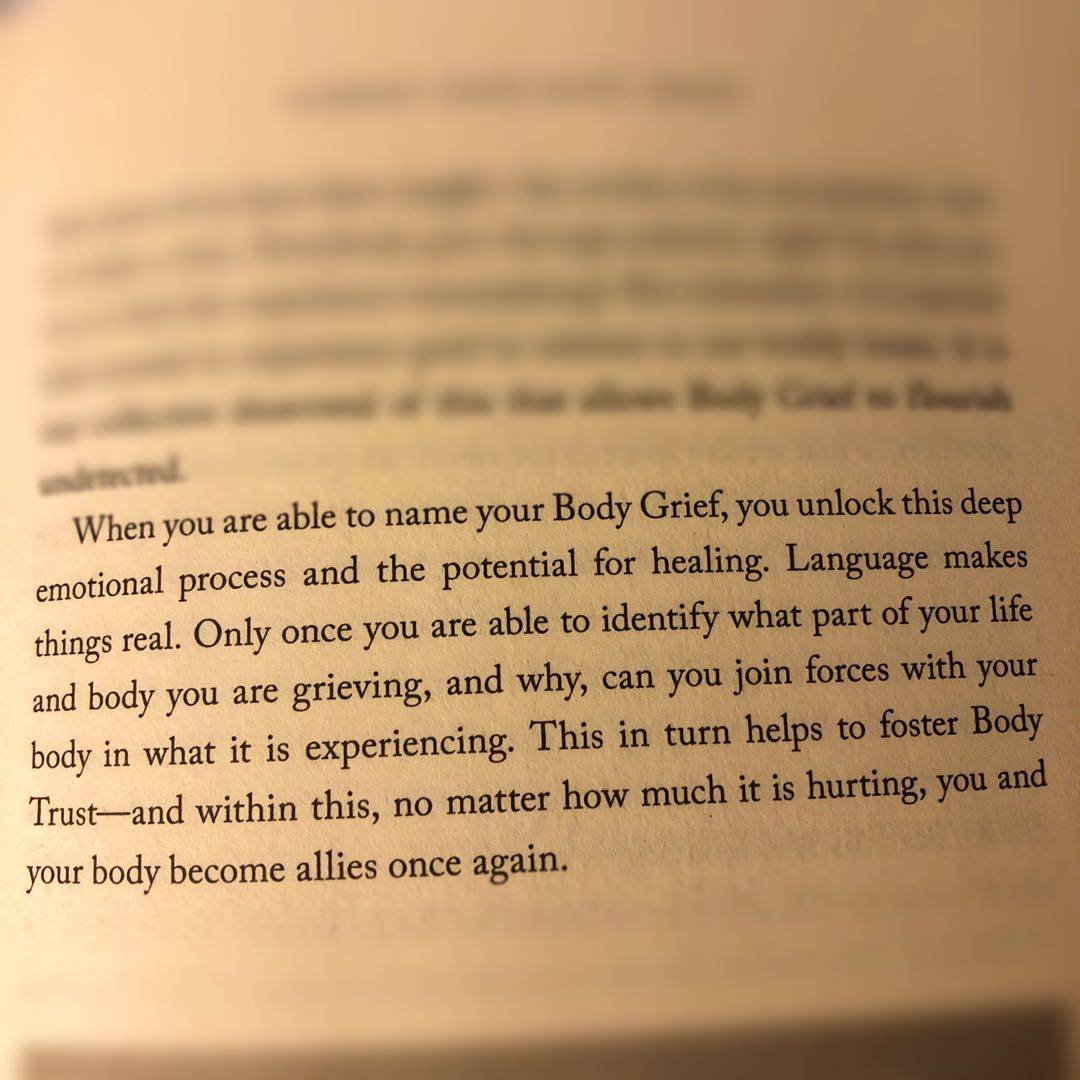
“….we do not come out of the Body Grief process “fixed”. Being human and living in a body means there will always be one more thing. One more change in how we experience our body, one more loss. But with the inner and outer resources, with hindsight, with adaptive coping tools, with compassion, and above all with Body Trust, we have everything we need to keep going, to keep living.”
The more society tells us that we don‘t fit, the less we are able to trust in our body.
Body Trust feels like an unclenching of the jaw and fists as the tension is slowly released from the body. When we are in Body Trust, the mind, body and spirit are finally on the same page, and we know that we have the inner and outer resources to endure what is to come.
Hope provides a glimpse into the future, reminding us that there is always more to live for. This in turn opens the door to Body Trust, which asks us to have faith in our body in the present moment.
Play also is any activity, hobby or creative pursuit where your mind can get lost.
At its core, play is anything that lights you up and helps you remember how good it feels to simply be alive.
Play in and of itself is calming our nervous system as it activates the frontal lobe, and therefore shuts off the fight, flight, freeze or fawn response (finally the amygdala gets to rest!) It also nurtures your inner child and helps to heal the mind, body, and soul, making us happier and more content in the long run.
Self-compassion is an attempt to take care of that part of you that is feeling hopeless, the part of you that forgot how to be happy.
“Self compassion is how we hug ourselves when we‘re feeling hopeless—“
The Hope side of this coin is is simply about allowing for space. It is not a state of mind to aim for, but a shift in perspective that allows us to trust the present enough to want to stick around for what the future holds.
“The lesson here is not to chase a cure or to expect to ever be fully free from pain….Your pain is allowed to shift and change, your body is allowed to adapt, the world of medicine is allowed to grow, and you are allowed to get better. You are allowed to vacillate between Hopelessness and Hope. There is room for both.”
Hope is what revives us and gives us the energy to pull ourselves back from rock bottom. Every time we run out of steam, lose faith, or stop believing in the process, hope pushes us to take another step forward. Hope also has a way of finding us in small, unexpected moments and ways.
Hope that things will get better always lies right on the other side of a hopeless rock bottom. This is why Hopelessness and Hope go hand in hand. One cannot exist without the other.
In whatever ways you find your joy of missing out, instead of fighting against your body you will learn to listen deeply to its signals and it‘s whispers, and to give it what it needs at any given moment.
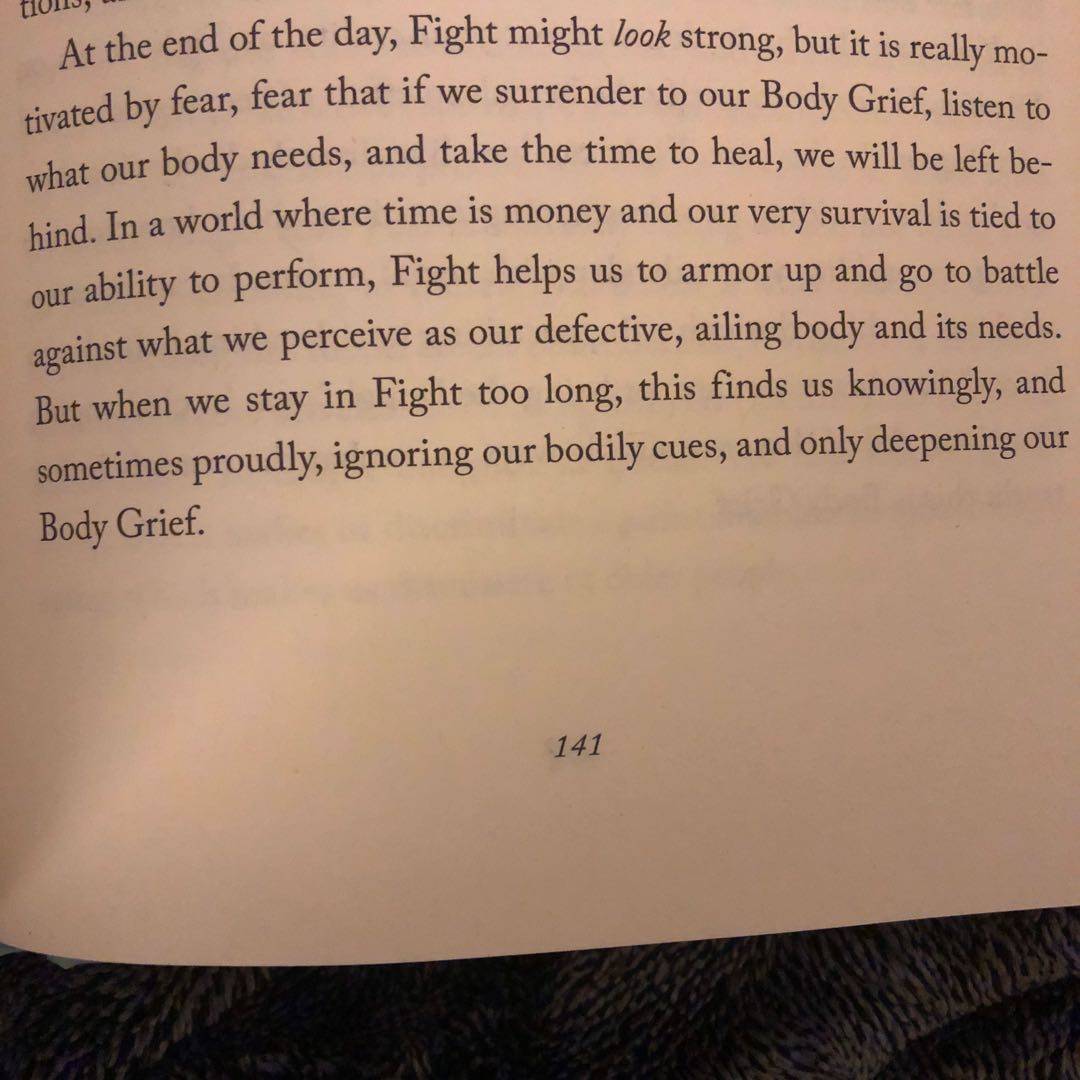
We are human beings whose bodies break, get sick, and “fail us” every day. When we fight this, know that we so out of our fear of only being human.
It is due to our own internalized ableism, healthism, and capitalism, all of which are so deeply stigmatized and misunderstood, that we would often rather stay in Fight than succumb to said isms.
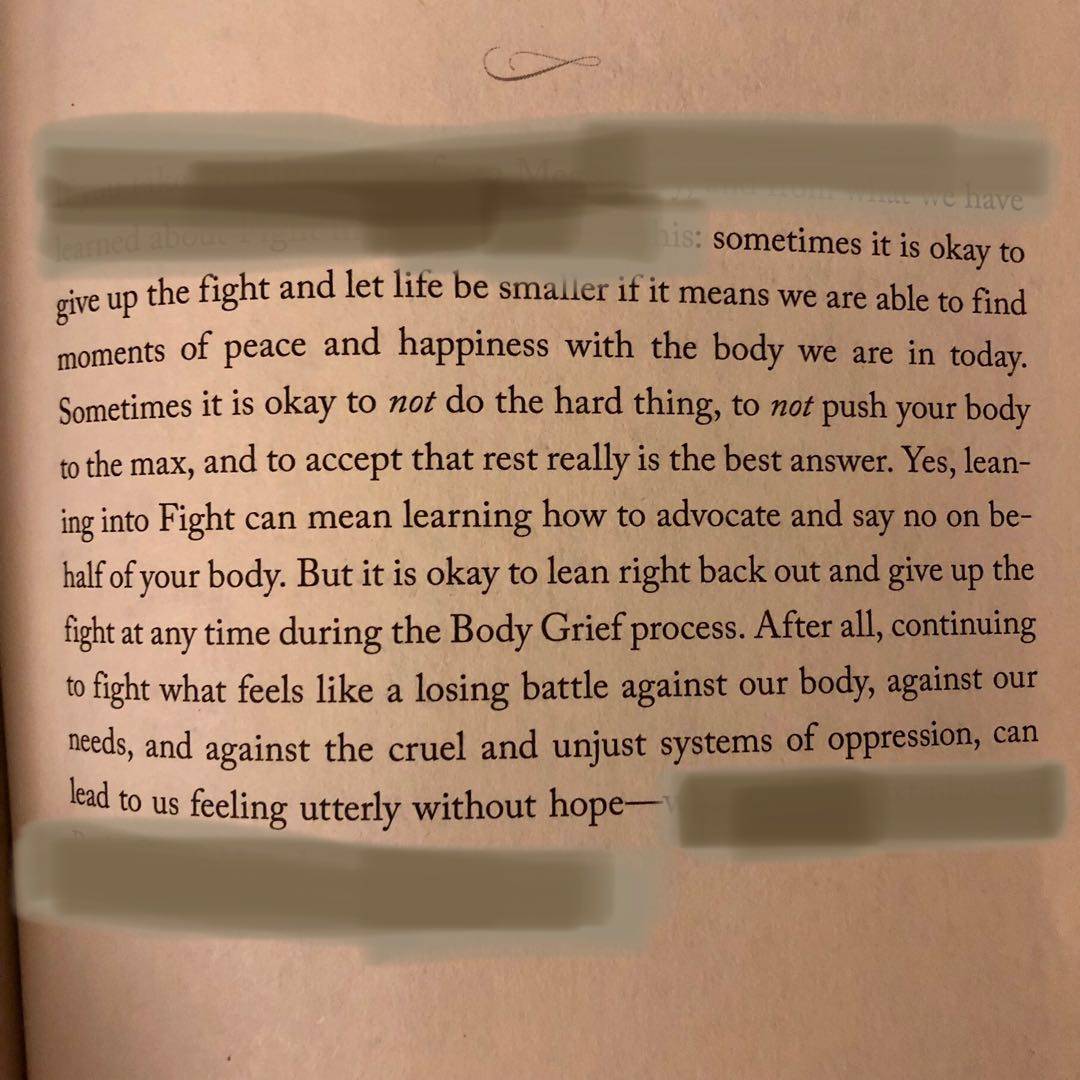
But when it comes to healing our Body Grief, our best life will always be the one where we are able to recognize which battles are worth fighting, and when it is time to accept where we are at and advocate for our body and what it needs today—while also recognizing the influence of any internalized isms that may be at play.
When you and your body are already perceived as being less-than because of your race, gender, ability, or whatever else, and when this results in fewer opportunities, lower wages, and even threats to your physical well being, survival becomes your only option. There is no time to be with your Body Grief; you have no option but to keep fighting whatever is happening in your body to keep showing up.
All of us carry this belief that we must fight for our place in the food chain, even though we live in an age where most of us, especially in a first world country like the United States, have “enough”, including enough time to reflect, to feel, to heal, and to be with our Body Grief. When we forget this, it‘s easy to stay stuck in Fight.
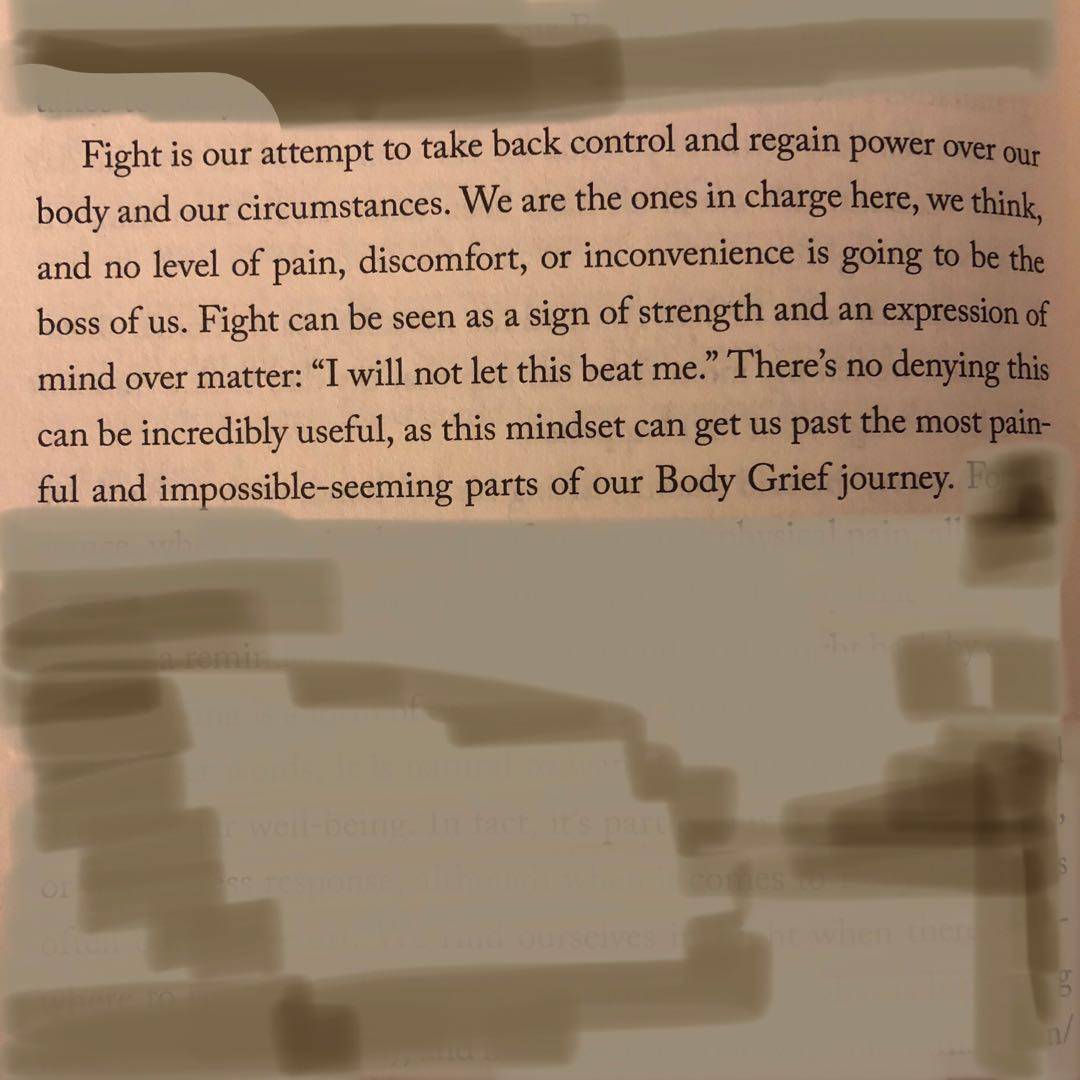
I feel seen….a little TOO seen….😅
Harm reduction is about finding a way to reduce discomfort while having compassion for what our body is telling us it needs right now.
But finding something or someone to blame for a body not functioning the way we think it should—whether said body belongs to us or not—negates a simple truth: the human body is as fragile and as unpredictable as fuck. Sickness, disability, mental health issues, accidents, and assault can happen to any of us at any time.
“……although society stubbornly refuses to accept disability as “normal”, the disabled population is the only minority that everyone has a chance of becoming part of one day.”
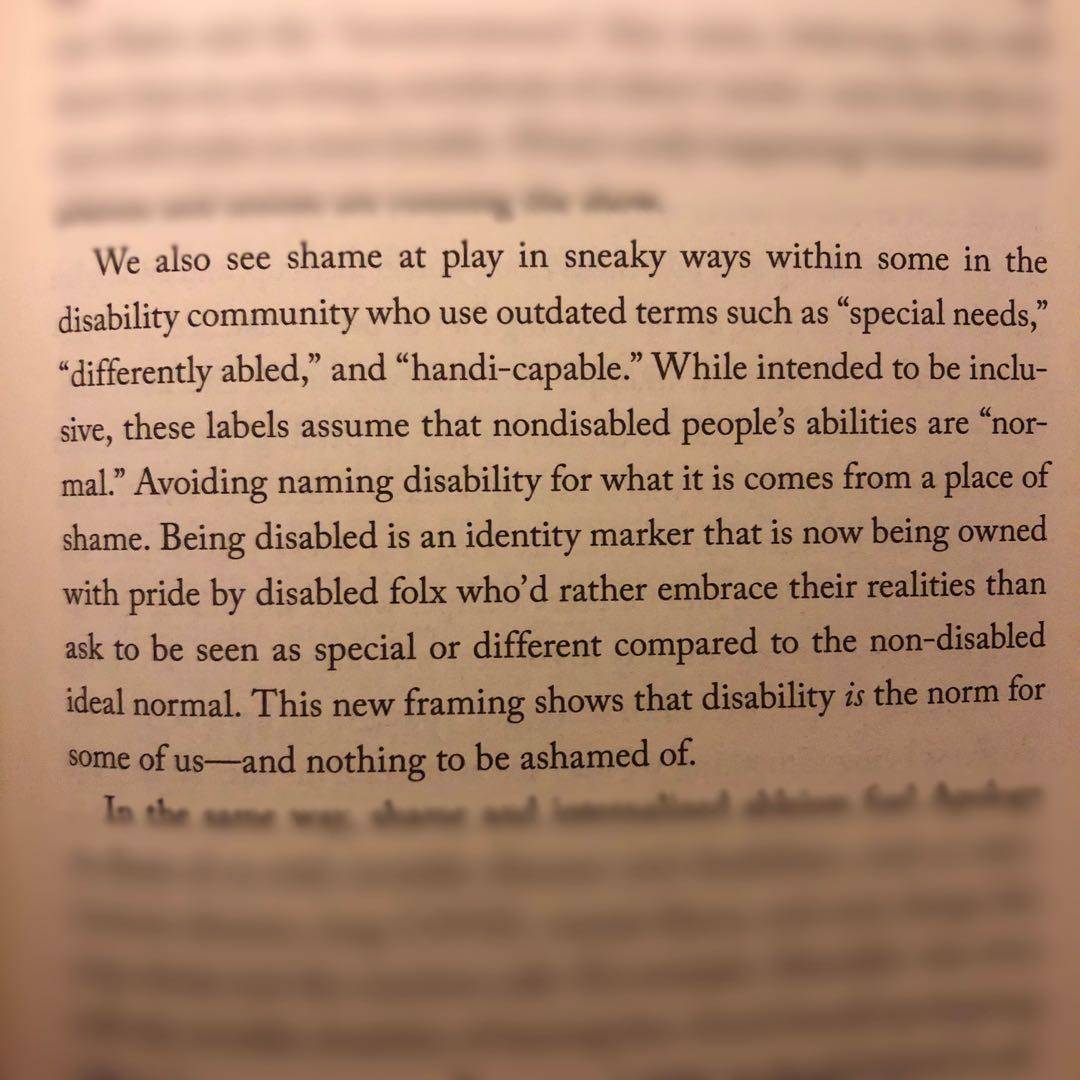
The verbiage of the problem with disability euphemisms.
So imperative that this is contained within the pages of this book.
There is, of course, a place for Apology in our lives: it is on us to apologize when our actions have hurt somebody. But apologizing for our Body Grief hinders our healing because it means saying sorry for something we have no control over.
Your needs, no matter how outsized or outside of what is considered normal they may be, are just as important as everybody else‘s. Some people may never need the same level and specific kinds of care, assistance, and support that you do—and that‘s okay.
But as humans, we are allowed to have needs, and not everybody‘s needs are equal.
Remember: feelings are not facts. They are designed to come and go, and the reason they are called feelings is to encourage us to do just that: feel them and move forward.
The reality is, our bodies are vulnerable, but they are also built to change and adapt. Sometimes these changes and adaptations are painful, messy, inconvenient, and they stop us from getting what we believe we desire, or what we believe we need.
But this is the human condition. Shock only forces us to accept it.
Who gets to decide what is worthy and what isn‘t? It is human to be vulnerable and to have needs, and it is humane to ask for and receive help.
If you can‘t take care of yourself, you have too many needs. If you reach out for help, you must be weak. If you are weak, you are worthless. Ugh.
Body Grief is a beautiful mess of a journey. It is cyclical, nonlinear and it can be incredibly lonely and painful.
The kinder we are to our bodies, the more opportunities we give them to rest, heal, and simply be. And the more we do that, the more in tune we become with our bodies and their changes.
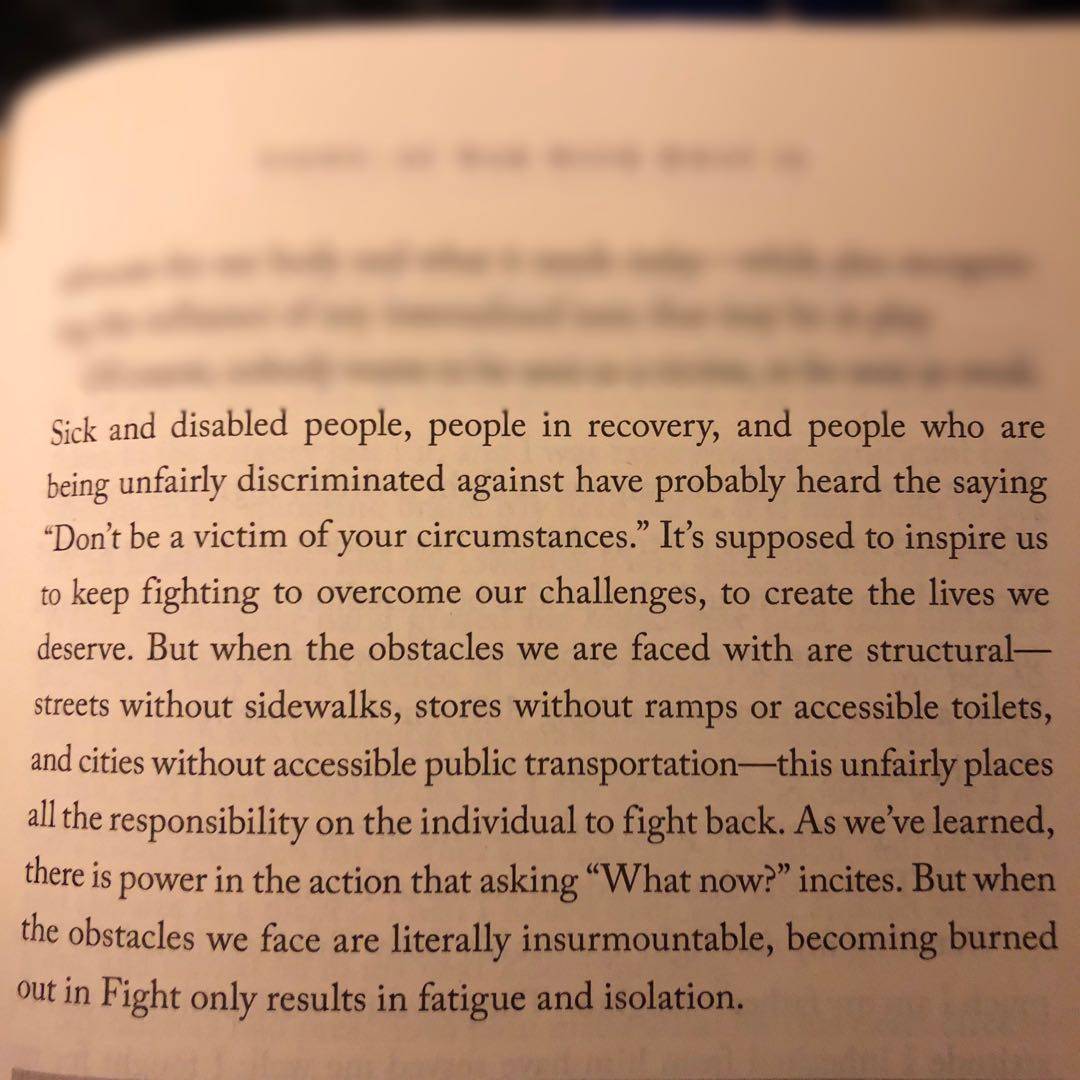
Disability is not something to fix—it is just that the world is not equipped for disabled people.
“…..Perceived Body Betrayal stems from the societal message that our productivity, looks and abilities are the primary measure of our worth, when in reality, all bodies of all colors, shapes, sizes, and genders hold equal value, in sickness and in health, and at every life stage.”
Perceived Body Betrayal is the feeling we get anytime our body changes in ways we are not able to control, does not recover fast enough from any setbacks, experiences pain, or is otherwise unable to perform on demand: that it is somehow against us.
Feel it, don‘t fix it.
Feel it, don‘t know it.
Feel it, don‘t explain it.
Feel it, don‘t analyze it.
Feel it, don‘t moralize it.
The thing is, grief in all its forms wants and needs to be felt and expressed. This is what allows us to heal. With each difficult, messy emotion that is brought to the surface, acknowledgement is how we are able to tend to our wounds.