


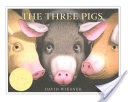
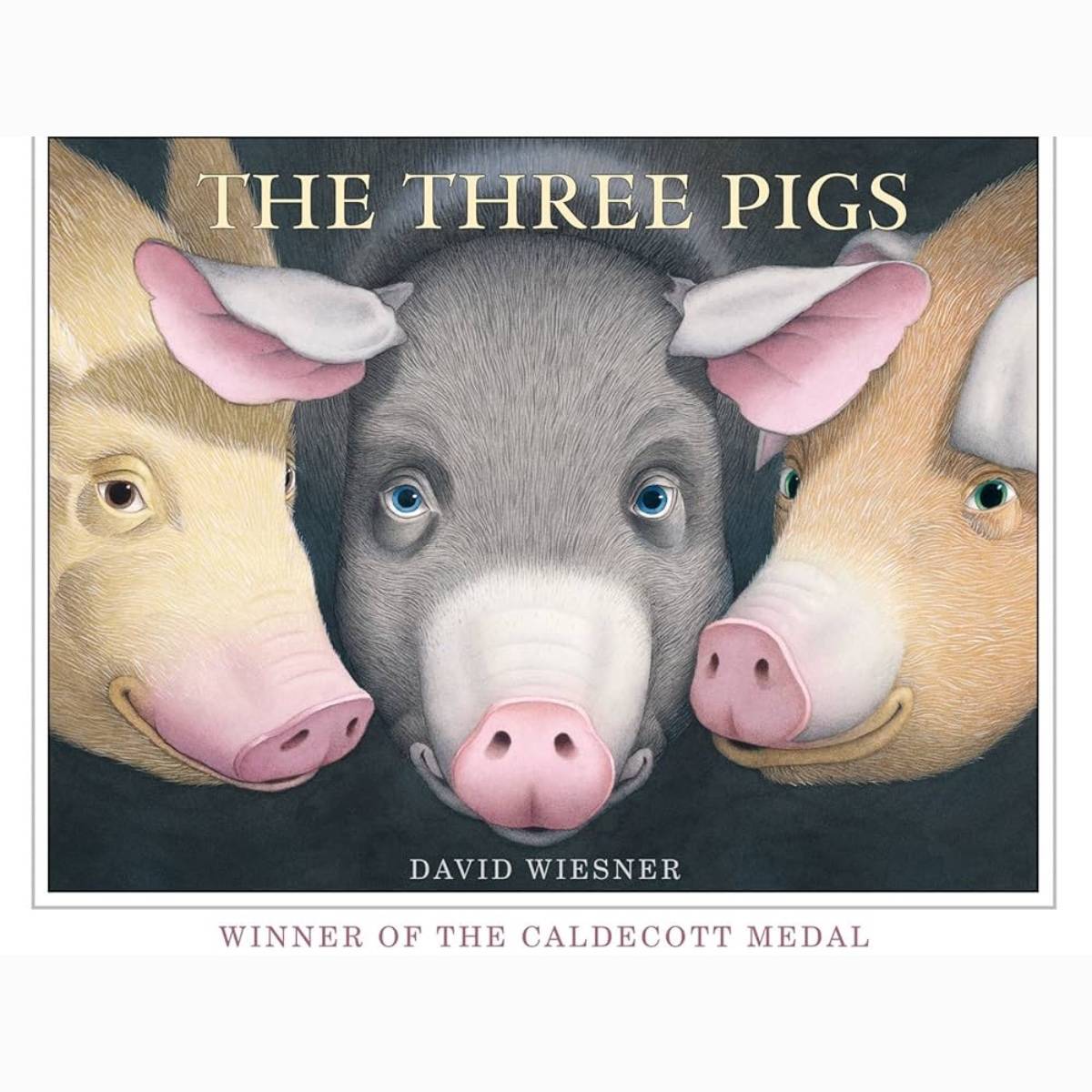
 The Three Pigs |


“So the wolf huffed, and he puffed, and he blew the house in...“Hey! He blew me right out of the story!““



“So the wolf huffed, and he puffed, and he blew the house in...“Hey! He blew me right out of the story!““
I would use this book to teach about point of view and story telling. I will read the book to students and discuss how the story changes when characters “leave“ their own narrative. I would use this to explain the concept of breaking the fourth wall and how that changes perspective and meaning. I would also have students rewrite another tale where characters step out of their story.
In this lesson using The Three Pigs by David Wiesner, students will explore how breaking traditional story structure can spark creativity. After reading, they‘ll discuss how the pigs “step out” of their story. Students will then create their own fractured fairy tale by choosing a classic story and imagining what would happen if the characters left the plot. Students can use color and this style to captivate their audience in their own images.
 pick
pickIn The Three Pigs by David Wiesner, the illustrations break traditional storytelling by showing the pigs stepping out of their storybook world. The artwork shows the pigs leaving a story about themselves and jumping out of the pages. The author uses spacing and movement to help the pigs tell their own story. The illustrations help emphasize imagination and the idea that characters can shape their own destiny's.
pick“The Three Pigs“, David Wiesner and published in 2001, uses shape and composition to break traditional storytelling. As the pigs escape their story, the shapes of panels bend, twist, and fall apart, showing their movement between story worlds. Shifts in color and value reflect changes in setting and the characters jump out of the story. Playful lines and dynamic composition highlight imagination, freedom, and the power of creating your own path.
The Three Pigs is a creative retelling of the classic tale where the pigs literally step out of their story and explore other narratives. In the classroom, this book is useful for teaching students about story structure, perspective, and how illustrations can completely change a familiar tale. It also encourages imagination and critical thinking about how stories are told.
 pick
pickIn David Wiesner‘s The Three Pigs, the illustrations are cleverly organized to play with perspective, space, and story structure. Wiesner uses shifting angles, panels, and even blank space to show the pigs stepping out of their own tale and into others. The art doesn‘t just support the text, it transforms it, making the pictures central to how readers understand the story‘s playful reimagining.
I think this will be a fun book to read to kids on various retellings of classic stories.
 so-so
so-soDavid Wiesner‘s The Three Pigs (2001) is a clever, imaginative retelling of the classic tale. The art drives the story, using detailed, cinematic watercolor illustrations to bring the pigs and their world to life. Wiesner plays with perspective and meta-narrative, showing the pigs stepping out of their story, which adds humor and depth. The visuals aren‘t just decorative—they transform a familiar tale into an inventive, playful adventure.
“Come inside, everyone. Soup‘s on! I think we‘re going to like it here.”
When the book took a turn, this could be a fun way to introduce “plot twists” to my students. I think this book is super fun and would use it as a quick read aloud for a transition time frame.
pickIn David Wiesner‘s, “The Three Pigs” published in 2001, the book starts out just like the classic tale and continues on as the three pigs sneak out of the story to hid from the Wolf! They continue on to turn the pages of their former story into a paper airplane. They ride around for a while and end up in tow other fairy tales before deciding to go back to their story although they bring a new friend along.
so-soMany different versions of this story. This one is one of my favorites.
“Come inside, everyone. Soup‘s on! I think we‘re going to like it here.”
When the book took a turn this could be a fun way to introduce “plot twists” to my students. I think this book is super fun and would use it as a quick read aloud for a transition time frame.
pickIn David Wiesner‘s, “The Three Pigs” published in 2001, the book starts out just like the classic tale and continues on as the three pigs sneak out of the story to hide from the Wolf! They continue on to turn the pages of their former story into a paper airplane. They ride around for a while and end up in two other fairy tales before deciding to go back to their story although they bring a new friend along.
“The wolf huffed, and he puffed, but no matter how much he tried, he could not blow down.”
This book would be great for young children. It is a great way to show how you can take one story/fable, and change it to a magical new story. This story would be great for literature activities, such as comparing the two stories. Putting them side by side will help children to work on comparing and contrasting the stories.
so-soThe Three Pigs by David Wiesner. Published in 2002. Created a crazy twist on the traditional tale of The Three Little Pigs. He uses the illustrations as a big part of the story, such as creating depth and dimensions to switch it up. He makes the pigs come to life, by creating a narrative for them.
“The wolf huffed, and he puffed, but no matter how much he tried, he could not blow down.”
This book would be great for young children. It is a great way to show how you can take one story/fable, and change it to a magical new story. This story would be great for literature activities, such as comparing the two stories. Putting them side by side will help children to work on comparing and contrasting the stories.
pickThe Three Pigs by David Wiesner. Published in 2002. Created a crazy twist on the traditional tale of The Three Little Pigs. He uses the illustrations as a big part of the story, such as creating depth and dimensions to switch it up. He makes the pigs come to life, by creating a narrative for them.
“The wolf huffed, and he puffed, but no matter how much he tried, he could not blow down.”
This book would be great for young children. It is a great way to show how you can take one story/fable, and change it to a magical new story. This story would be great for literature activities, such as comparing the two stories. Putting them side by side will help children to work on comparing and contrasting the stories.
pickThe Three Pigs by David Wiesner. Published in 2002. Created a crazy twist on the traditional tale of The Three Little Pigs. He uses the illustrations as a big part of the story, such as creating depth and dimensions to switch it up. He makes the pigs come to life, by creating a narrative for them.
When the book took a turn this could be a fun way to introduce “plot twists“ to my students. I think this book is super fun and would use it as a quick read aloud for a transition time frame.
pickIn David Wiesner's, “The Three Pigs“ published in 2001, the book starts out just like the classic tale and continues on as the three pigs sneak out of the story to hide from the Wolf! They continue on to turn the pages of their former story into a paper airplane. They ride around for a while and end up in two other fairy tales before deciding to go back to their story although they bring a new friend along.
"Come inside, everyone. Soup's on! I think we're going to like it here."
When the book took a turn this could be a fun way to introduce "plot twists" to my students. I think this book is super fun and would use it as a quick read aloud for a transition time frame.
pickIn David Wiesner's, "The Three Pigs" published in 2001, the book starts out just like the classic tale and continues on as the three pigs sneak out of the story to hide from the Wolf! They continue on to turn the pages of their former story into a paper airplane.
They ride around for a while and end up in two other fairy tales before deciding to go back to their story although they bring a new friend along.
When the book took a turn, it could be an interested way to tie in the aspect of “plot twists“ to the students. It would be a super fun as an interactive real aloud to the students reactions.
pickIn David Wiesner's, “The Three Pigs“ published in 2001, the book starts `out just like the classic tale and continues on with the pigs sneaking out of the page to hide and run away from the wolf. The amazing artistry symbolizes the fascinating different story tales and connects them all together. I love how the individual pages start to get folded into shapes as if they were playing with the pages.
“The wolf huffed, and he puffed, but no matter how much he tried, he could not blow down.”
This book would be great for young children. It is a great way to show how you can take one story/fable, and change it to a magical new story. This story would be great for literature activities, such as comparing the two stories. Putting them side by side will help children to work on comparing and contrasting the stories.
pickPublished in 2002. Created a crazy twist on the traditional tale of The Three Little Pigs. He uses the illustrations as a big part of the story, such as creating depth and dimensions to switch it up. He makes the pigs come to life, by creating a narrative for them.


