Sorry, @jenniferw88 , this is incredibly late!
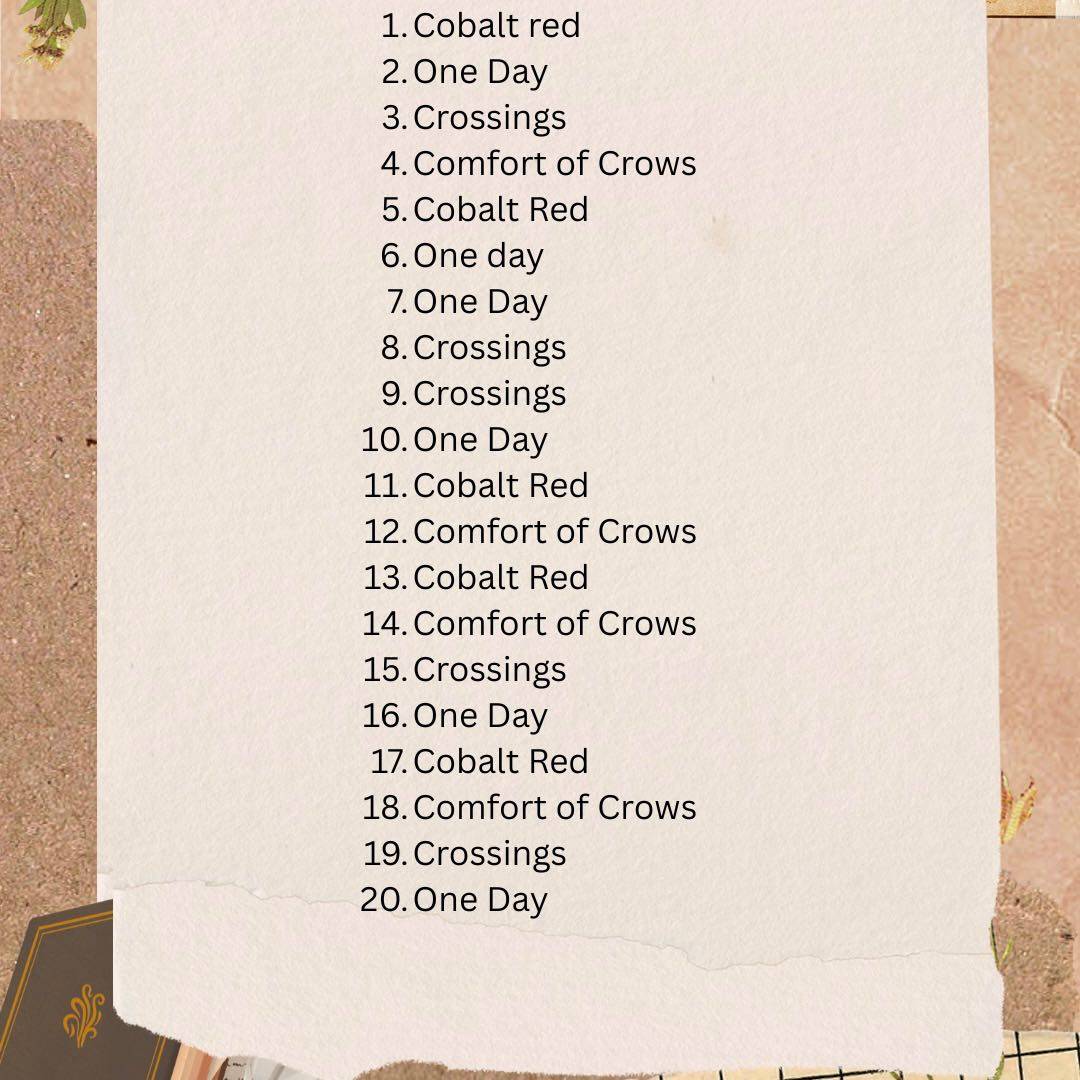
#AuldLangSpine @monalyisha

Sorry, @jenniferw88 , this is incredibly late!
#AuldLangSpine @monalyisha
In “On the Clock,” Gundelsberger describes feeling this reality [like a robot] in her body, lamenting how humans increasingly have to compete with computers, algorithms, or robots that never get sick, depressed, or need a day off. When she finally collapses from pain and exhaustion at Amazon, a veteran employee gives her some Ibuprofen that is kept on the warehouse floor.
In July 1998, the Italian Institute for Nuclear Physics, INFN, decided to make its researchers start clocking in and out of the lab. They did not know the backlash this would inspire: not only at the institute but also across the world. Hundred of scientists around the world wrote in support of the INFN professor‘s complaints: saying that the book was needlessly bureaucratic, insulting, and out of step with how the researchers actually worked.
Even after a drastic rise in wage labour after the Civil War, it was compared to prostitution or slavery, sometimes by white workers wanting distance between sex workers and enslaved Black people. But Black free people too noticed the similarity of a hireling to a slave. Richard L. Davis, a miner, maintained that “none of us who toil for our daily bread are free.” “At one time we were chattel slaves, today we are, white and Black, wage slaves.”

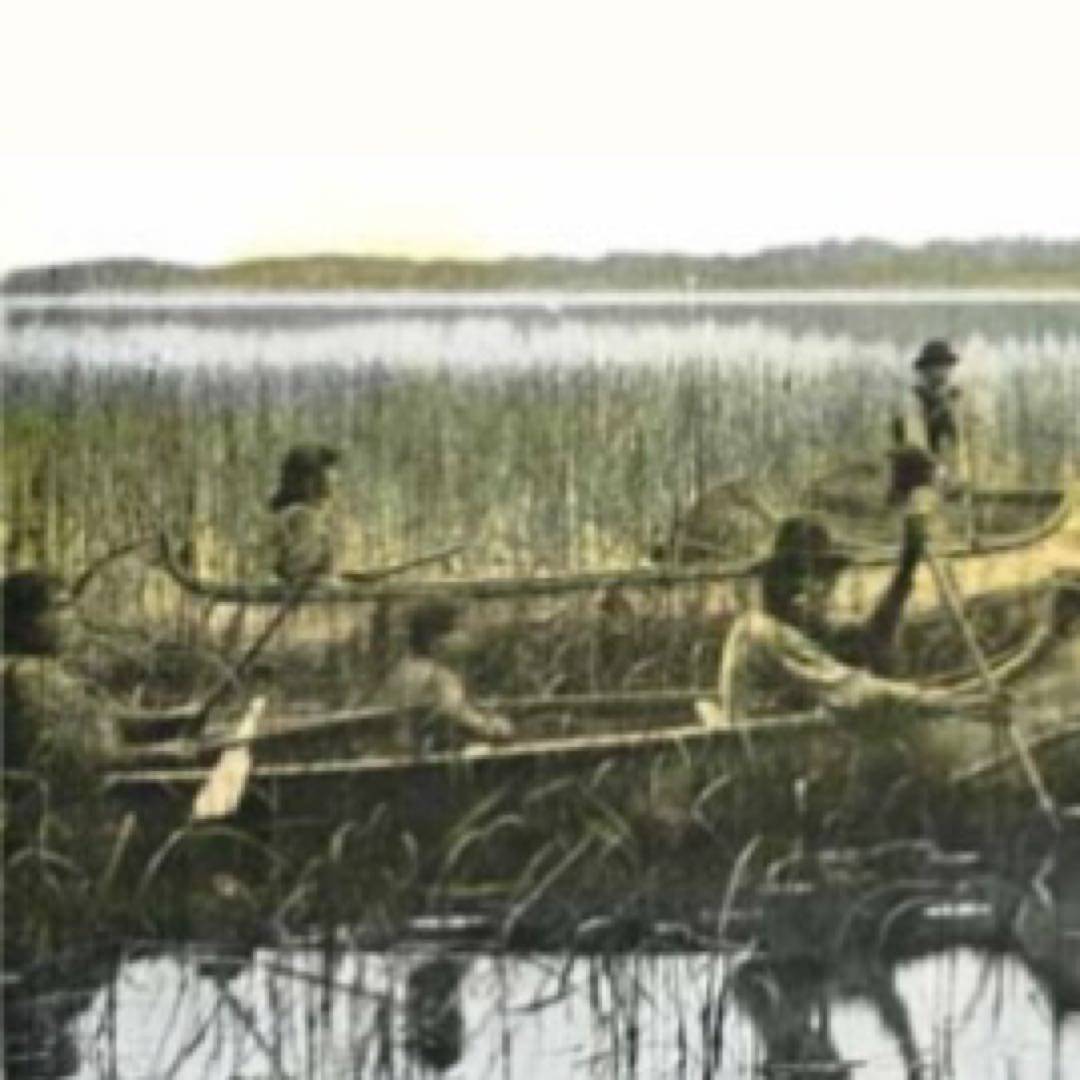
Nanni notes the colonial missions tried to induce people not simply to work, but to work in a regular and uniform manner for a specific period of time per day. This view of abstract labour hours could not have been more alien to task-oriented communities, who recognized their activities based on different ecological and cultural cues, such as the flowering and rooting of certain plants, and where things took however much time they took. /1

This is very interesting. It's more a reflection on time and a history of how it is measured and how that has changed than a self help book of any sort. I would recommend not reading this if you are seriously burnt out already.
#BookSpinBingo @TheAromaofBooks

No big revelations here, feels patchworky. Capitalism & wage labor. Productivity, time management, task-oriented vs. schedule-oriented work, efficiency, nature, planetary time. Leisure, rest. Fungible time. Divisible time. Time & attention. The self-timers & the timed. Biggest question: is reading this a good use of time? 2023
66 “If you don‘t know what‘s coming down the line, preparing for the future becomes an infinite task.”

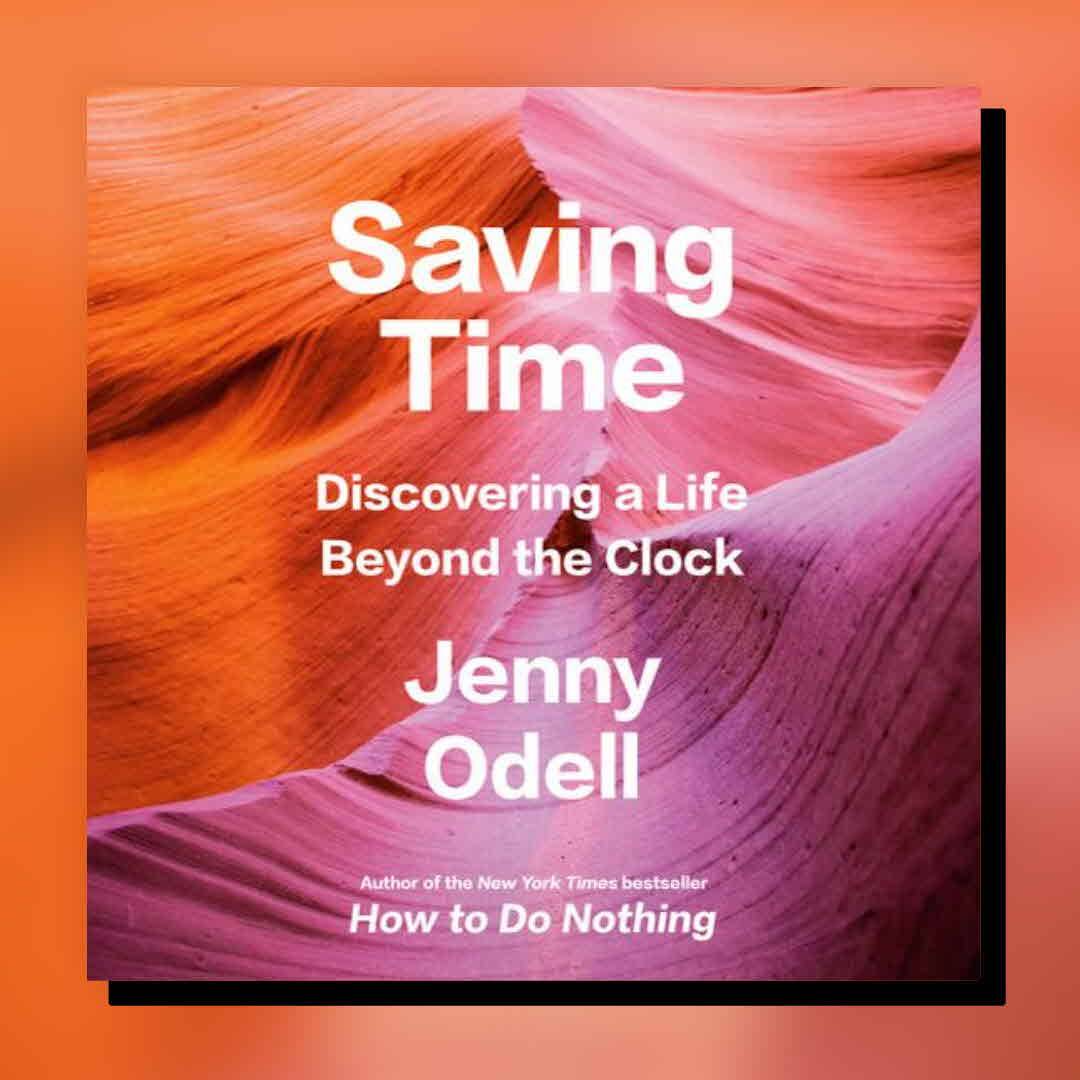
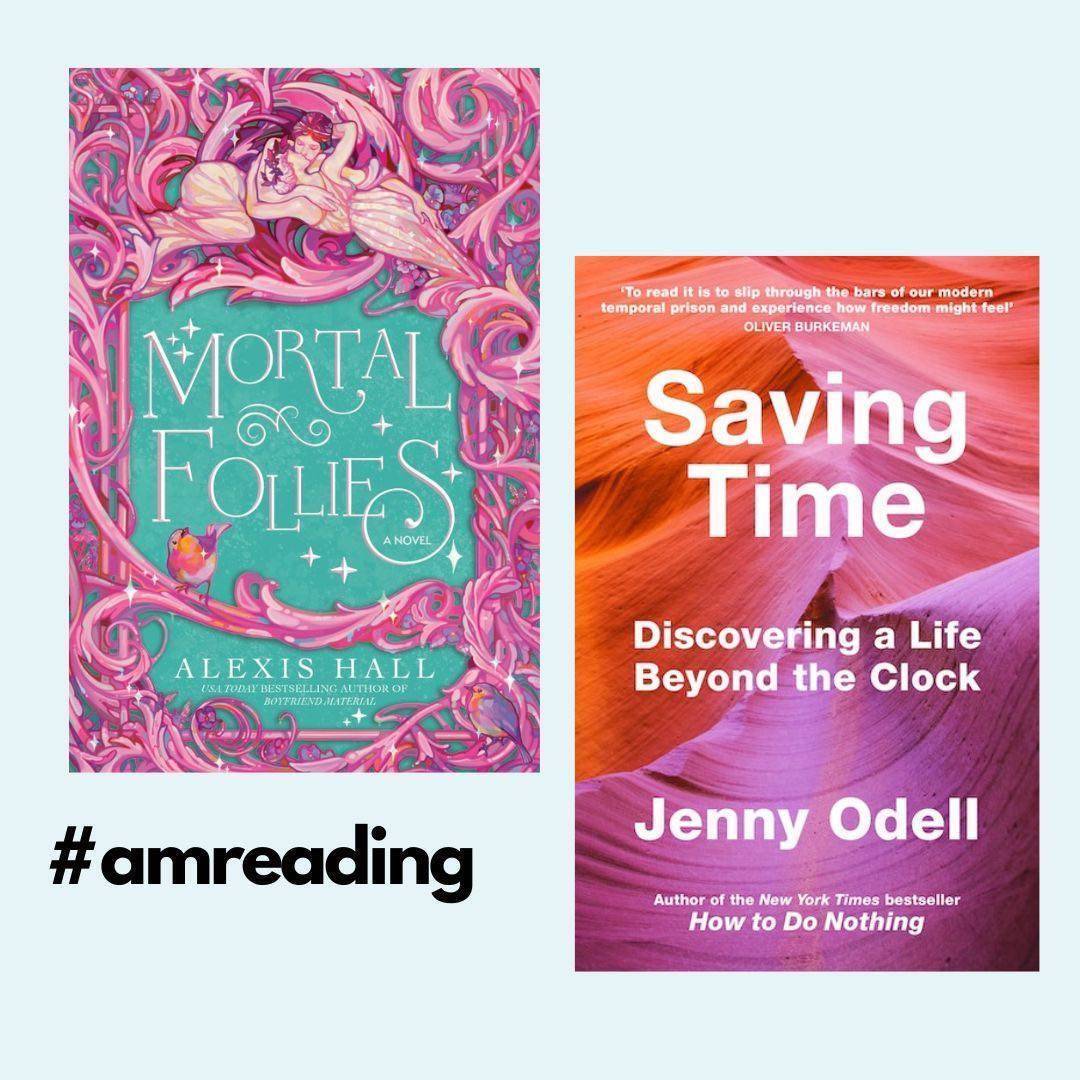
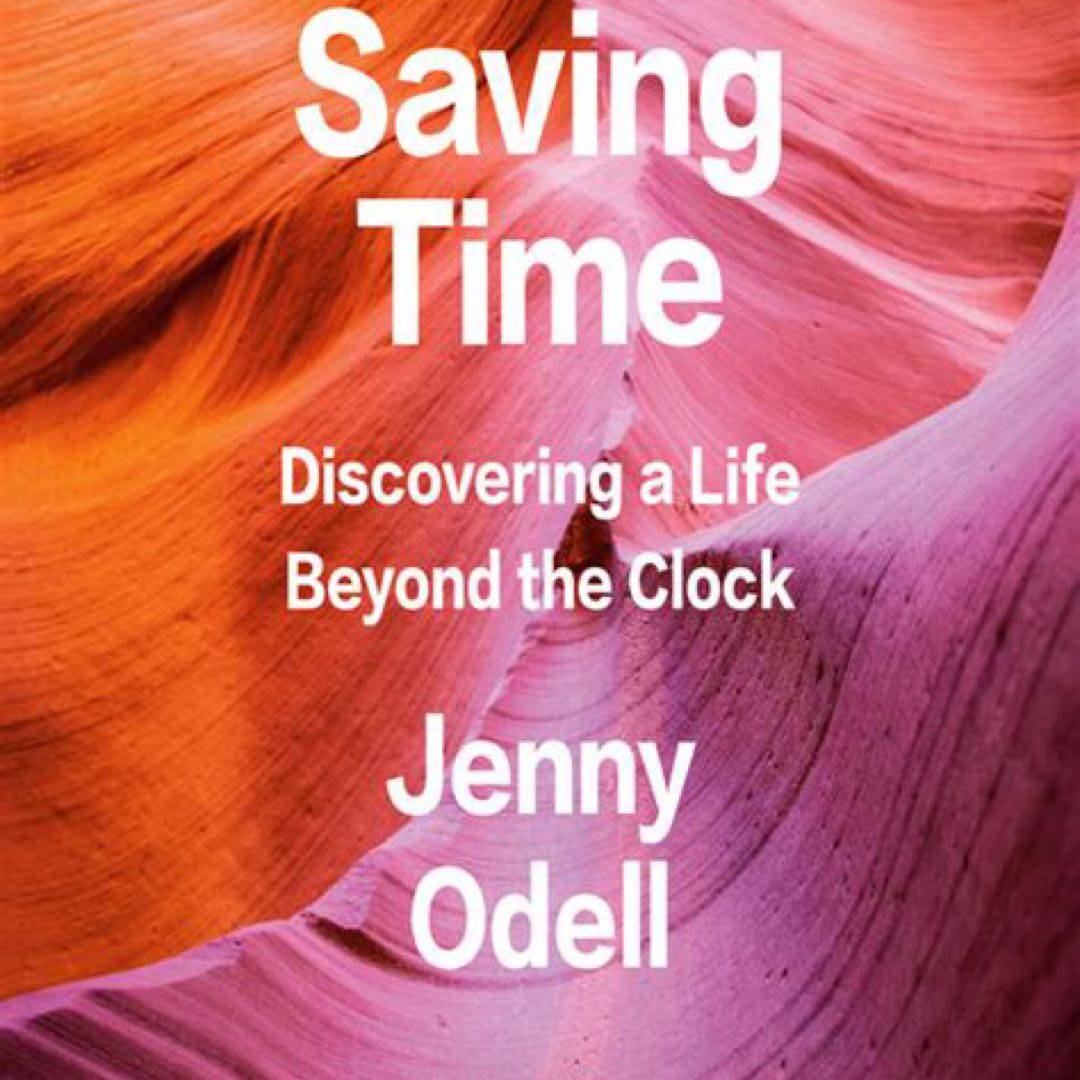
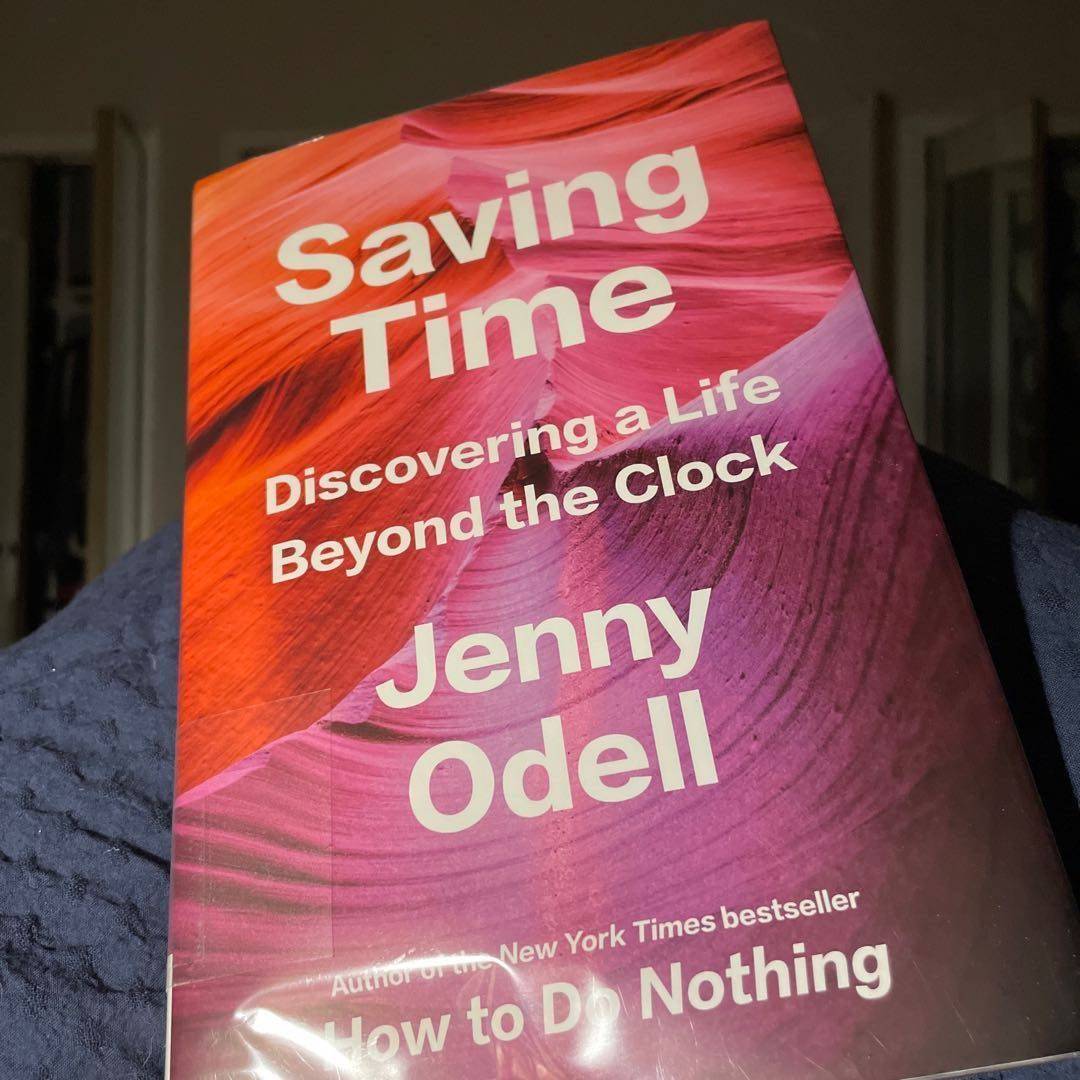
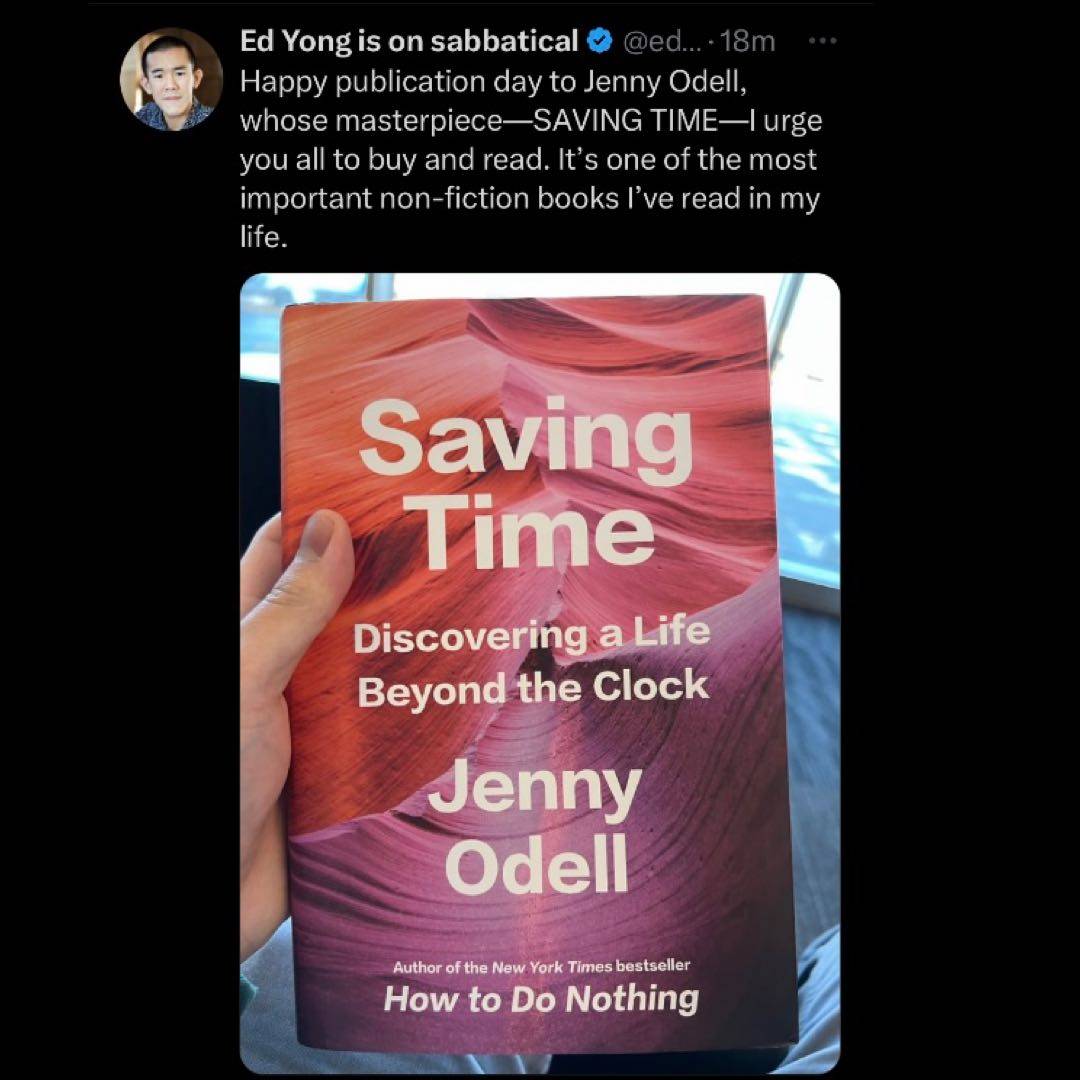
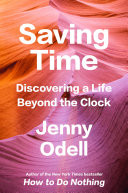
first books of the year are MORTAL FOLLIES by Alexis Hall (which i described as sexy mayhem with Napoleonic War jokes to a friend) and SAVING TIME by Jenny Odell which is even more intense and philosophical than HOW TO DO NOTHING and i am 1000% here for it.
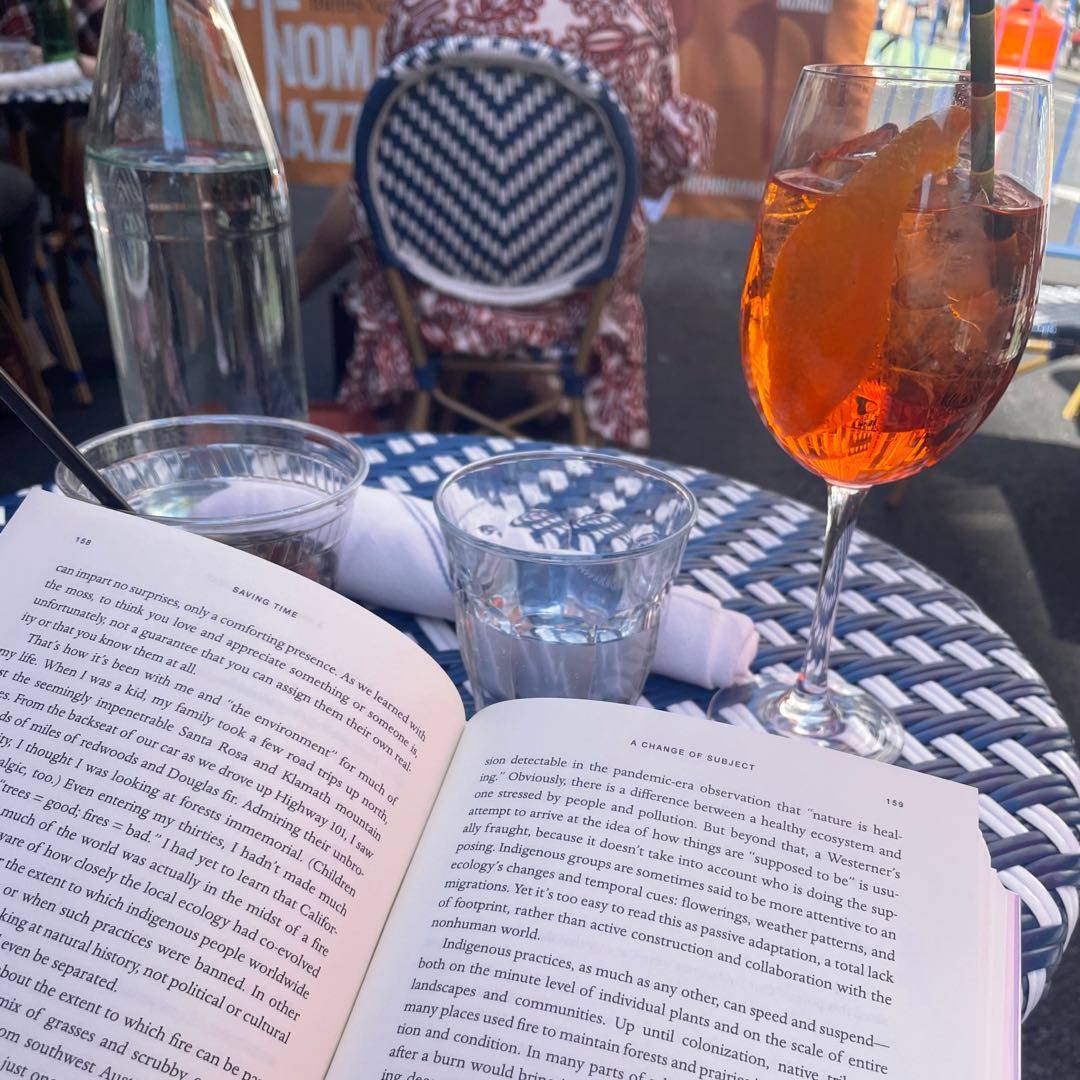
(pink theme is accidental)

I finished my 8th book for #SummerEndReadathon. I really enjoyed parts - like the history of time - but mostly this book was kind of boring and a bit pointless. I feel like time is mostly dictated by society now. I'm also on the side that it is going too quickly. Maybe when I am retired (many years from now), time will be my own and hopefully will go a bit slower.
@TheSpineView

Been working through this one slowly but it feels more accessible to me than How to Do Nothing (or at least I‘m having though tangents regarding the informed consent of performance art less).

This was even better than I hoped it would be. I loved her first book and this careening meander through chronologies, geographies, ornithology, philosophy, ecology, and a myriad of other fractal paths of the narrative was exhilarating.

An interesting and rather academic look at the meaning of time. Why do we feel like time is scarce? Should time be a commodity? A clock is a tool, but not necessarily the only or best way to think about time. Our obsession with productivity (in the economy/industry at large, but also in our personal lives) is unfortunate and flawed. Slowness can be far more rewarding than speed. Adding her other book, How to Do Nothing, to my TBR.
Between a pick and a so-so for me. Really interesting information on the industrialization of time. But, and this is my usual complaint about non-fiction, the end lagged. The last 80 pages were a real slog for me.

Interesting and thought provoking book on ways that we can and do experience literal time.

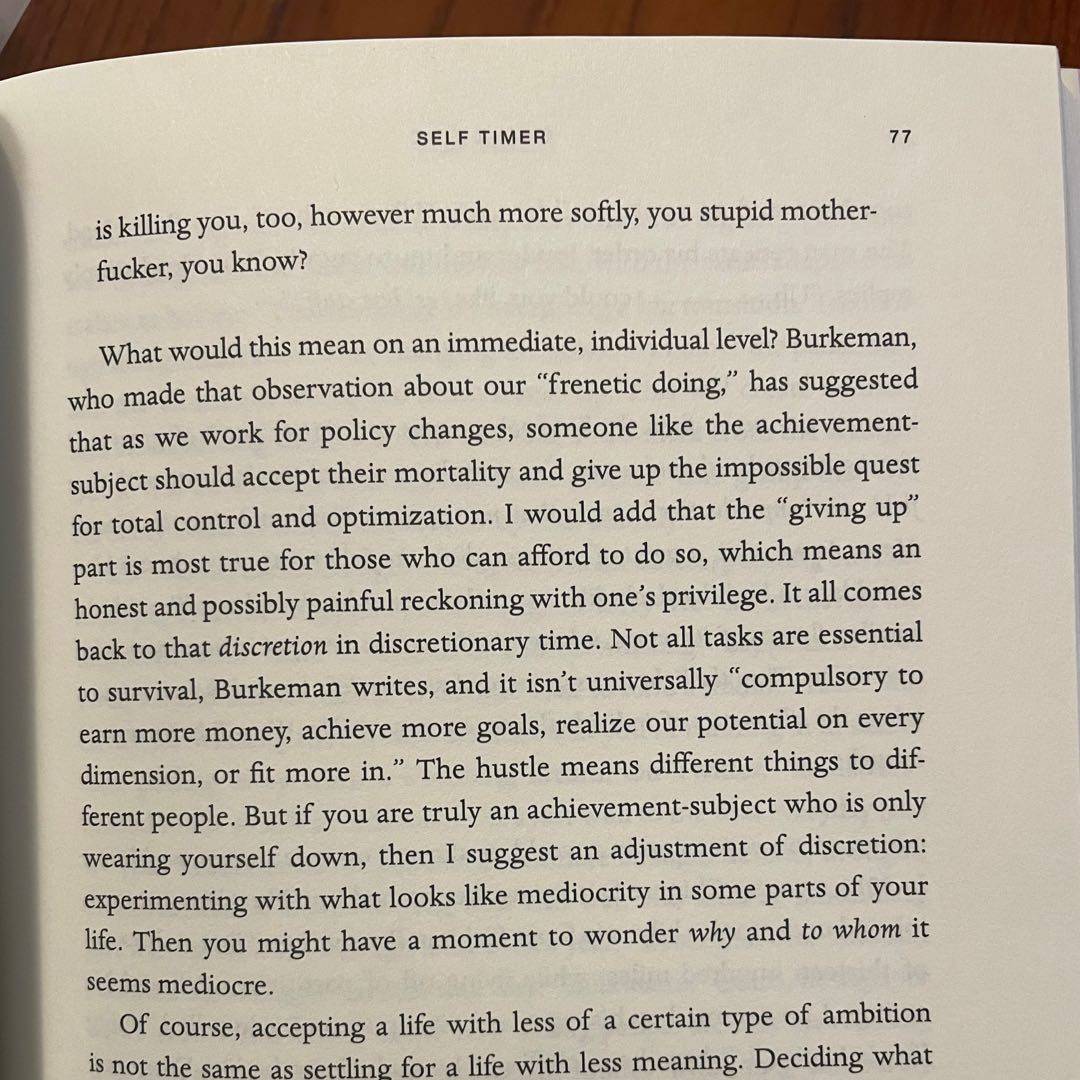
“But if you are truly an achievement-subject who is only wearing yourself down, then I suggest an adjustment of discretion: experimenting with what looks like mediocrity in some parts of your life. Then you might have a moment to wonder why and to whom it seems mediocre.”

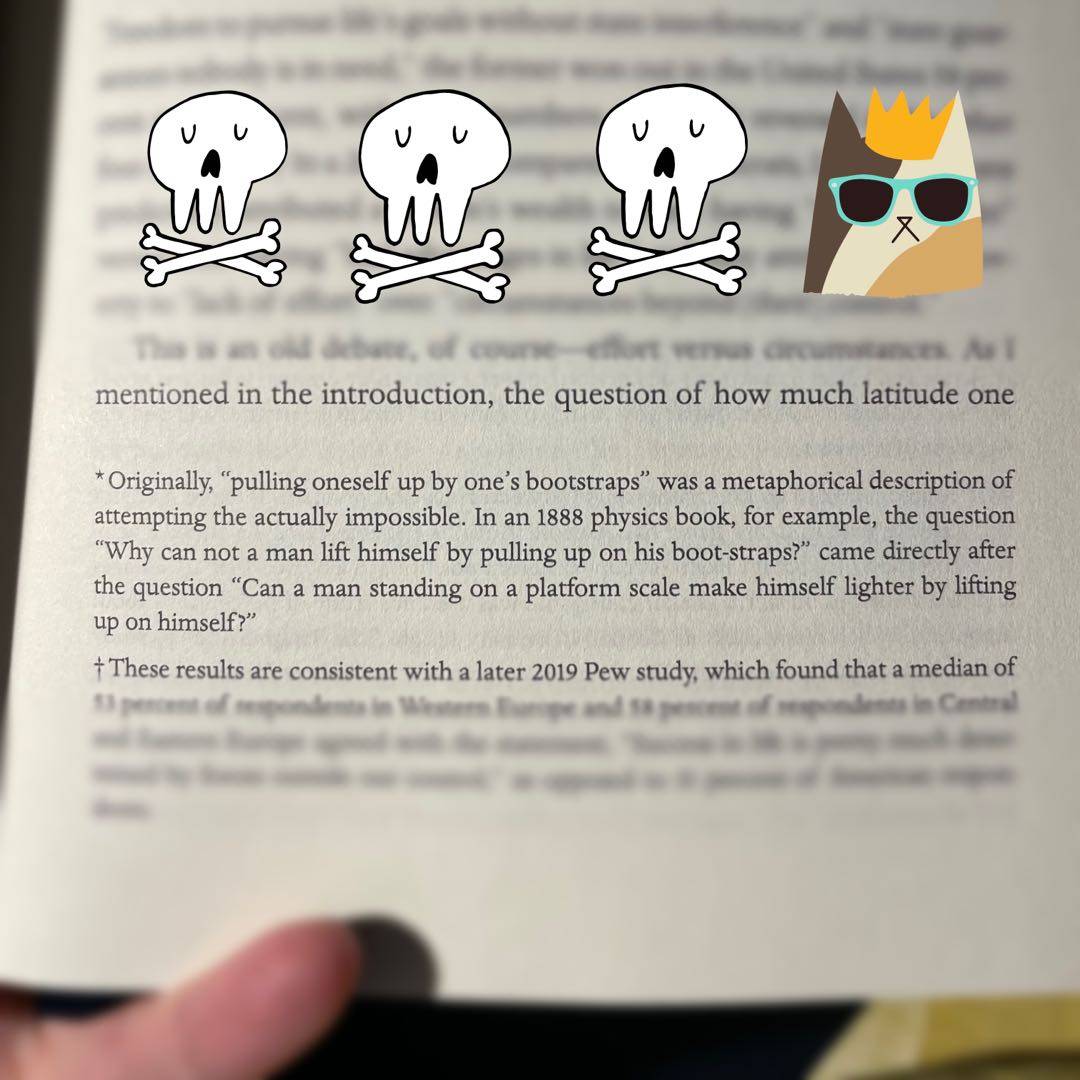
“Originally, ‘pulling oneself up by one‘s bootstraps‘ was a metaphorical description of attempting the actually impossible.”
🤯🤯🤯

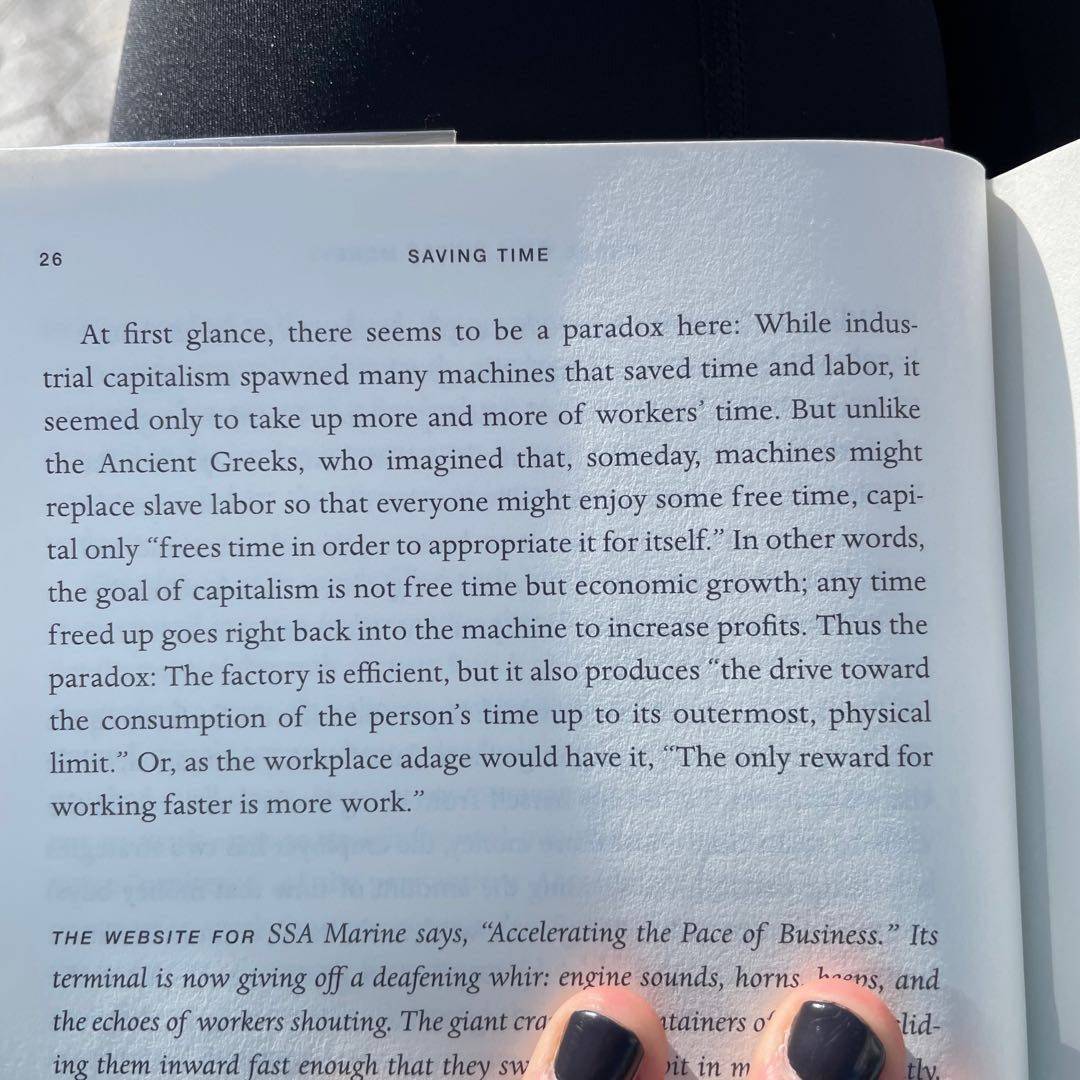
“The only reward for working faster is more work”
👎👎👎

I started “How to Do Nothing” in this same place almost exactly three years ago.

Well that is quite the endorsement. Onto the TBR it goes!