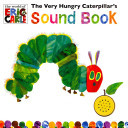
The Very Hungry Caterpillar's Sound Book |


“He was a beautiful butterfly!“

The Very Hungry Caterpillar can be used in preschool and early elementary classrooms to teach counting, days of the week, food groups, and life cycles.
The Very Hungry Caterpillar can be used in preschool and early elementary classrooms to teach counting, days of the week, food groups, and life cycles.
 pick
pickPicturebook (1969): The Very Hungry Caterpillar by Eric Carle features iconic, colorful collage illustrations that bring the story to life. The bright, textured images clearly show the foods the caterpillar eats and its transformation into a butterfly. Carle‘s playful use of size, shape, and holes in the pages adds a tactile, engaging element that captivates young readers and supports early literacy and counting skills.
I would use this with younger children. The Very Hungry Caterpillar can teach days of the week, counting, and healthy eating. Use it for sequencing activities, chart the foods eaten, explore butterfly life cycles, and engage children in interactive reading by having them “feed” a paper caterpillar. It's colorful illustrations also support visual literacy and discussion of textures and colors.
pickPicture book (1969 & 1867) The illustrations are iconic for their vibrant, textured collage art. He used hand-painted tissue papers, cut and layered to create bold, colorful images that captivate young readers. The tactile quality of the artwork invites children to engage visually and physically, enhancing their connection to the story. This distinctive style has become a hallmark of Carle's work, contributing to the book's enduring popularity.
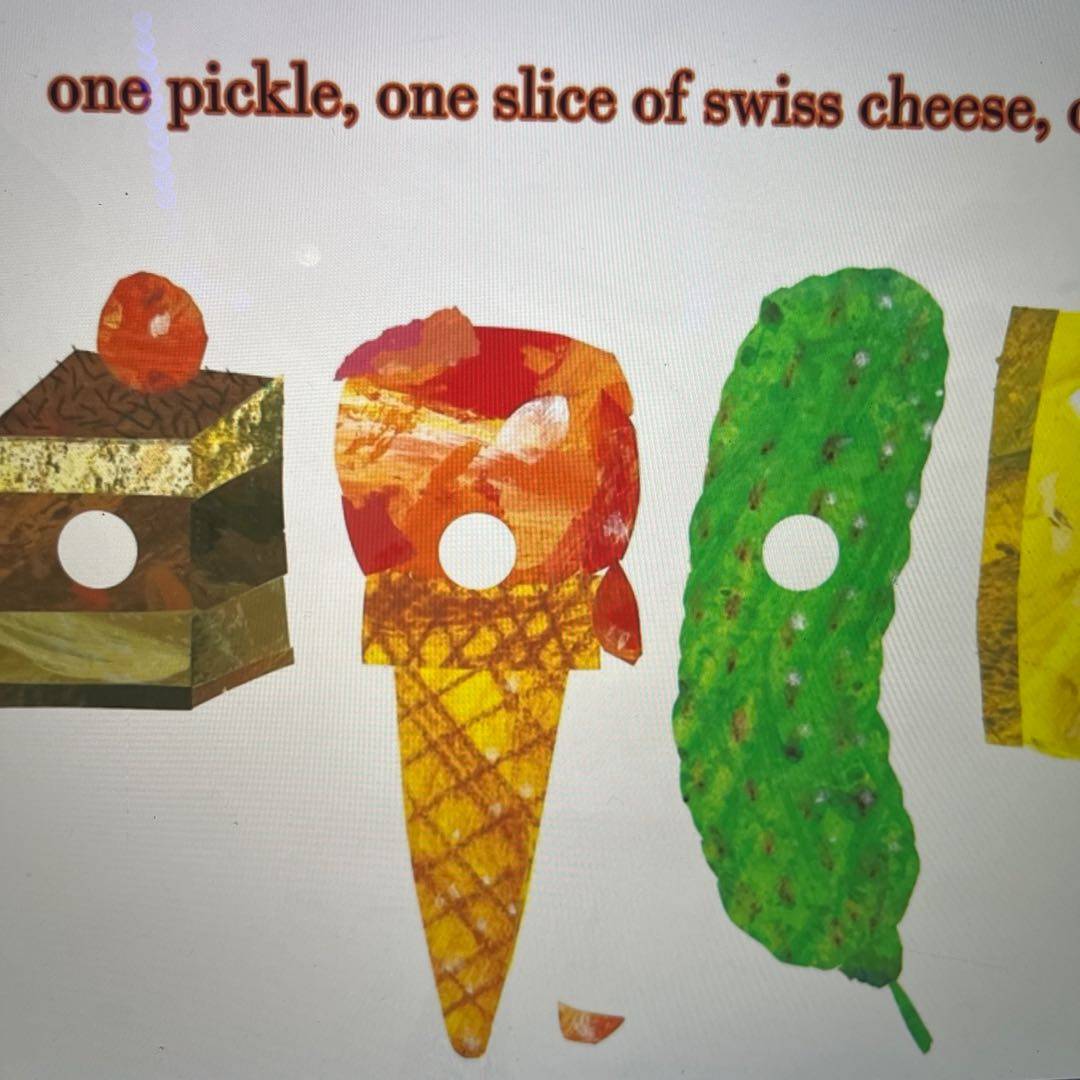
“On Saturday, he ate through one piece of cake, one ice-cream cone, one pickle, one slice of swiss cheese, one slice of salami, one lollipop, on piece of cherry pie, and one slice of watermelon. That night he had a stomach ache.“
This book is great for the classroom because it teaches counting, days of the week, and the lifecycle of a butterfly. I think children would be very engaged with this book.
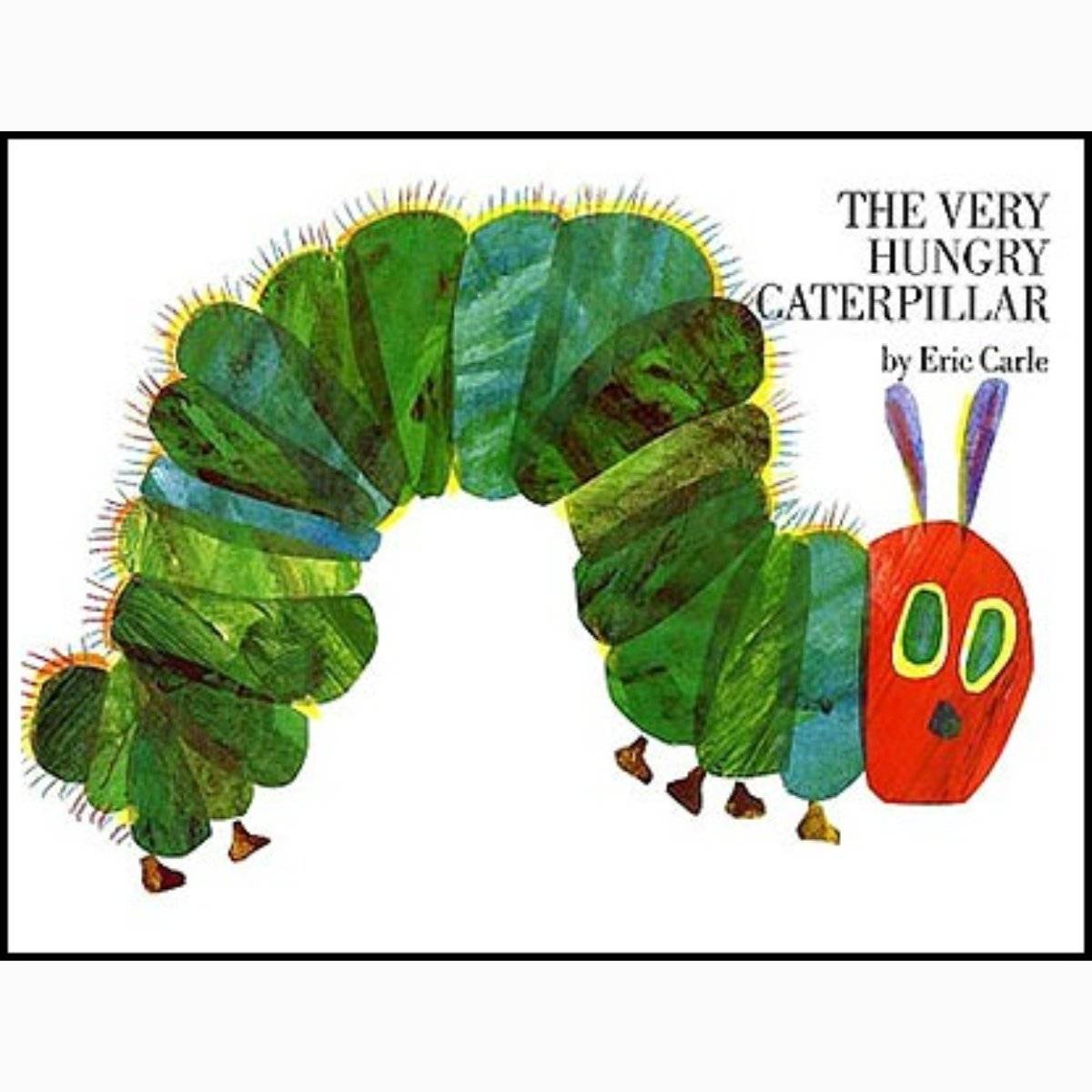 pick
pickPicture book! The very hungry catepillar published in 1969 uses bright colors, simple shapes, and textured collages to show the catepillar's journey. The white space and die-cut holes guide the eye and make the story fun and easy to follow.
“On Saturday, he ate through one piece of chocolate cake, one ice-cream cone, one pickle, one slice of Swiss cheese, one slice of salami, one lollipop, one piece of cherry pie, one sausage, one cupcake, and one slice of watermelon. That night he had a stomach ache.“
The Very Hungry Caterpillar is great for the classroom because it teaches counting, days of the week, and the life cycle of a butterfly. The bright, simple illustrations and interactive holes keep children engaged while supporting early literacy and math skills.
pickIn The Very Hungry Caterpillar, Eric Carle published in 1969 uses bright colors, simple shapes, and textured collages to show the caterpillar‘s journey. The white space and die-cut holes guide the eye and make the story fun, easy to follow, and interactive for young readers.
This book is such a classic! Its simple, repetitive text also supports early literacy skills and helps young learners practice prediction and recall.
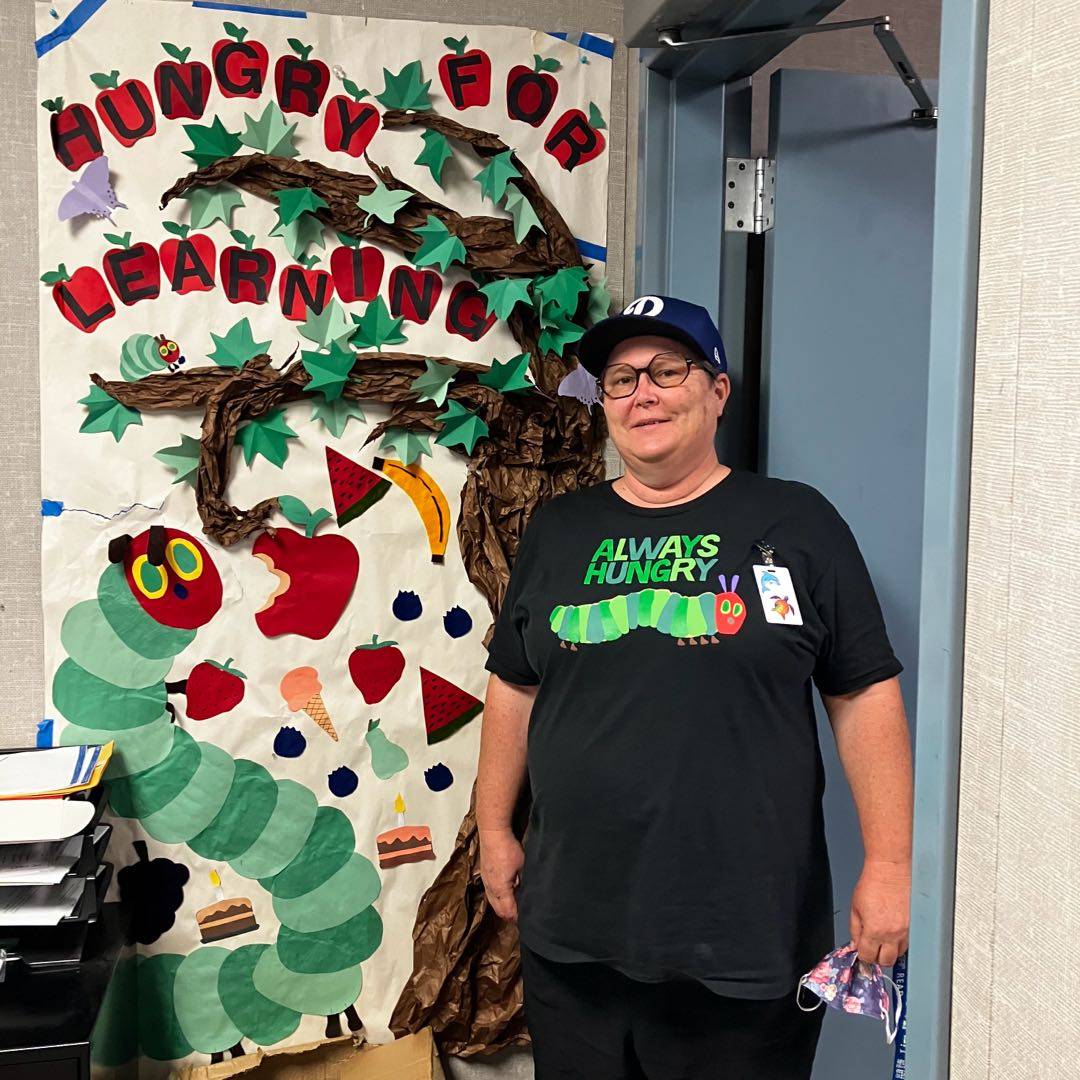
I don‘t care that my kids are almost all grown, I‘ll always love Eric Carle. :) 🐛 📚 🥰
#wedonotcarewednesdays
#wdncw

What we did at work this week. And by we, I mean not me; because, I have no crafting talent. I made the grapes and punched the leaves. Oh, and offered my van for transport to the school sites.
#classroomdecorating
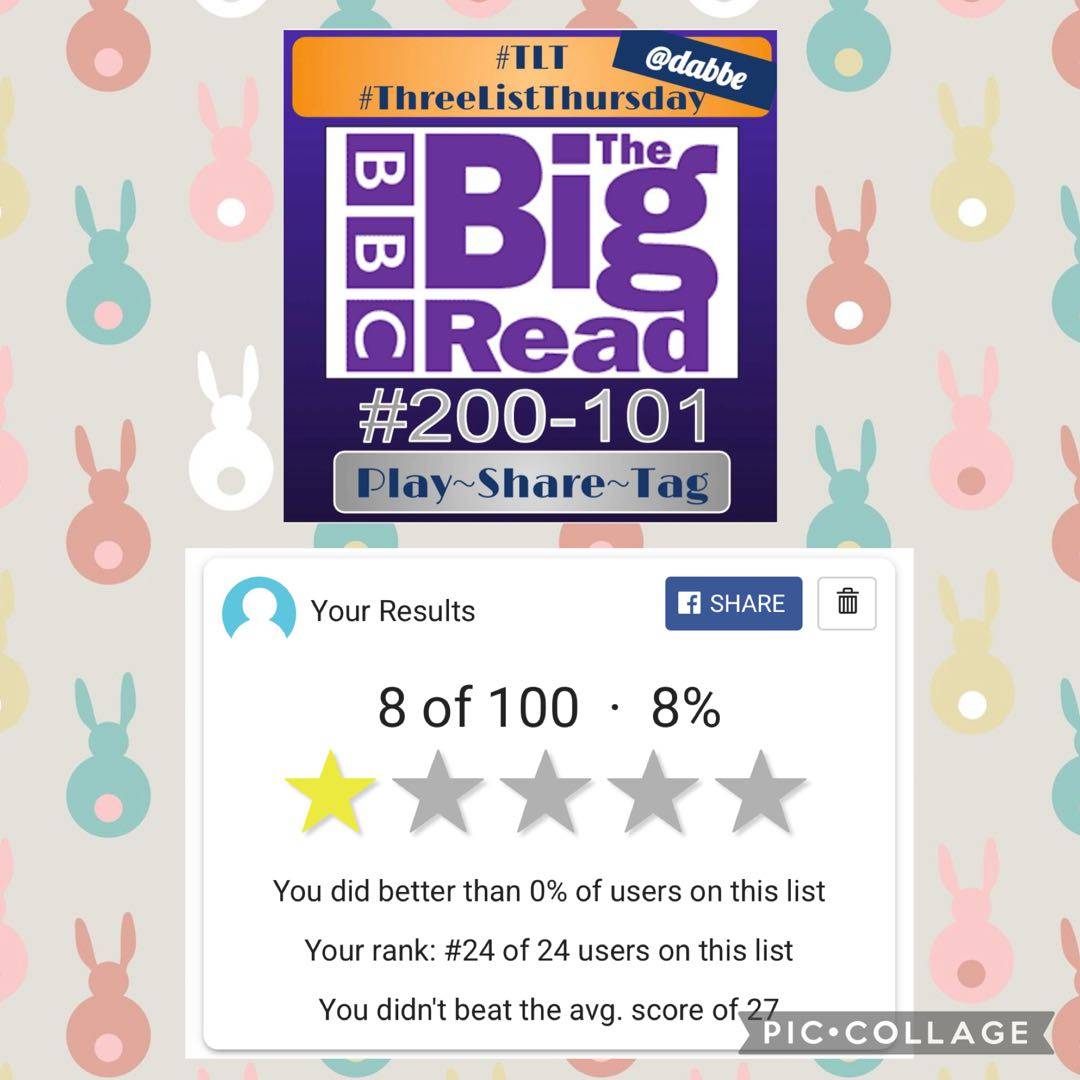
1. The Very Hungry Caterpillar - I read this book when I was a little girl.
2. The Little Prince - I liked this one.
3. Frankenstein - This book was okay.
4. Moby Dick - I read the children‘s version of this book instead of the regular version but I liked this book.
5. IT - I liked this one.
6. The Hound Of The Baskervilles - I liked this one.
7. Les Miserables - I liked this one.
8. Dracula - This book was okay.
#threelistthursday
This story is an incredible teaching tool when talking about concepts of print and days of the week
“On monday he ate through one apple. But he was still very hungry.”
pickThis story is a classic by the legendary artist Eric Carle. It follows a caterpillar who weaves his way seemingly in and out of the book through many different foods. The illustrations are beautiful and fun to observe as well as the flow of the book.
“But he was still hungry.“ This phrase is repeated throughout the book, engaging young readers. It shows the caterpillar's constant hunger as it grows, providing a fun and rhythmic element to the story.
I would use this book to teach the life cycle of the butterfly, learning days of the week, or as a math activity.
pickThe Very Hungry Caterpillar is a children's book written and illustrated by Eric Carle, first published in 1969. It tells the story of a small caterpillar that eats his way through many foods before eventually turns into a butterfly. The book has very vibrant, engaging illustrations and it helps children learn about counting, the days of the week, and the life cycle of a butterfly.
“but he was still hungry.“
it captures the caterpillar's insatiable appetite, which mirrors the growth and curiosity of young children.
watching a child devour a snack, just like the caterpillar in the story.
pickthis classic story of a caterpillar eating his way through a variety of foods before becoming a butterfly is beloved for its repetitive, rhythmic language and vibrant illustrations.
I love the illustrations and vibrant colors shown in this book.
pickThis book is vibrant and engaging with pages of different sizes, getting bigger as the book progresses. It is great for young children to become engaged in the storyline as they learn the life cycle of a butterfly.
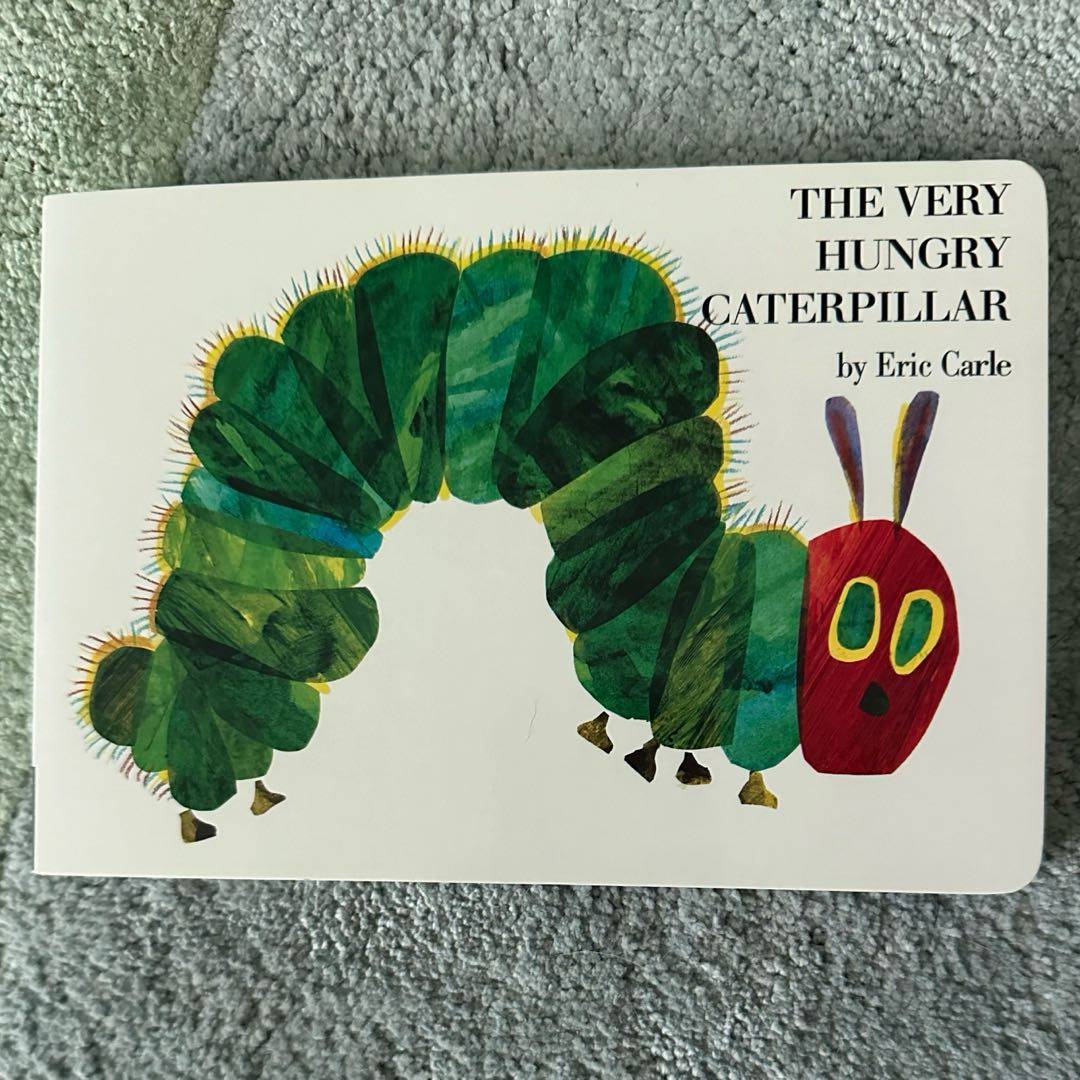 pick
pickThere was so much to learn in this book. And it helped me understand where butterflies came from. So glad Lea shared this one with me as we get our nursery library set up.
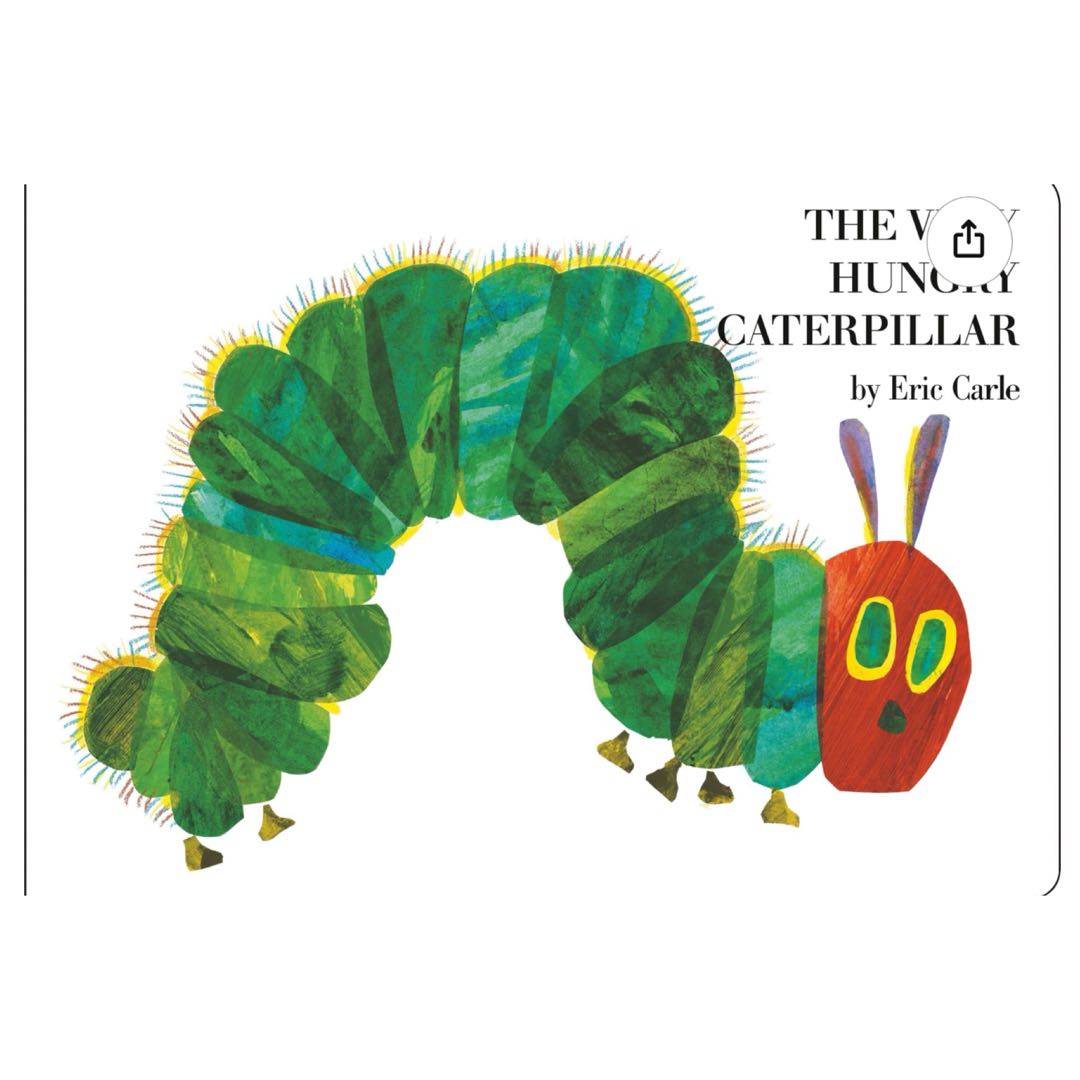
This book can be used to teach about metamorphosis, sequencing, and basic counting, making it an engaging resource for science and math lessons
pickEric Carle's The Very Hungry Caterpillar is a delightful and educational story about transformation and the days of the week. Through the vibrant illustrations, it takes children on a journey from caterpillar to butterfly. The book is a perfect choice for teaching about life cycles
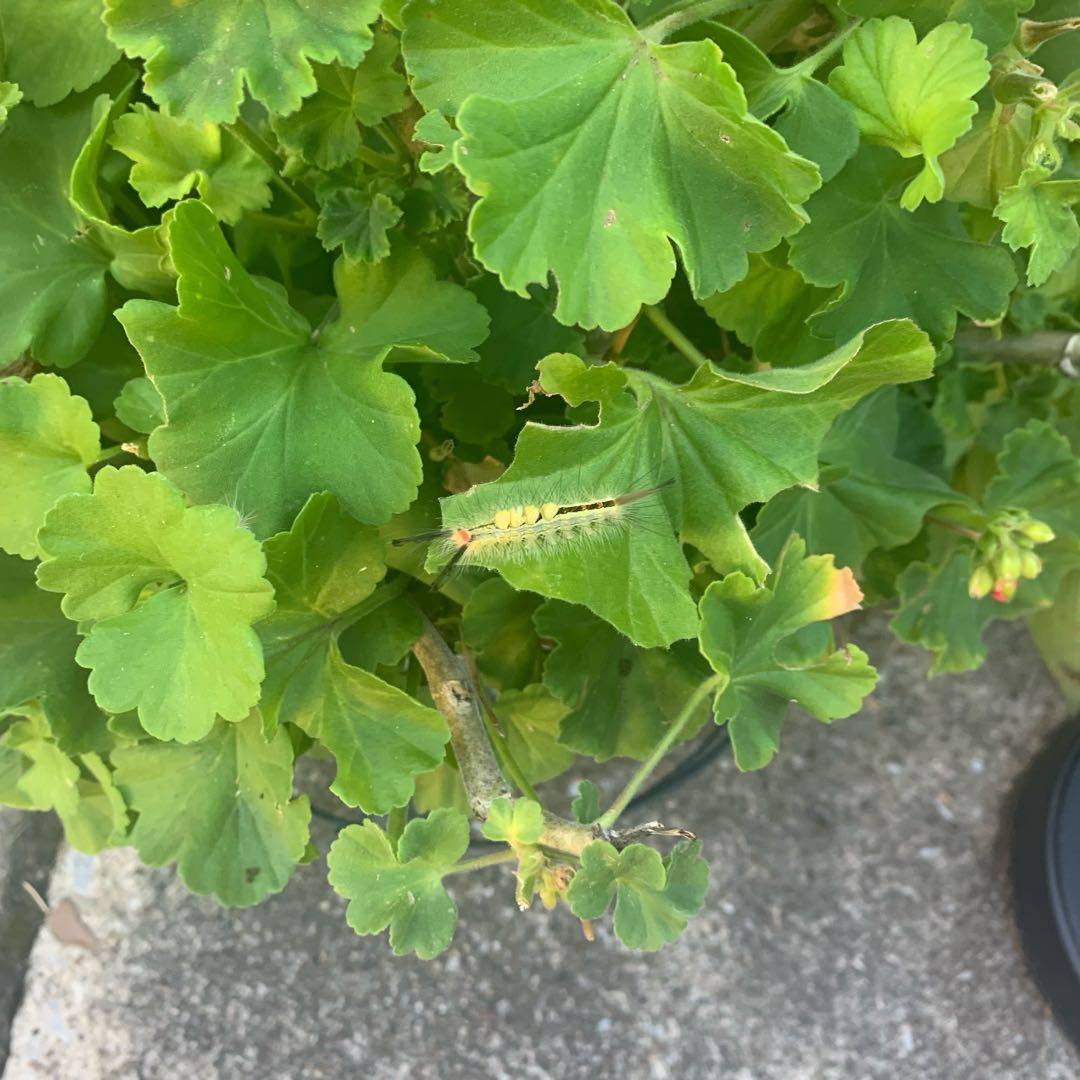
Does anyone know this eastern US caterpillar snacking on our geraniums?? We can‘t find it on google. 🤔🐛🤔
So life is conspiring to make this spoonie really tired, but I have finished a few books, and they are three of the best books I‘ve read this month. (Two 4.5⭐️ and a 5⭐️!) And while I‘m will to dash off an okay review for an okay book, I‘d really like to do these justice. 🤞🏻 I get to them tonight or tomorrow morning.
 pick
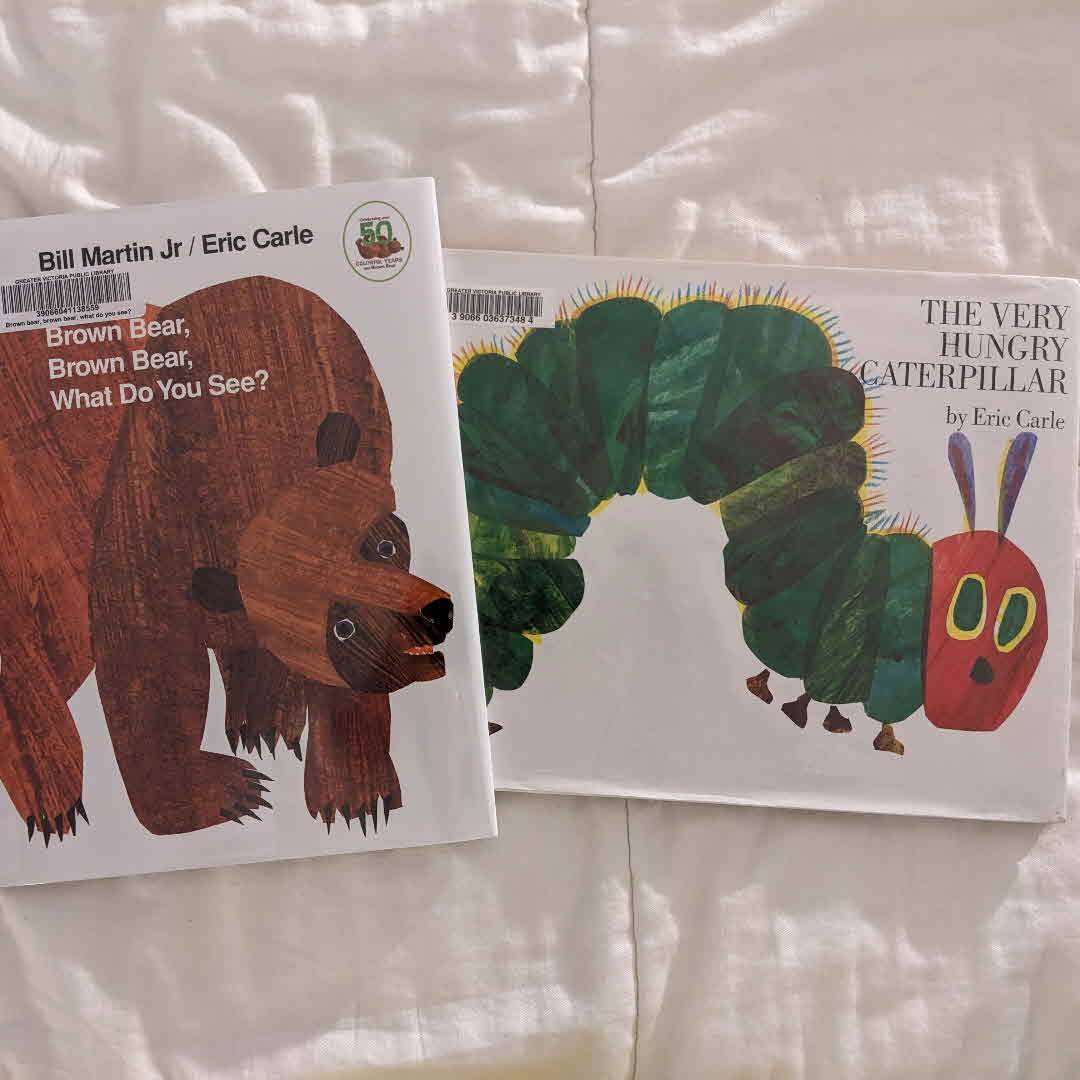
pickThe Very Hungry Caterpillar is a feast for the eyes, and I enjoy him merrily munching away in full technicolour. I feel like Brown Bear, Brown Bear, What Do You See? is the prequel to The Artist Who Painted A Blue Horse, (i.e. rainbow menagerie) but that's probably adult reading order bias. Still completely in love with Eric Carle's enthusiastically colourful style.
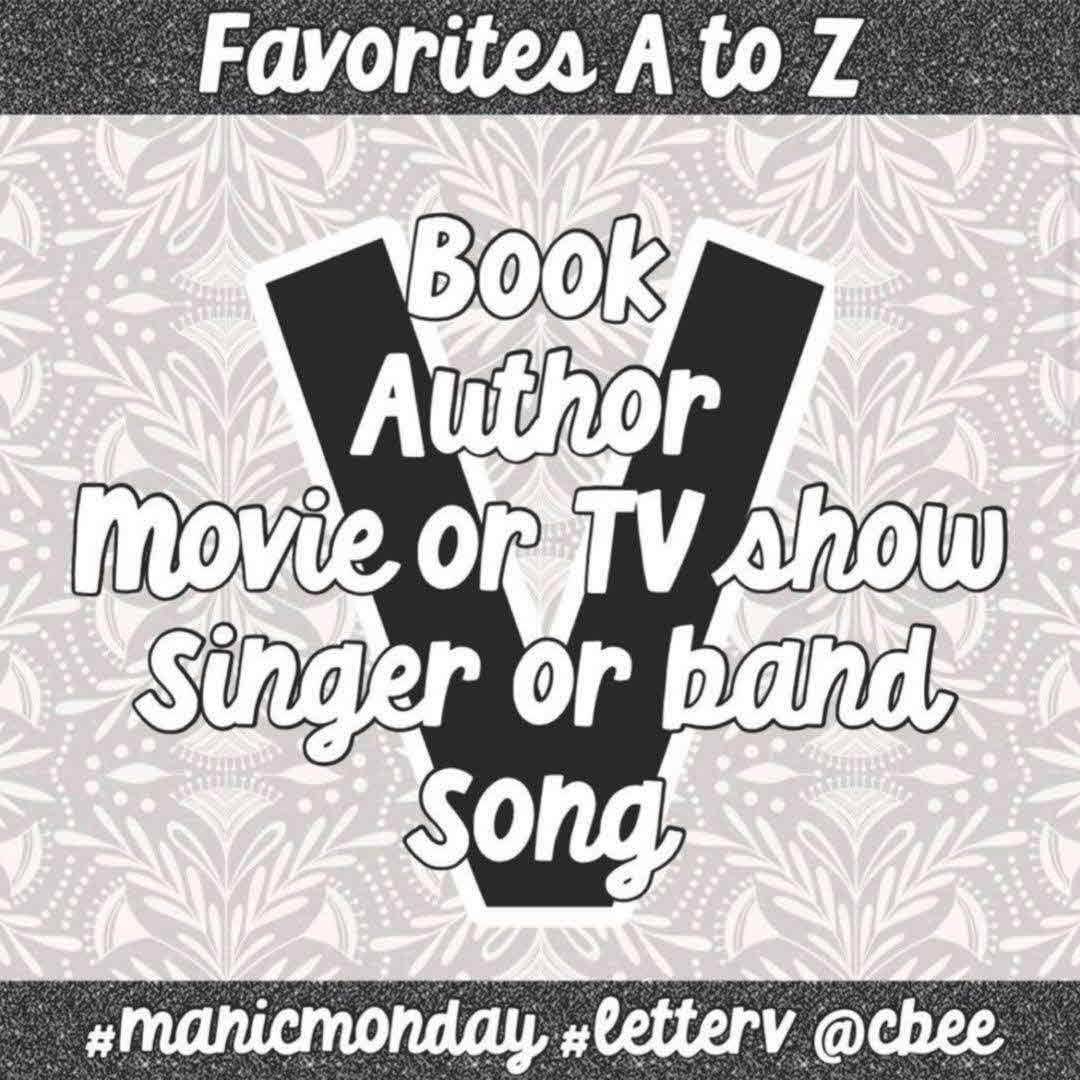
📖 The Very Hungry Caterpillar, V for Vendetta, The Vor Game, Venus in Fur
✍️ Jules Verne, Catherynne M. Valente
📺 Veronica Mars
🎤 Van Morrison
🎶 Vocal (Madrugada), Valentine's Day (David Bowie), Virtual Insanity (Jamiroquai), Voodoo Child (Jimi Hendrix)
#ManicMonday (It really was manic, hence the ManicMonday on a Tuesday) #LetterV @CBee
“On Thursday he ate through four strawberries, but he was still hungry”
pickOne of my favorites from my childhood. The illustrations bring such attention to the book and it is so recognizable. It shows the kids how eating food helps you grow!