 pick
pickWhen writers I admire posted about the death of Alice Wong, I looked her up and decided to read this collection she edited. These pieces are vital and illuminating, and I will seek out more by several contributors.
7 likes
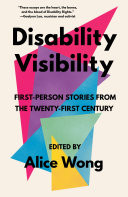
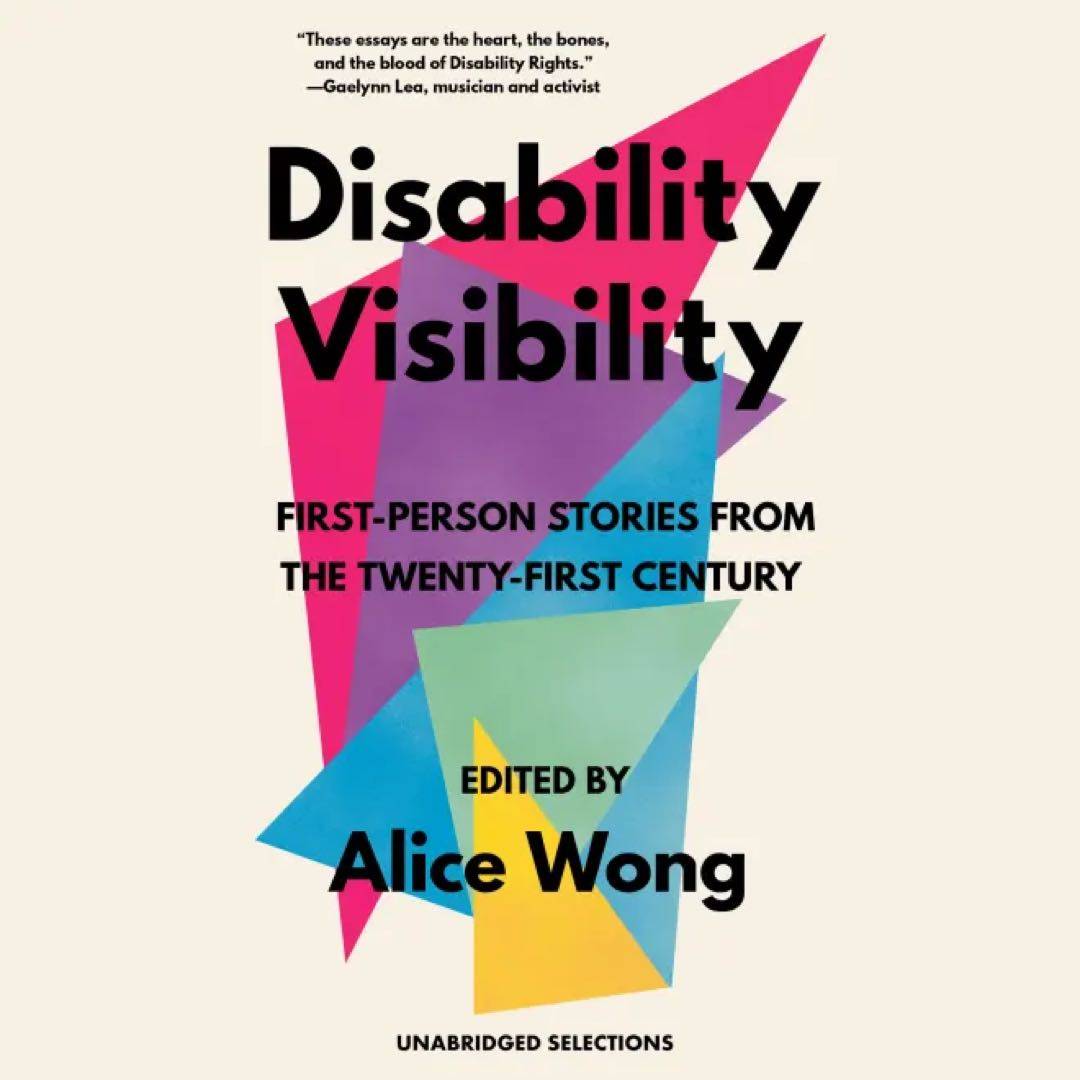
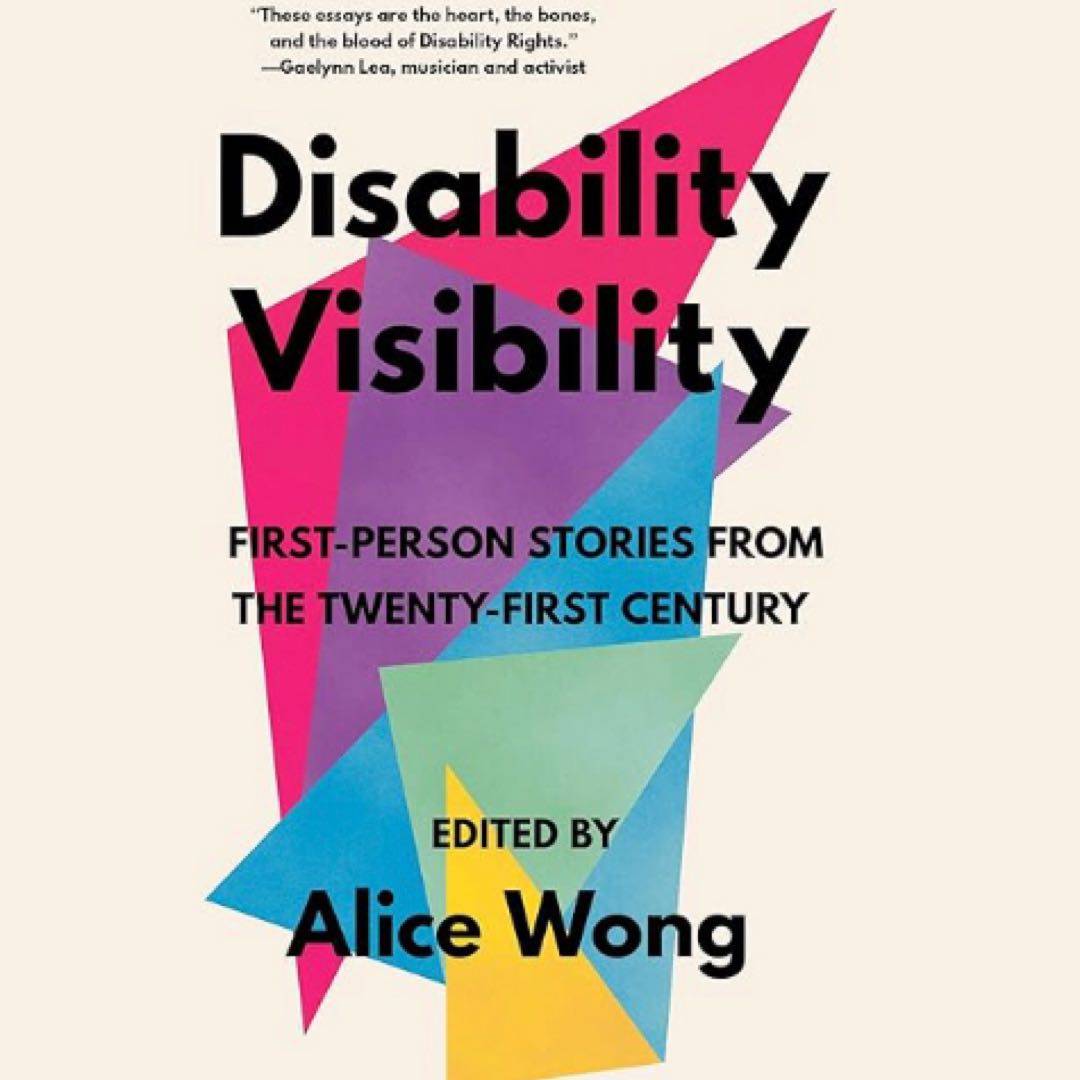
 Disability Visibility: First-Person Stories from the Twenty-First Century |


 pick
pickWhen writers I admire posted about the death of Alice Wong, I looked her up and decided to read this collection she edited. These pieces are vital and illuminating, and I will seek out more by several contributors.
 pick
pickWas so saddened by news of the passing of the incredible Alice Wong. This book is such an important read by and about disabled folks and features an impressive range of voices and perspectives. I plan to finally read Wong‘s memoir in the coming days. Again, such a loss to humanity, but what a legacy she leaves behind.
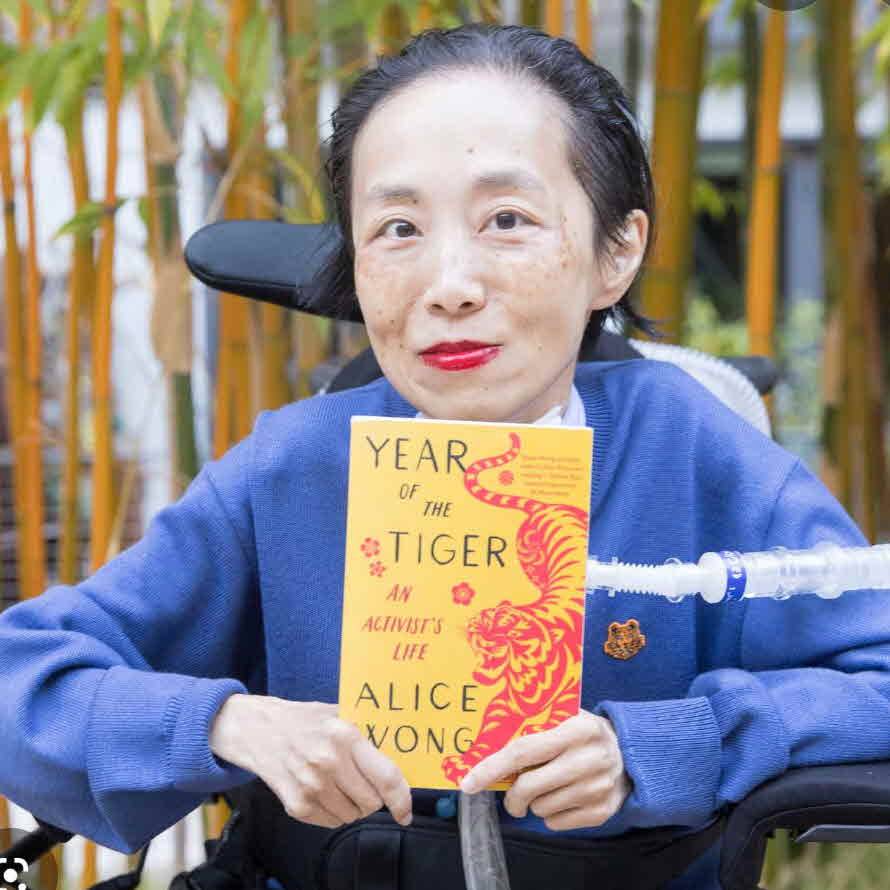
The world has lost a great one.
It is strange how you don't know someone but you might feel a connection. On Thursday I was thinking "I haven't seen posts from Alice Wong in a while" and yesterday I started a book that was heavily influenced by her (The Future Is Disabled) and today I wake up to the news that she passed away.
A sad day for the disabled community, and a sad day for all of us to lose her voice.
 pick
pick4.5 ⭐️
Having read 2 of 3 of Alice Wongs‘ books this year, I am in agreement with my StoryGraph app so far, she will be my most read author!!
As I read through her books I have been living in a continuous “10/10 highly recommend, this MUST be required reading no matter who you are, disabled or temporarily abled,” moment.
My complaints were about the audiobook companion, formatting and recording issues that made the listen feel incomplete.
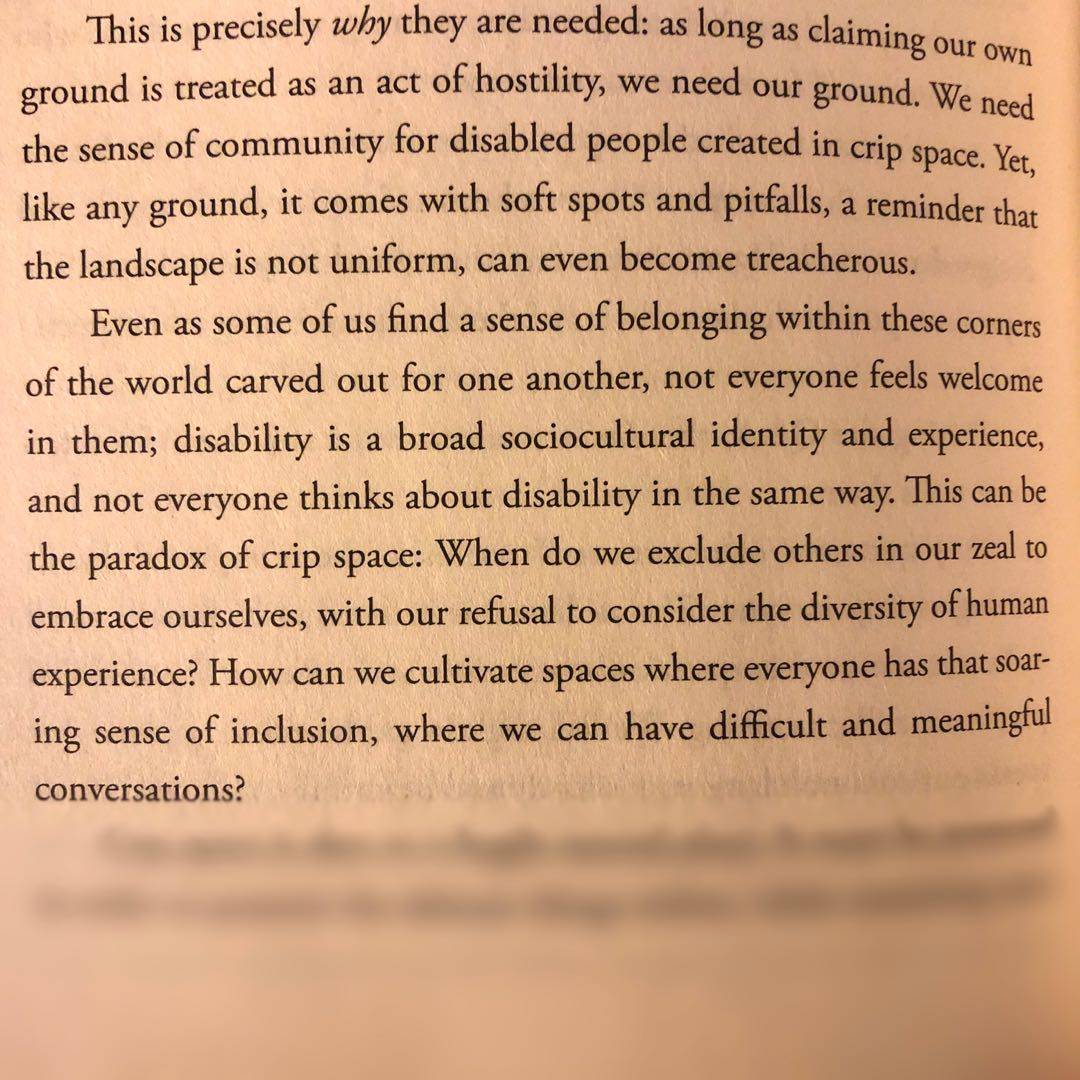
Crip space is akin to a fragile natural place. It must be protected in order to preserve the delicate things within, while remaining open to change with the seasons and the passage of time. That protection sometimes requires sacrifice or challenge, awkward questions, but that makes it no less vital. Because everyone deserves the shelter and embrace of Crip space, to find their people and set down roots in a place they can call home.
It is very rare, as a disabled person, that I have an intense sense of belonging, of being not just tolerated or included in a space, but actively owning it; “This space,” I whisper to myself, “is for me”. Next to me, I sense my friend has the same electrified feeling. This space is for us.
“…..I know that when I reflect on the meaning of a “good life”, an opportunity to contribute is as important as receiving the support one needs.”
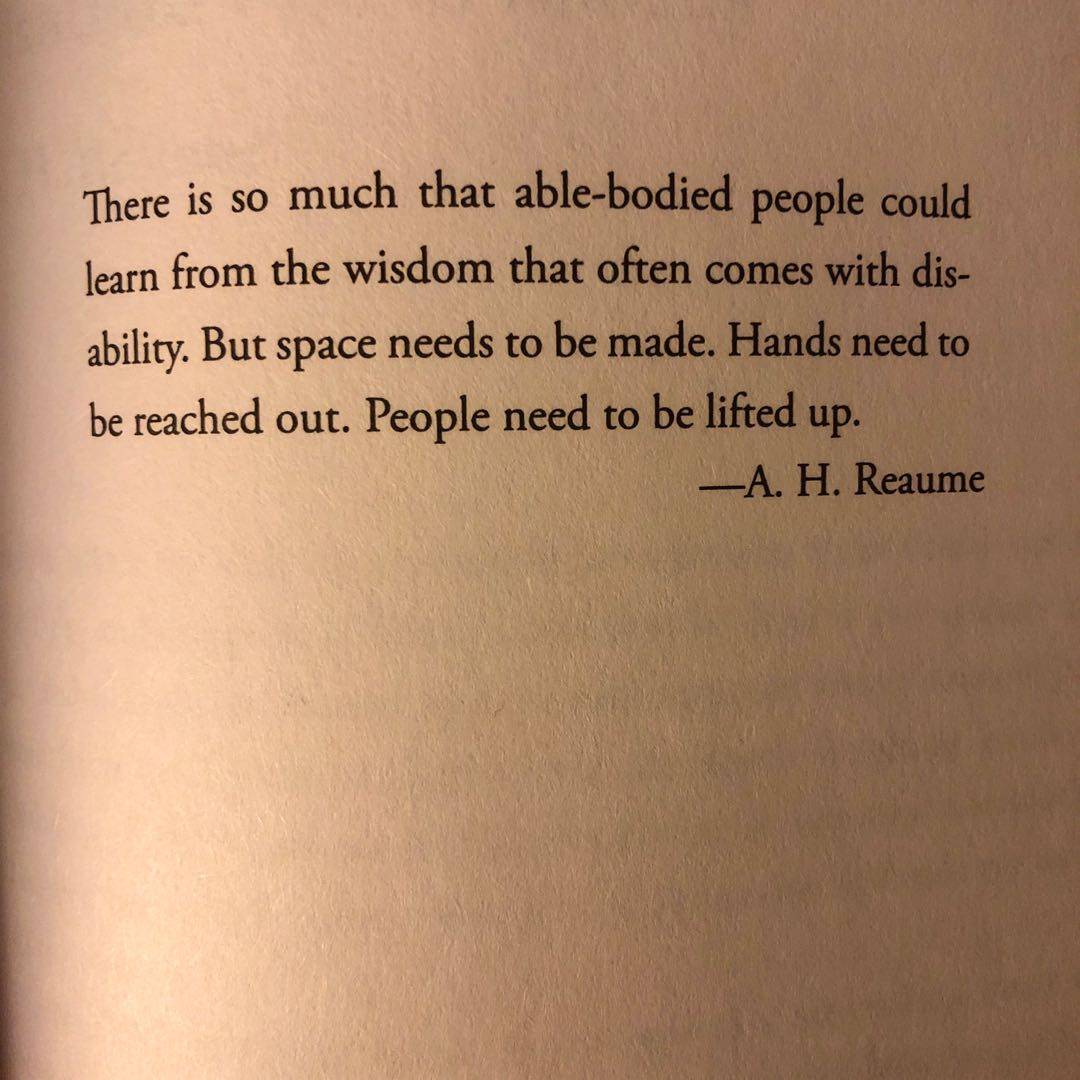
We need more disabled voices not just because disabled people are brilliant and talented and have so much to offer and say but also because disabled people face an incredible amount of dehumanizing
ableism that shapes and destroys their lives. And one of the best ways to combat that is through stories.
Give them no option but to consider your humanity.
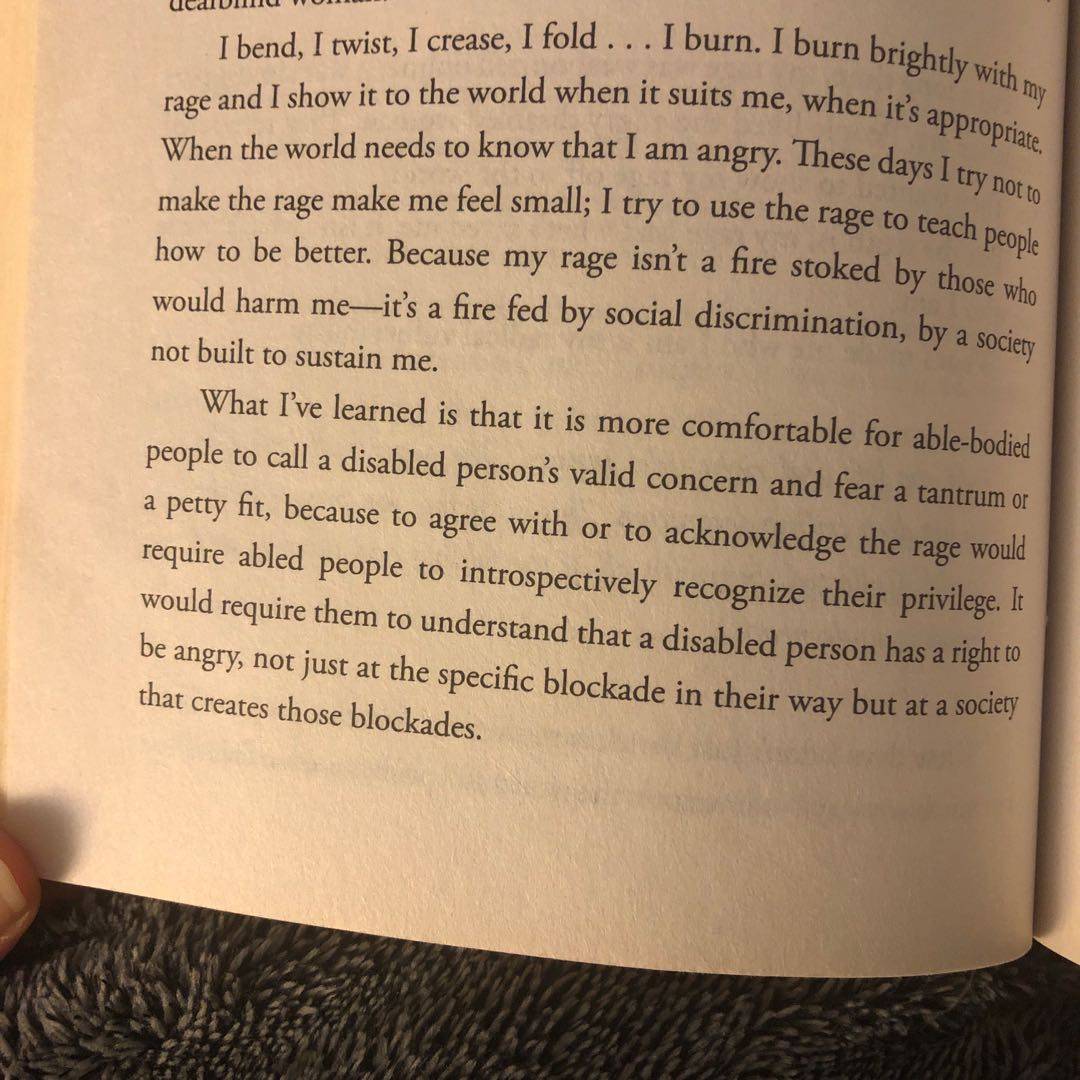
Say it louder for the people in the back!!
🗣️
(This entire chapter is full of golden nuggets of truth and wisdom, if you‘ve stacked this book from my posts of it so far, you‘ll probably want to capture and share each page of it like I have wanted to!)
My joy is my freedom-it allows me to live my life as I see fit. I won‘t leave this earth without the world knowing that I chose to live a life that made me happy, made me think, made me whole. I wont leave this earth without the world knowing that I chose to live.
When that doesn't work, we can remind ourselves that the absence of joy isn't permanent; it's just
the way life works sometimes. The reality of disability and joy means accepting that not every day is good but every day has openings for
small pockets of joy.
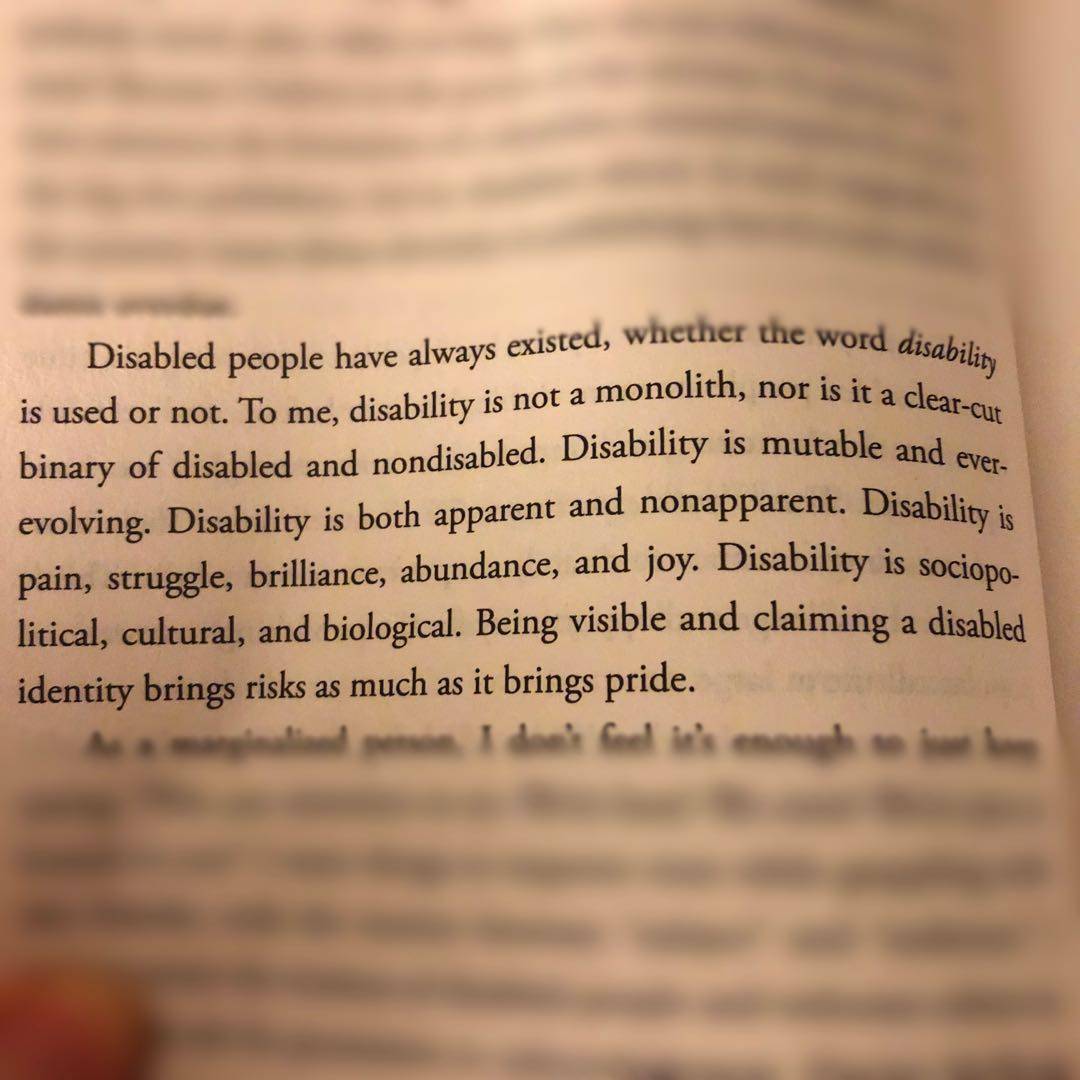
I may not find joy every day. Some days will just be hard, and I will simply exist, and that's okay, too. No one should have to be happy all the time- no one can be, with the ways in which life throws curveballs at us. On those days, it's important not to mourn the lack of joy but to remember how it feels, to remember that to feel at all is one of the greatest gifts we have in life.
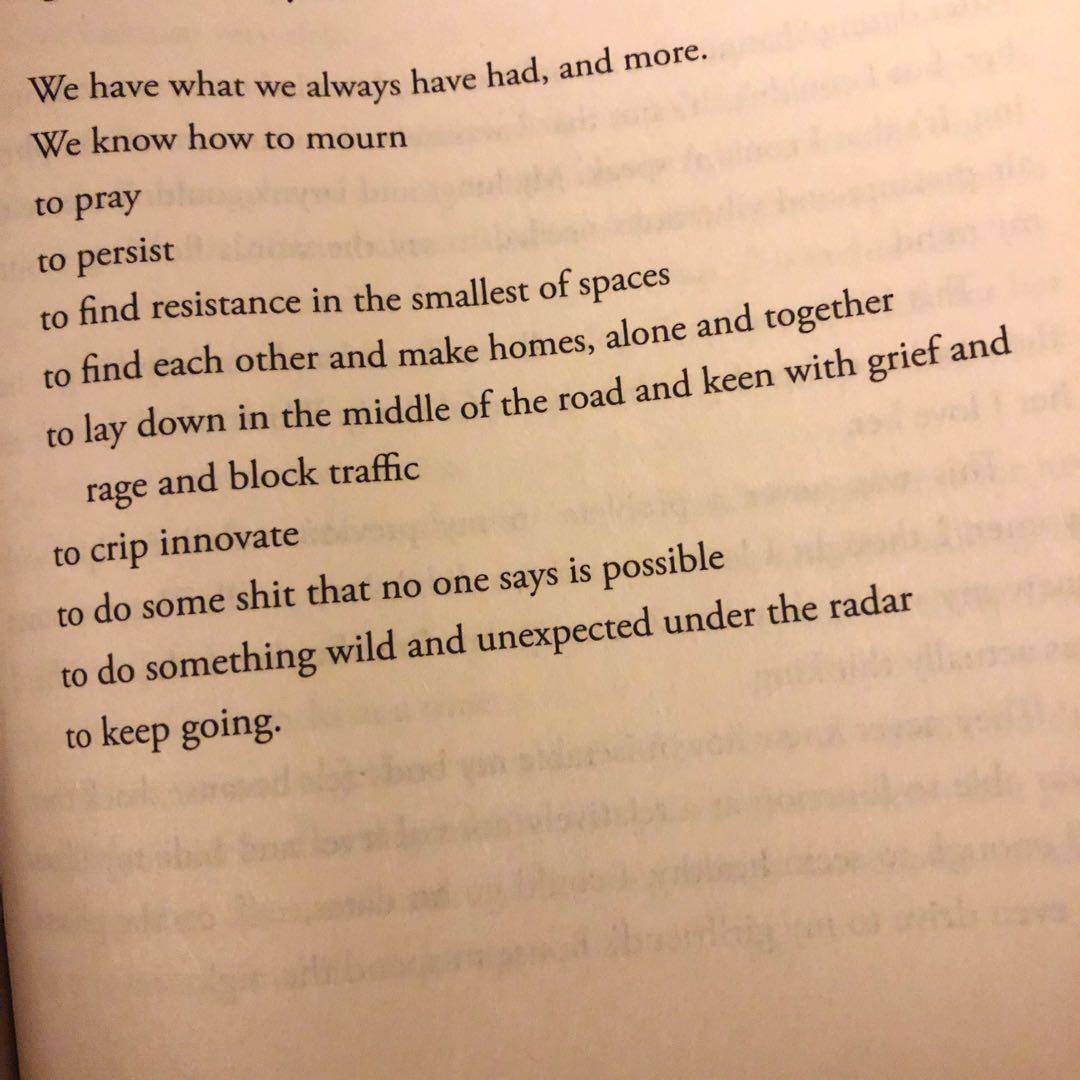
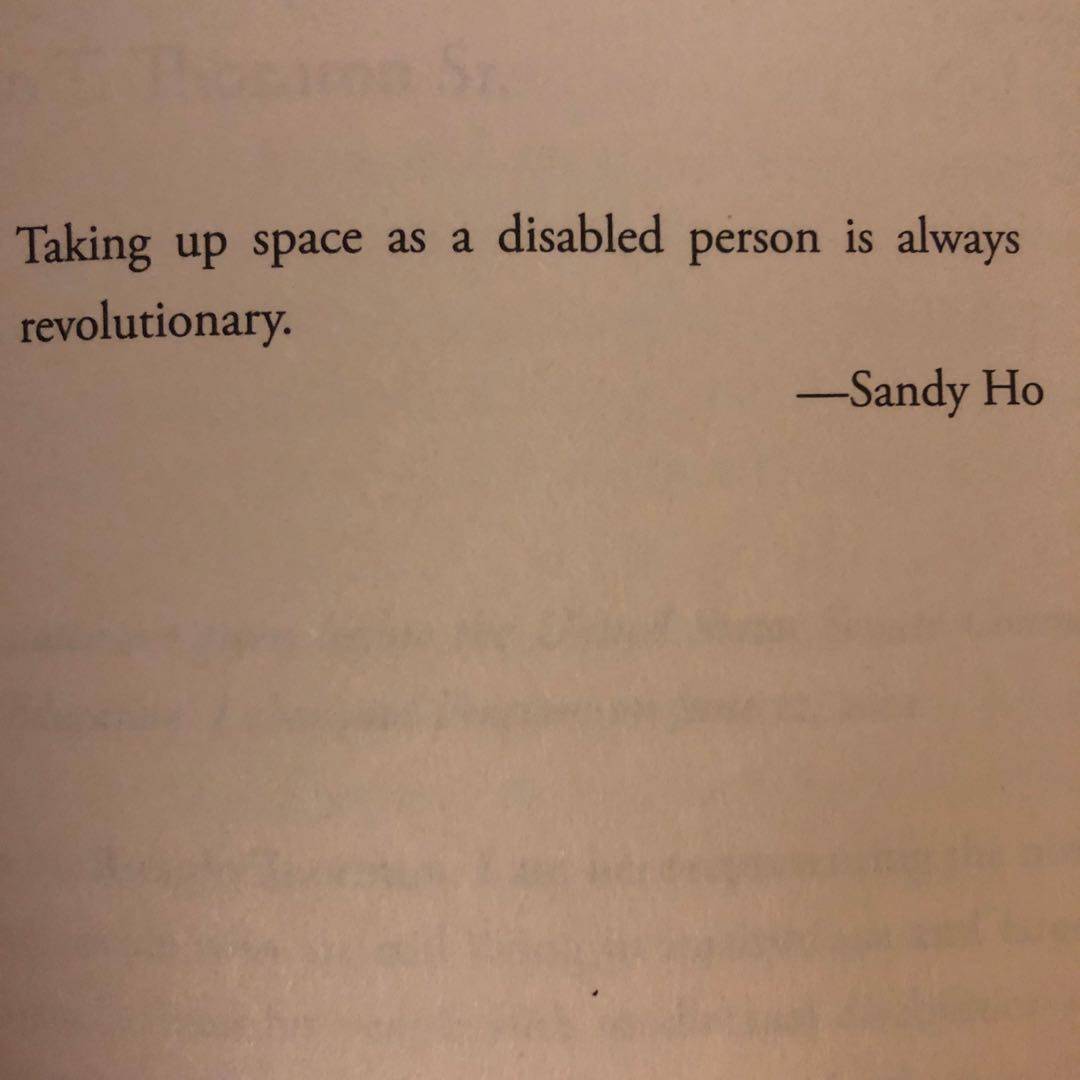
Taking up space as a disabled person is always revolutionary. To have a name is to be given the right to occupy space, but people like me don‘t move easily through our society, and more often than not survive along it‘s outermost edges.
It‘s important to have people believe in you and to expect that you‘re going to succeed. People need to have high expectations for people with disabilities because then they‘ll give them opportunities to learn and grow.
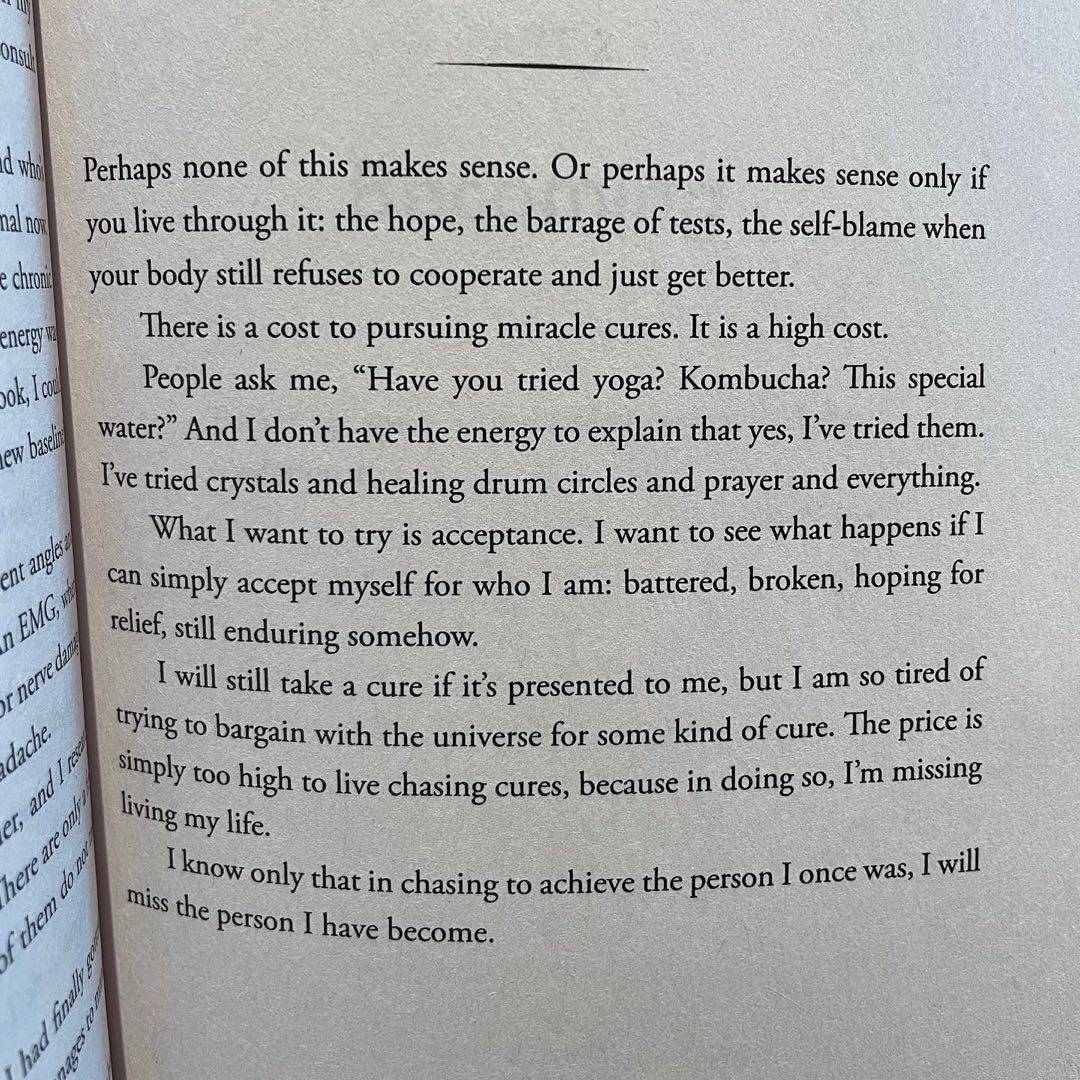
The price is simply too high to live chasing cures, because in doing so, I‘m missing living my life.
What I want to try is acceptance. I want to see what happens if I can simply accept myself for who I am: battered, broken, hoping for relief, still enduring somehow.
I have resolved that what would heal me most is making peace with my disability, to stop warring with my body. I want acceptance.
I come to church happy in the body I exist in; I come to church knowing that I am not a mistake waiting to be fixed. I do not come to church with a heart that is begging for the most special part of me to change. I come to church happy and whole. I come to church free.
I need some recs for a Book BY a Disabled Author.
I looked up the tagged but library doesn‘t have it on audio, & I‘m not sure I want to do physical book. This is for my library‘s book challenge. Just haven‘t found one I‘m interested in.
No romances—I‘ve been reading a lot lately, no authors that have ADHD or autism.
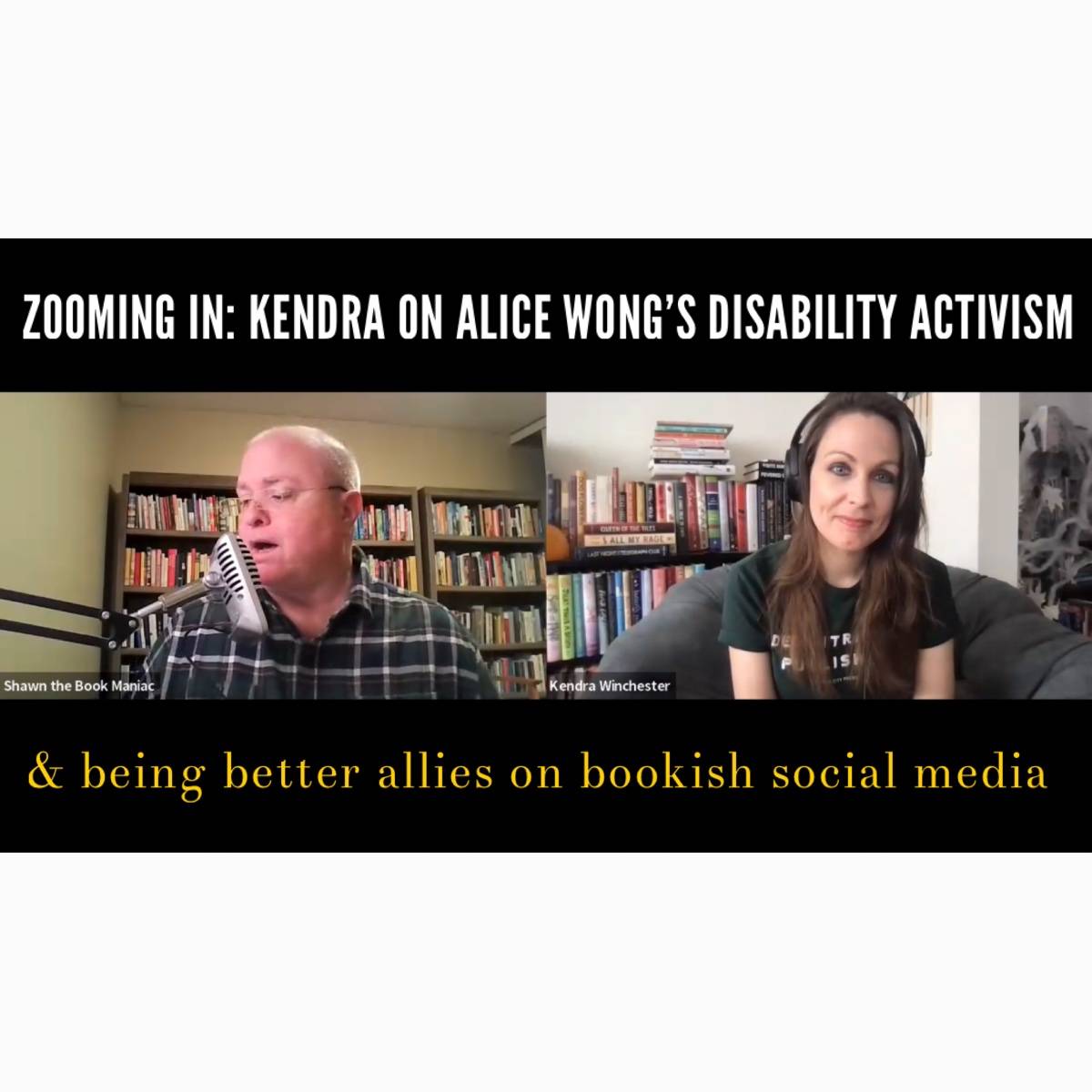
https://youtu.be/kf4nKOac9fA?si=nlIyIySZEYiiFhJA
Disabled Authors Deserve, and Demand, More by Alice Wong: https://www.publishersweekly.com/pw/by-topic/columns-and-blogs/soapbox/article/9...
A Disability Activist is Asked to Change Her Speech by Boston University Her Response by Kristen Shahverdian and Samantha Lafrance: https://pen.org/a-disability-activist-is-asked-to-change-her-speech/
 pick
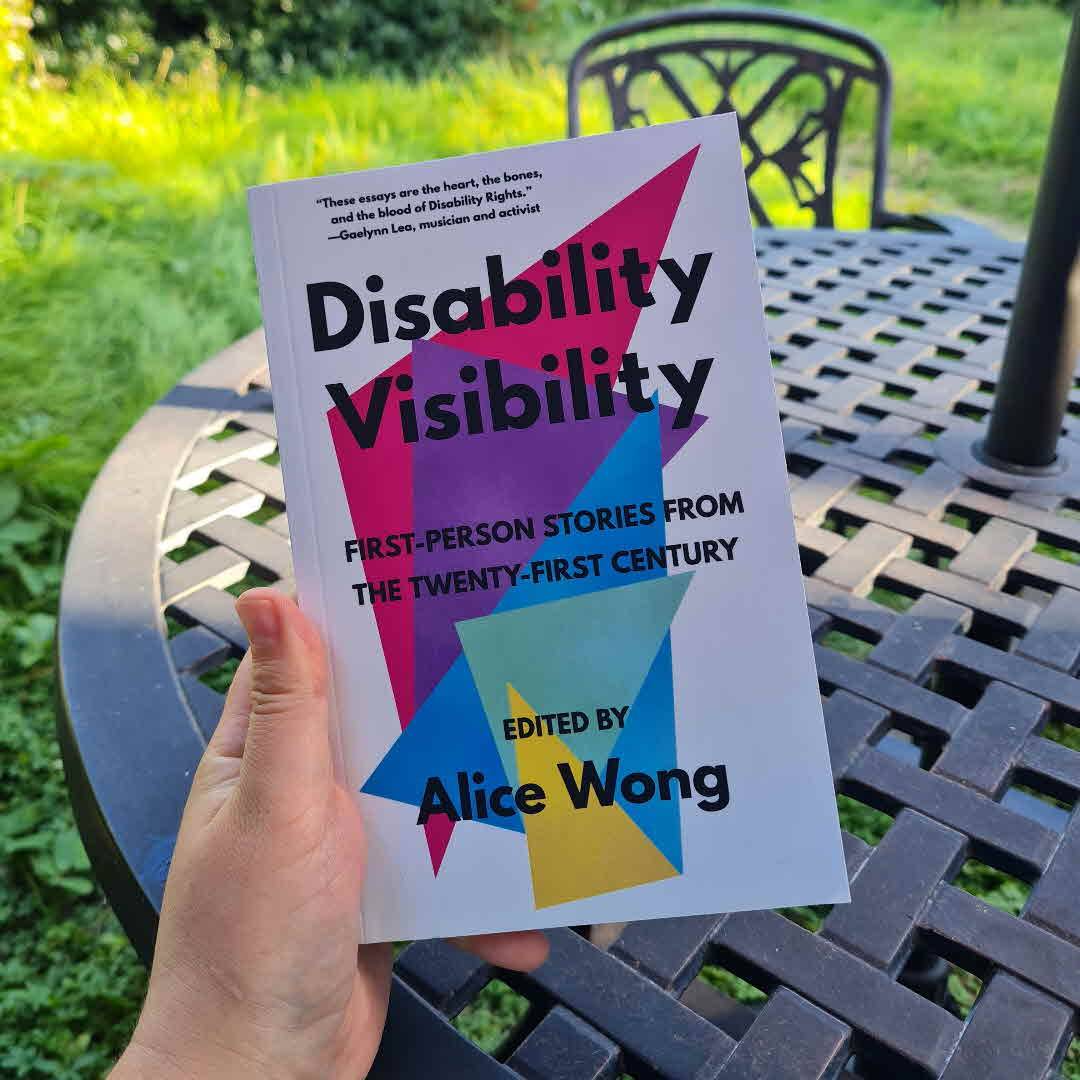
pickIf you want to read about disability rights, this book compiles an eclectic range of essays from many different voices.
Very important reading.
⭐️⭐️⭐️⭐️
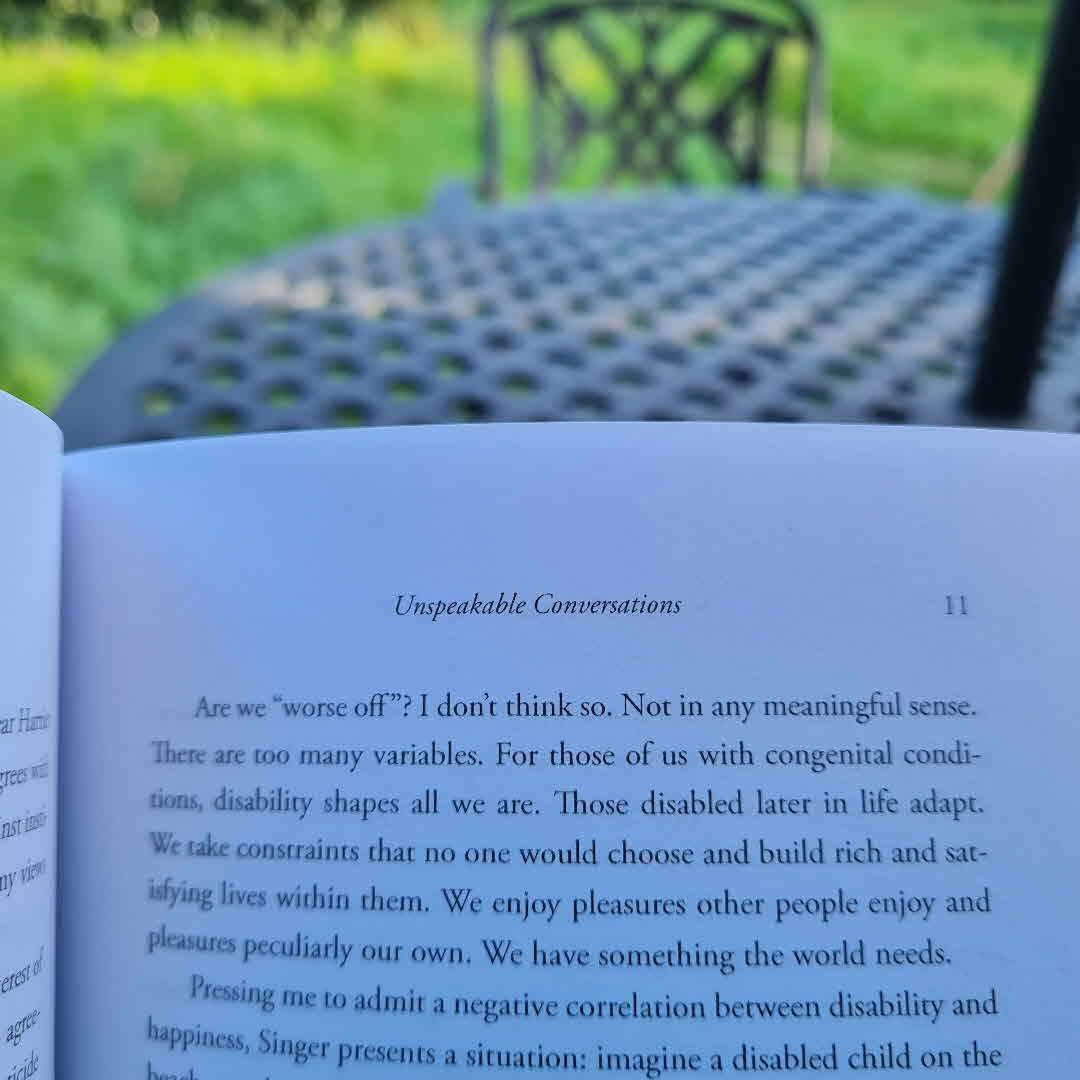
"Are we "worse off"? I don't think so. Not in any meaningful sense. There are too many variables. For those of us with congenital conditions, disability shapes all we are. Those disabled later in life adapt. We take constraints that no one would choose and build rich and satisfying lives within them. We enjoy pleasures other people enjoy and pleasures peculiarly our own. We have something the world needs." - Harriet McBryde Johnson
 pick
pickSuch a great book!
It‘s a collection of essays by people who have a wide range of disabilities and come from a wide range of backgrounds and races. The topics very from public transportation, healthcare, family, and everyday life with a disability.
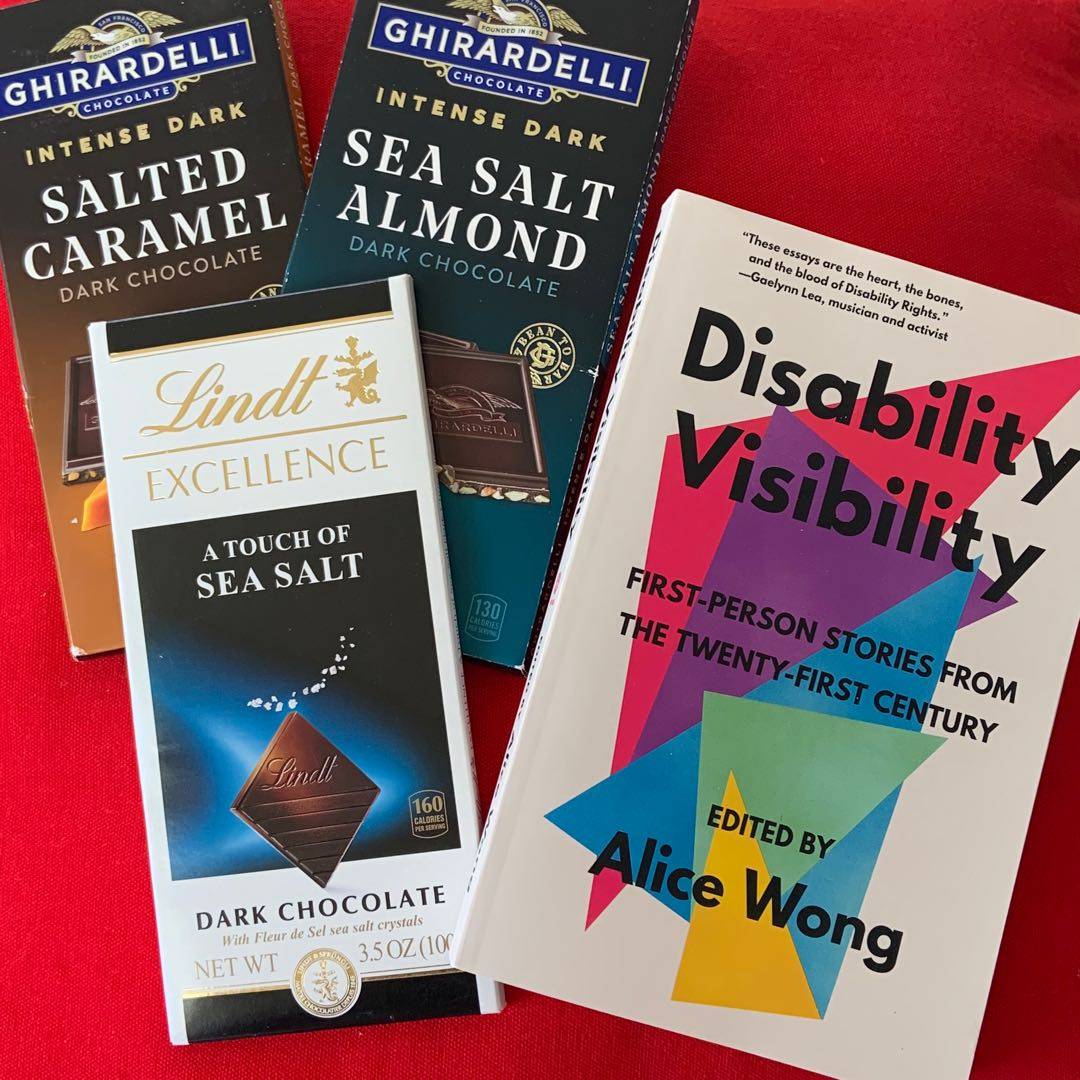
Thank you so very much for the lovely #JolabokaflodSwap gift, @AmandaBlaze ! I‘ve wanted to read this book for so long and figured I‘d need my own copy for highlighting - can‘t wait to start it! And 😋 to the chocolate in some of my favorite flavors. Thanks again.
Merry Christmas, all! ❤️🎄💚
pickAn excellent compilation of 37 essays and reflections on disability, from a wide variety of experiences and looking at different issues: intersections with other oppressions, accessibility, mutual solidarity, incarceration, and being othered in many ways. There‘s a powerful emphasis that I appreciated as a disabled person on telling our stories and speaking our truths for one another.#Nonfiction2022 #Marvelous
#SheSaid
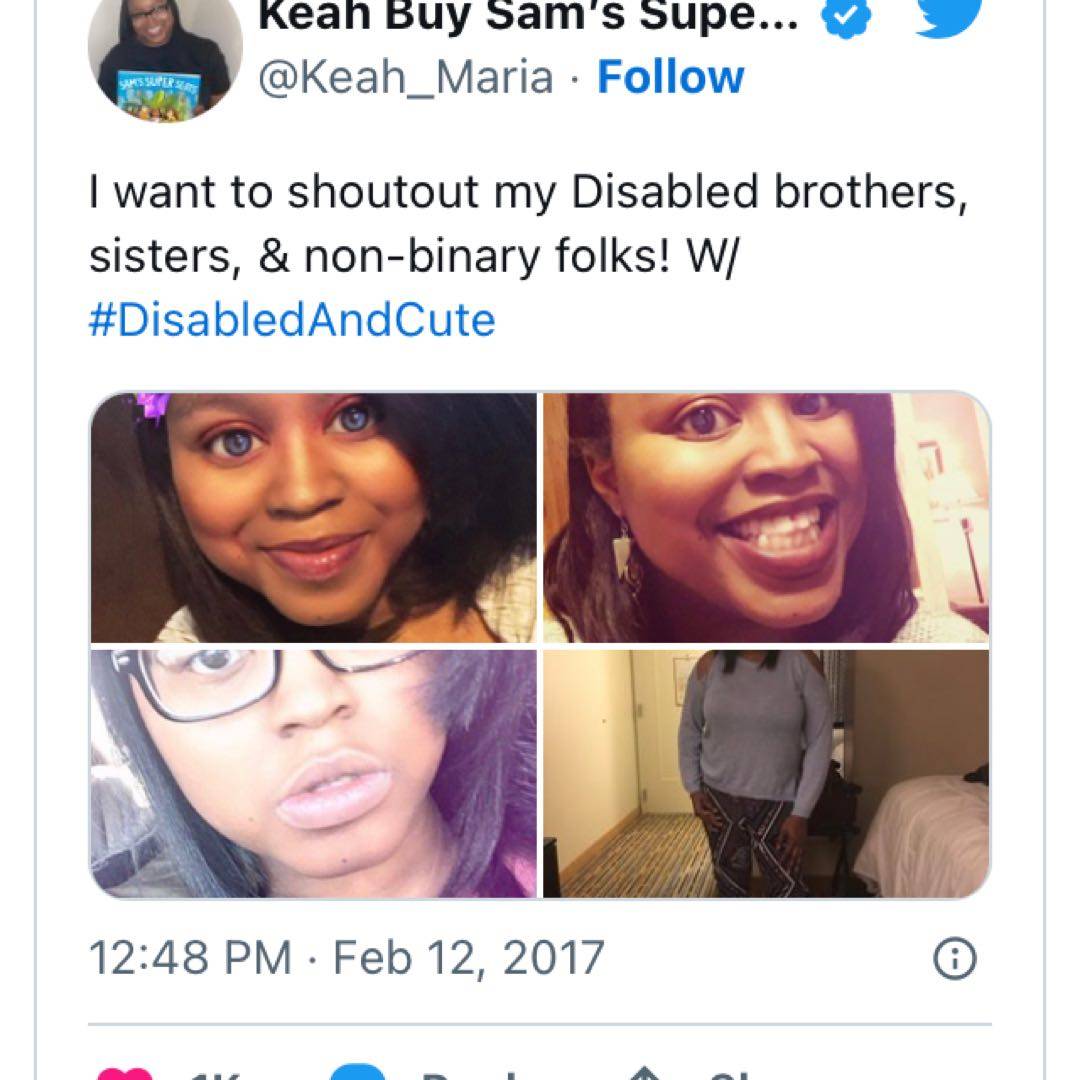
When I created #DisabledAndCute in 2017, I did so to capture a moment, a moment of trust in myself to keep choosing joy every single day. I wanted to celebrate how in this Black and disabled body I too deserved joy. The hashtag went viral and then global by the end of week two. When disabled people took to it to share their joys and stories I was floored…I might not feel joy every day, on some days I have to just exist, and that‘s OK too.
 pick
pickThis is a vital collection of essays and accounts which make up a cross section of many facets of the disability justice movement in the 21st century. It shows the diversity of the community and includes stories told be everyday people and those on the front lines in the disability justice movement. I respected that it included content warnings at the starts of essays which covered particularly sensitive topics.
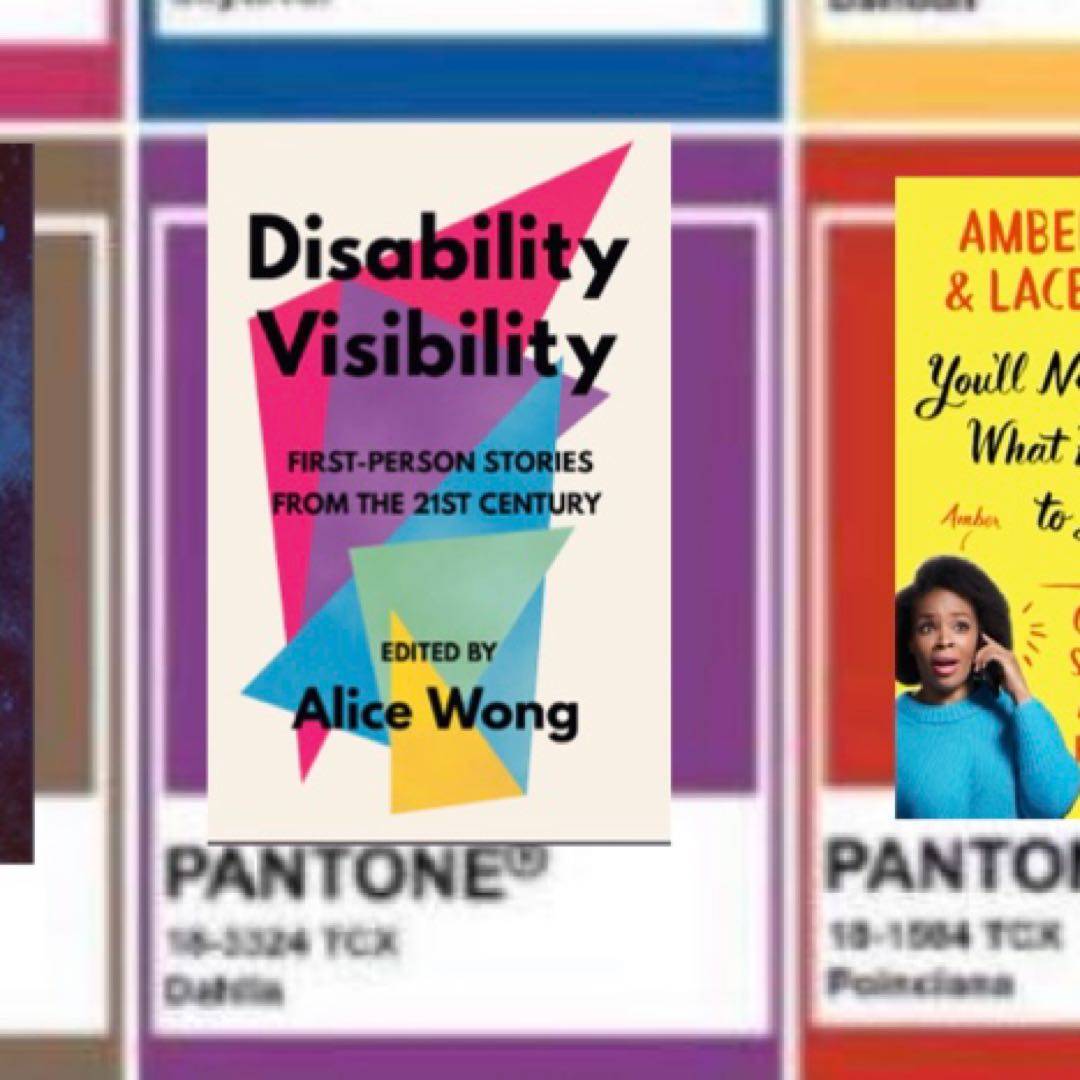
And I think I got a pretty good purple match here 😉
#Pantone2022
@Clwojick
 pick
pickI really really liked this collection, and I‘m so glad to whoever recommended this one to be read. I am disabled, and I learned so much more from this collection and from the immense amount of diversity of voices in this community then I‘ve heard before and found myself wishing I had connected with more voices in this community throughout my life and early years growing up and feeling alone.
#SheSaid
 pick
pick3rd book read for the #20in4 readathon
@Andrew65
⭐⭐⭐⭐⭐
This book made me feel connected to a community that I've never really felt a part of before. I learned about my own internalized ableism, which I didn't even know was a thing, and my eyes have been opened more to the needs of others. This was really helpful in just liberation and claiming space. I will do better because of this book.
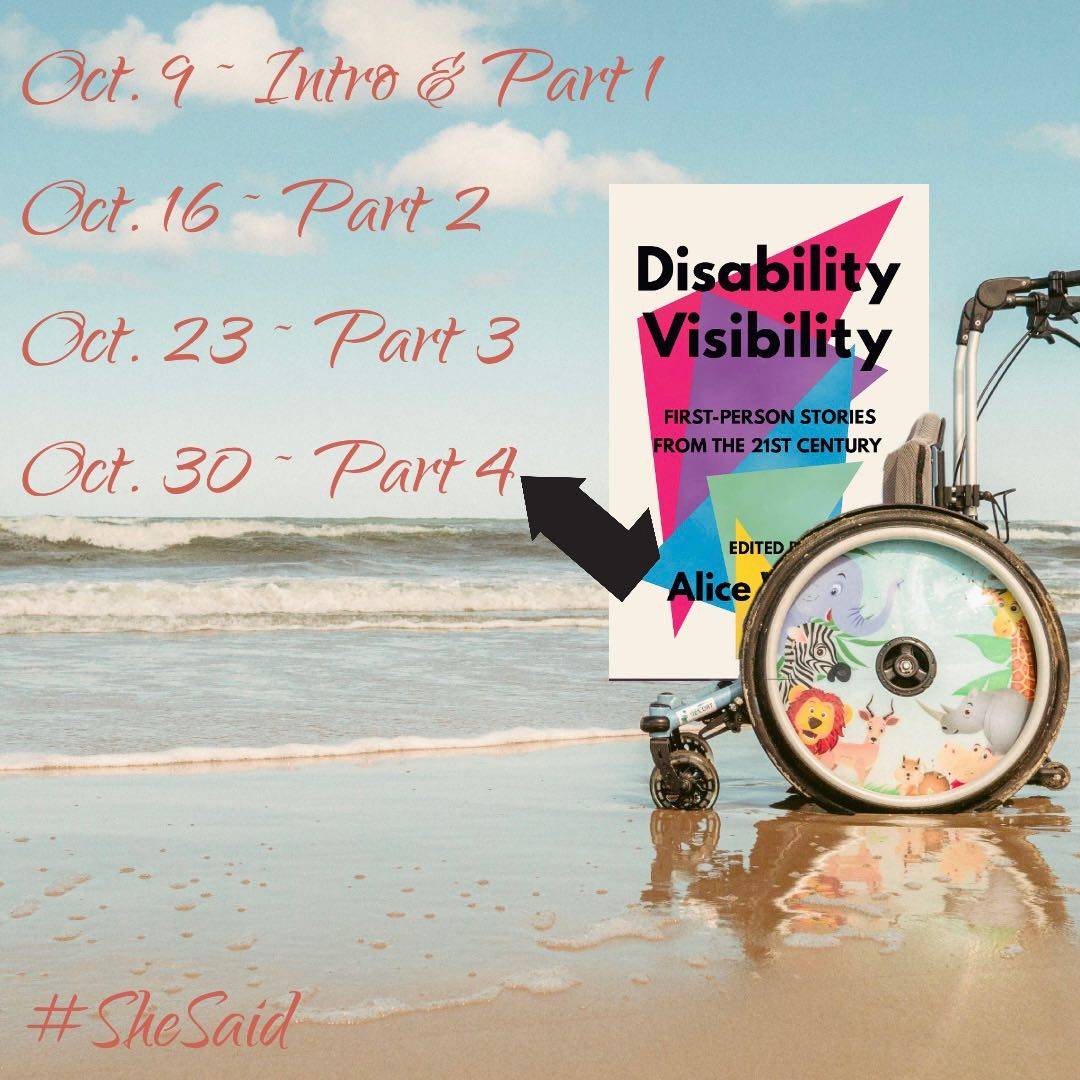
Hello #SheSaid! I don‘t know where the month went (yet again, this year is flying)… but I‘m glad to be spending it reading with you.
Such powerful essays this week and in this whole collection…. I think the disability adaptability relation to climate change and how nature adapts was a really interesting one.
How about you? What were highlights for you?
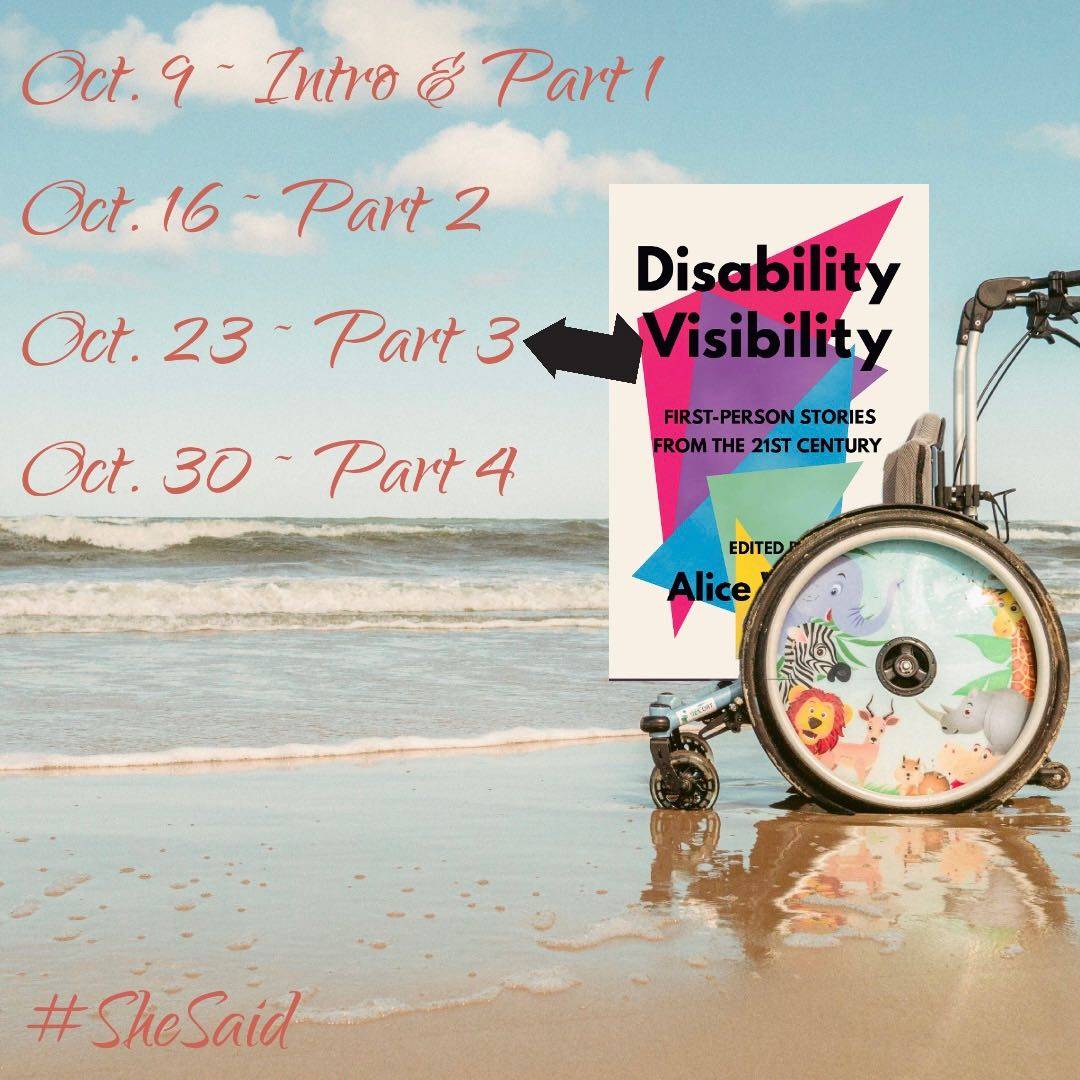
Hello #SheSaid
I‘m really enjoying these essays, I hope everyone else is too. The one with the author, explaining how she adapted to still do what she wanted..I really got a lot from that one in particular.
Hello #SheSaid
Sorry for the delayed start today!
Roughly halfway through this one already, how‘s everyone doing with it. I like the diversity we are getting with the different stories, but it also breaks it up more than a cohesive memoir.
Sandy Ho: It wasn‘t until the early 1980s, for example, that the Chinese characters used to refer to people with disabilities changed from “canfei,” “useless,” to “canji,” “sickness”…Media professionals in China are now encouraged by the Chinese disability advocacy organization One Plus One to use the characters “cán zhàng” (“disabled and obstructed”) when reporting on disability issues.
Hello #SheSaid!
New month, new book!
Definitely some powerful mini-stories and essays in here.
What touched you the most?
For me it was Chasing a Cure, and Deaf while incarcerated
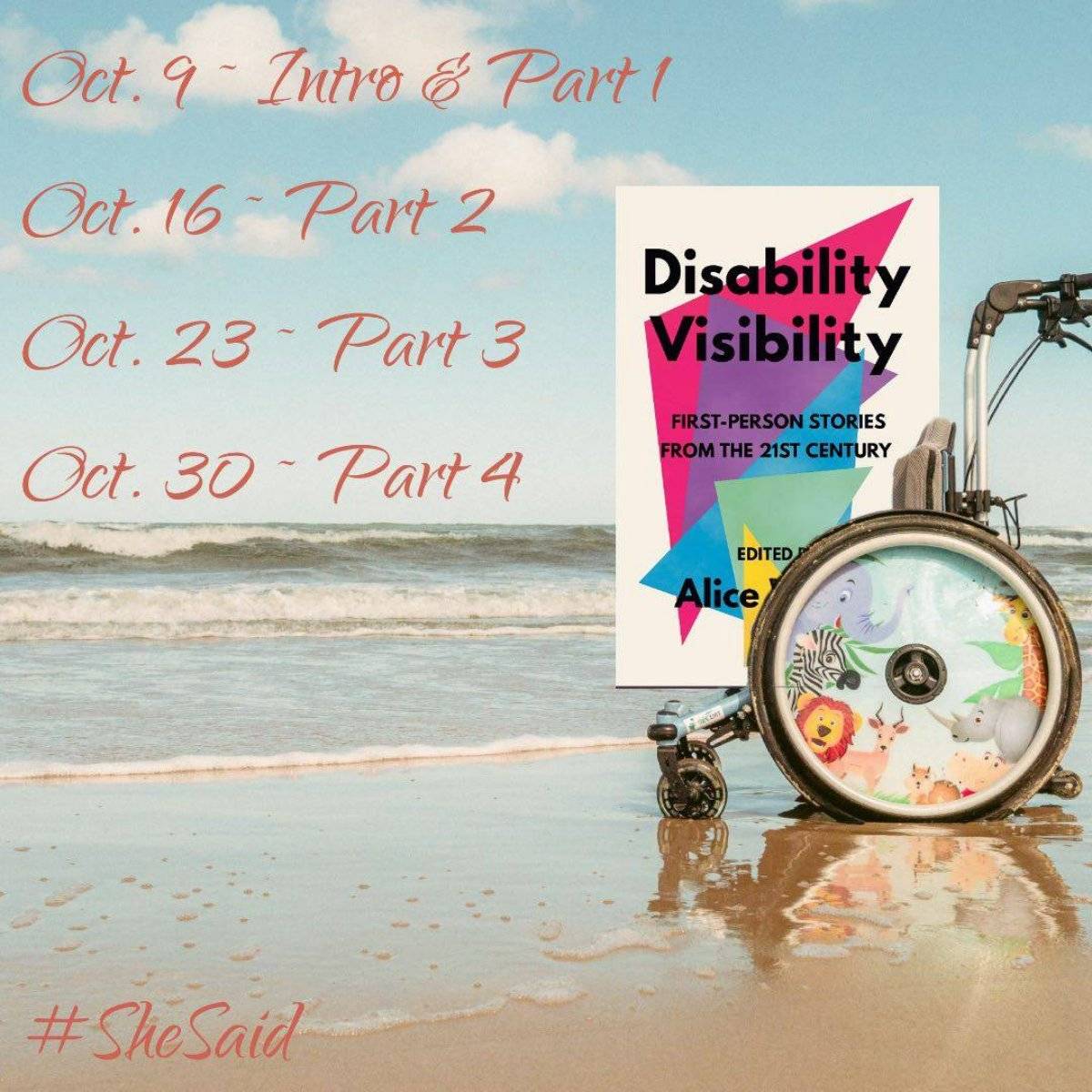
reposted for @Riveted_Reader_Melissa:
Hello #SheSaid! Next schedule is up for October! Put in your library holds and interlibrary loans!
original post is here:
https://www.litsy.com/web/post/2473988
#BuddyRead
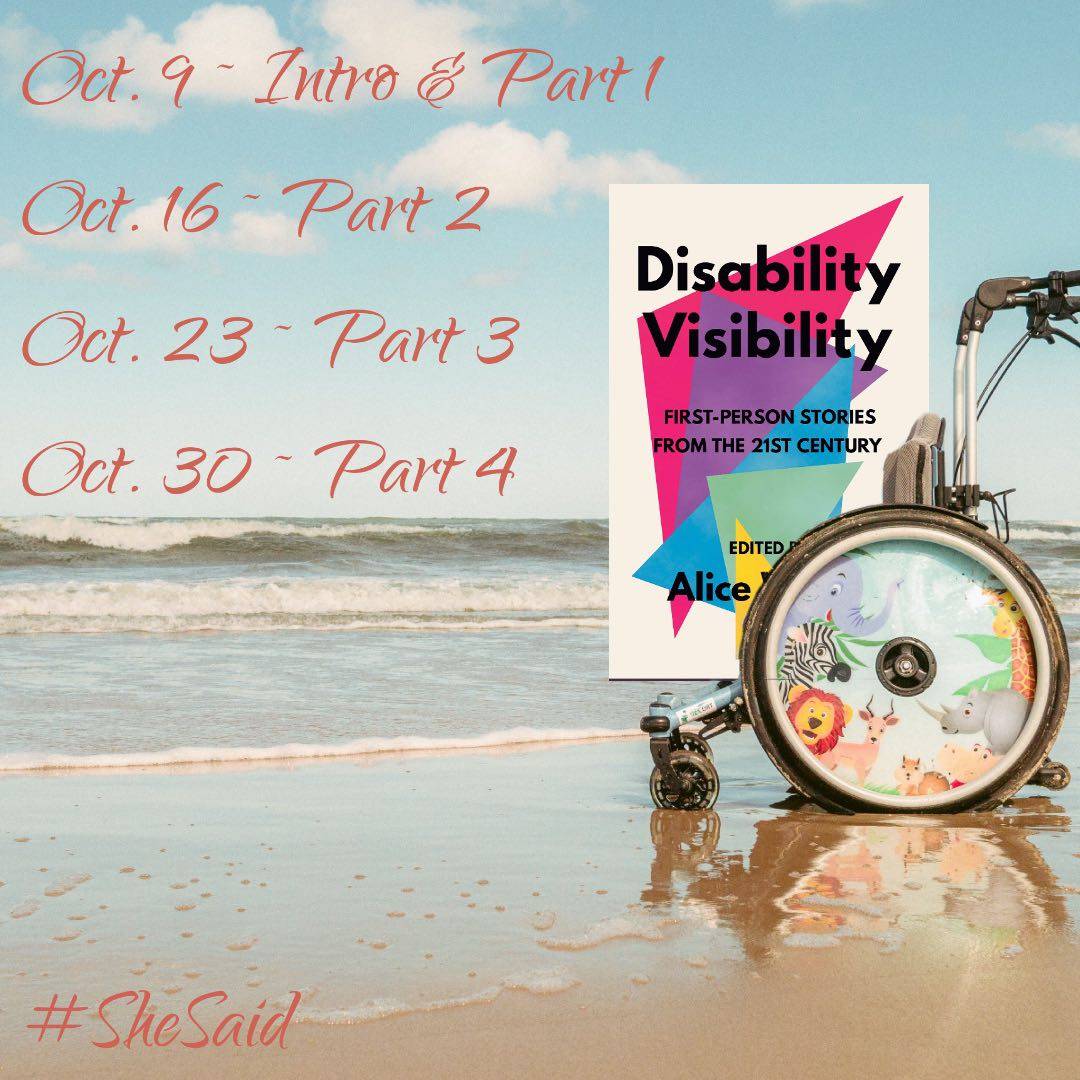
Hello #SheSaid! Next schedule is up for October! Put in your library holds and interlibrary loans!
 pick
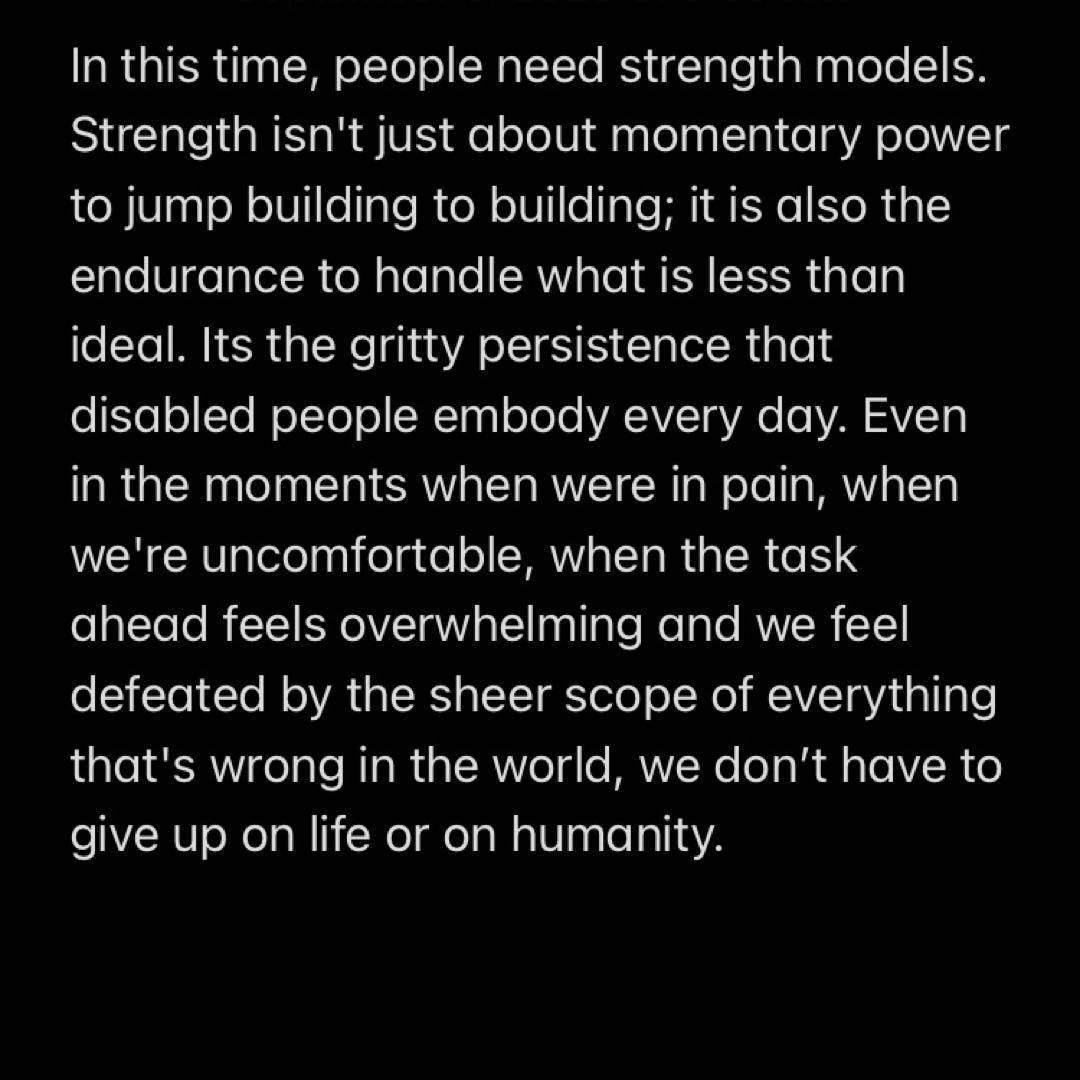
pickDifficult to read at times and at other moments incredibly uplifting. I think this book is one that everyone should read. Sharing a page that I strongly relate to. #readharder2022
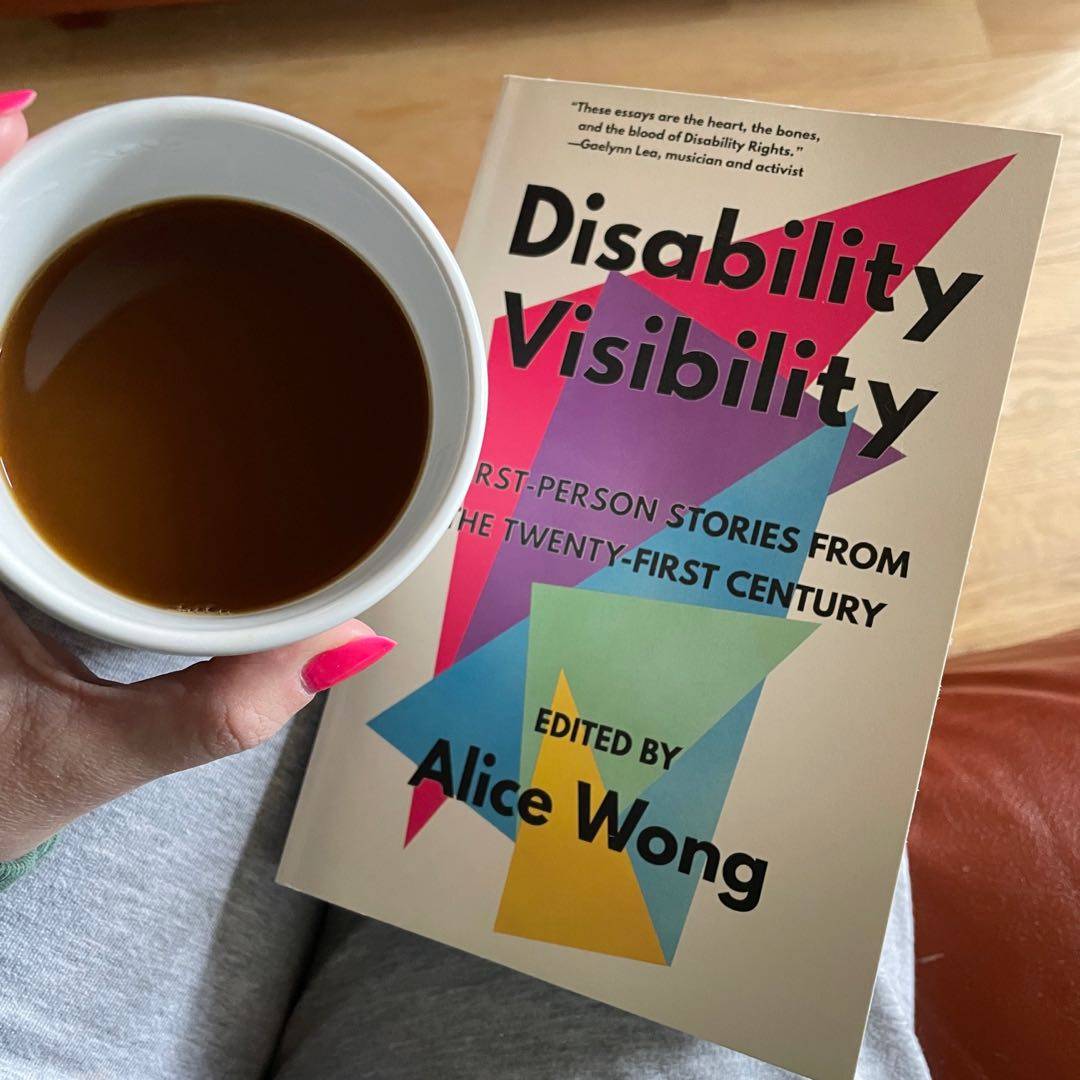
Perfect way to spend a Sunday morning. #readharder2022
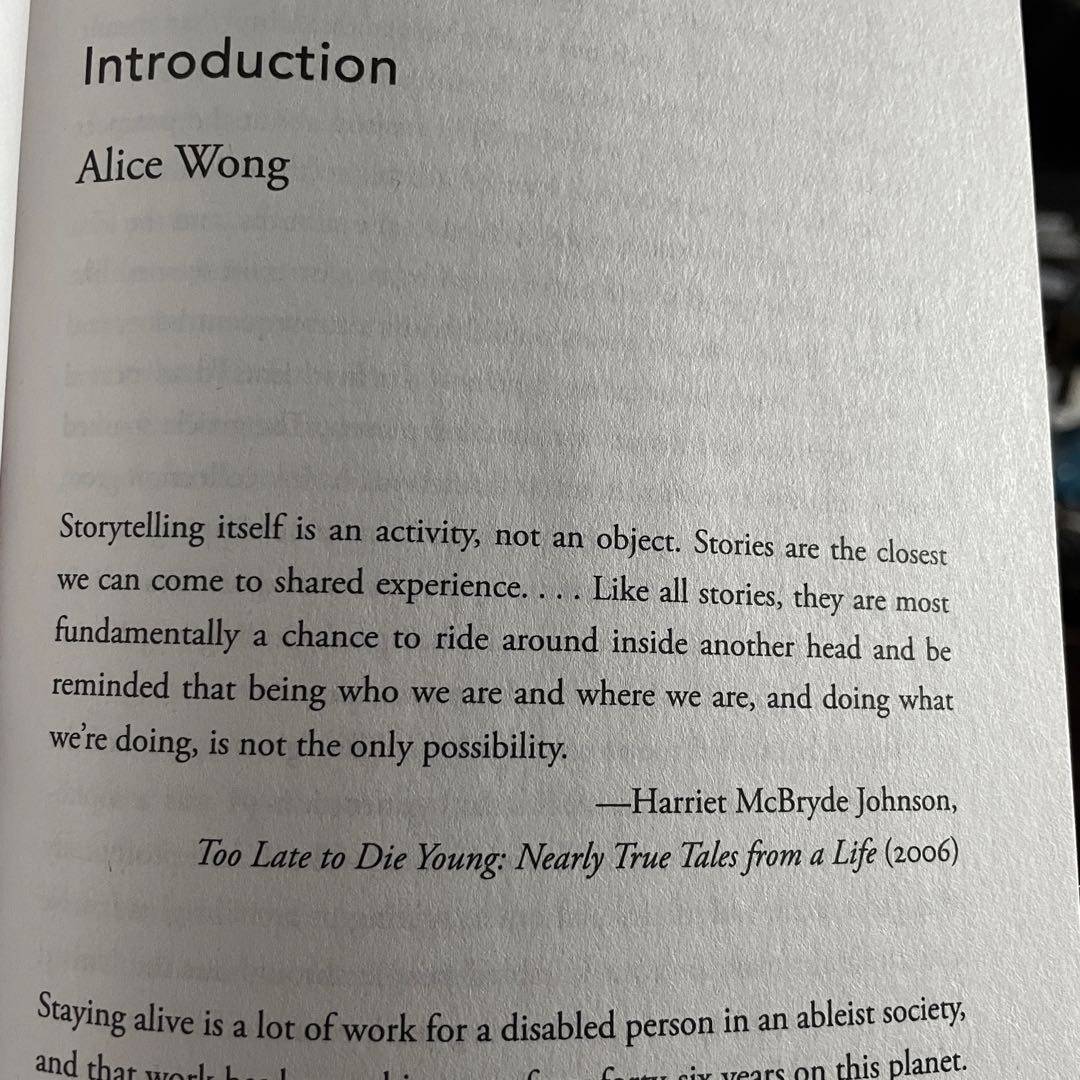
Really looking forward to this book. I‘m sure parts of it will be difficult to read (and appreciate the trigger warnings at the start of each piece). #readharder2022
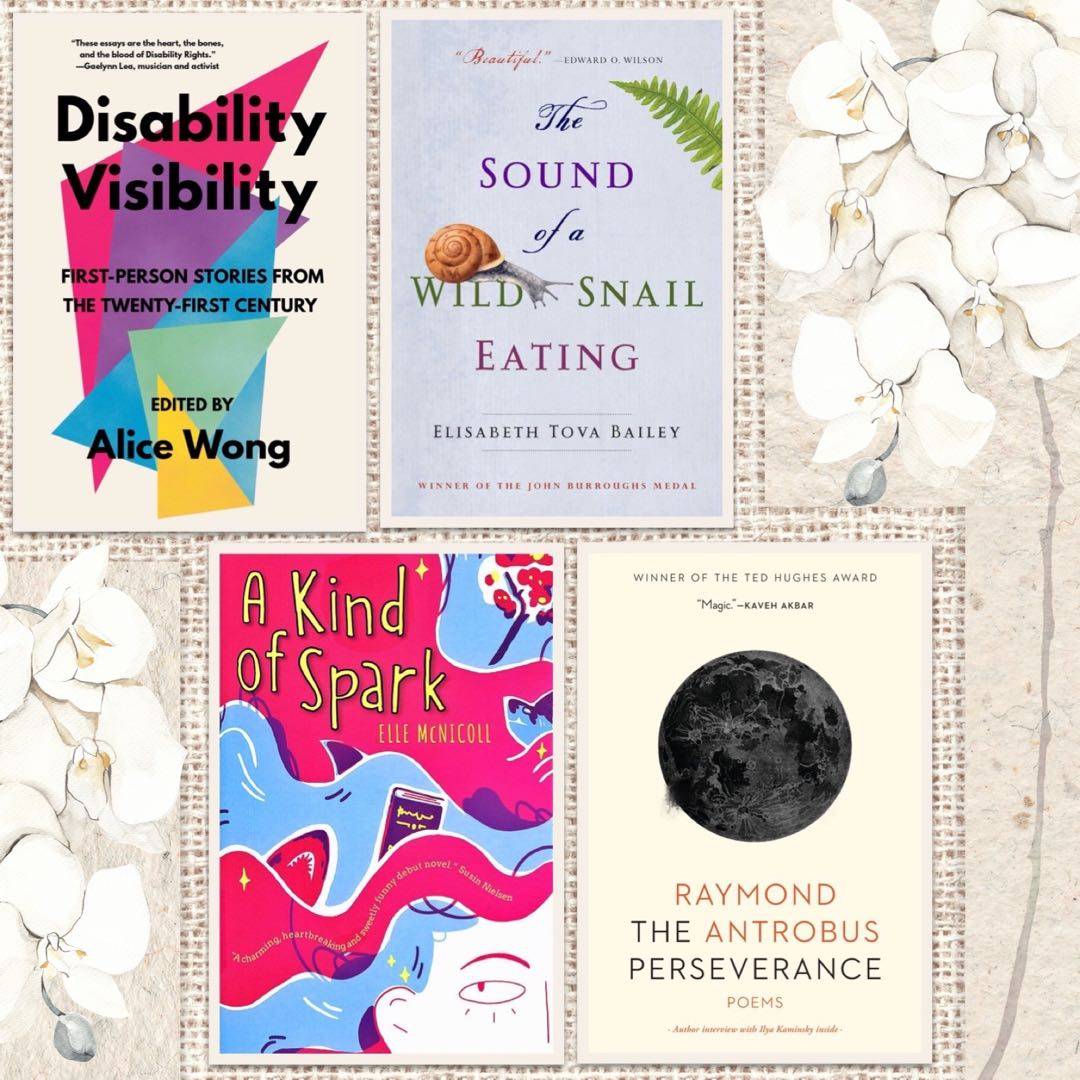
Today I have 4 recommendations from my favorite books that fulfill quite a few challenges in April‘s #DisabilityReadathon!
•The group read is Disability Visibility, which contains some of the best disability writing I‘ve ever read.
•A poetry collection, from a deaf author: The Perseverance by Ray Antrobus. Explores biracial identity, a difficult father relationship, & deaf experiences. The most memorable contemporary poetry I‘ve read in a while.